5.5G: Bridging the Gap Between 5G and 6G – What to Expect
5.5G: Bridging the Gap Between 5G and 6G – What to Expect
- Why Enterprise RAID Rebuilding Succeeds Where Consumer Arrays Fail?
- Linus Torvalds Rejects MMC Subsystem Updates for Linux 7.0: “Complete Garbage”
- The Man Who Maintained Sudo for 30 Years Now Struggles to Fund the Work That Powers Millions of Servers
- How Close Are Quantum Computers to Breaking RSA-2048?
- Why Windows 10 Users Are Flocking to Zorin OS 18 Instead of Linux Mint?
- How to Prevent Ransomware Infection Risks?
- What is the best alternative to Microsoft Office?
5.5G: Bridging the Gap Between 5G and 6G – What to Expect
5G Still Not Fully deployment, Now Comes 5.5G! Learn the Details in this Article.
Ever since the release of the Huawei Mate 60 Pro at the end of August, discussions surrounding Huawei’s 5G capabilities and chip technology have been hot topics. The latest buzz is all about a somewhat controversial “5.5G.”
Recently, during the 2023 Global Mobile Broadband Forum, Huawei unveiled the world’s first complete range of 5.5G product solutions.
According to Huawei, this solution will provide ten times the network capacity through innovations in broadband, multiple frequencies, multiple antennas, intelligence, and green technology.
So, what is 5.5G? Most people can probably guess the gist just from the name—it’s essentially an advanced version of 5G, or a transitional phase toward the era of 6G. This isn’t a new concept; we saw a similar transition from 4G to 4.5G around 2015.
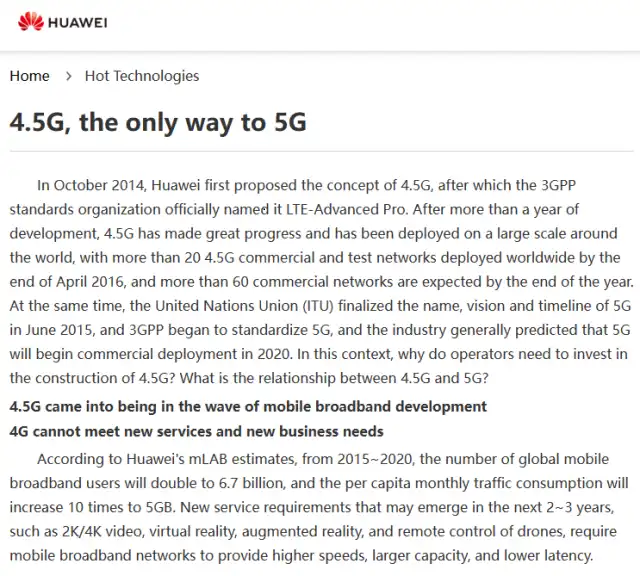
In essence, 5.5G, also known as 5G-Advanced, serves as a transitional phase between 5G and 6G.
Due to the long iteration cycles in mobile communication technology, typically spanning around a decade, and significant performance differences between each generation of technology, it’s necessary to provide a name for intermediate technologies.
Of course, 5.5G is not just a name; it comes with tangible technological advancements.
However, on the other hand, even though 5G has been fully commercialized for four years, the highly anticipated “killer” applications are yet to materialize, and many remain conservative about 5.5G’s prospects.
So, what sets 5.5G apart?
In simple terms, 5.5G can be likened to an extended model of a car, with a long sales cycle, continuing the main design and product features while making some upgrades to certain configurations based on user feedback and incorporating popular features of the time.
In this light, 5.5G primarily builds upon 5G in two ways: enhancing existing capabilities and bridging the gaps. These improvements include faster network speeds, reduced latency, support for more connections, and laying the groundwork for future 6G technologies.
For most average users, their primary concerns will likely revolve around aspects like network speed and latency.
In this regard, Huawei has neatly summarized that 5.5G promises a tenfold improvement in network performance compared to the current 5G capabilities:
- 10x Experience: Peak network speed increases from 1Gbps to 10Gbps.
- 10x Connections: 5.5G introduces Passive IoT (IoT without power source) technology, supporting billions of IoT connections.
- 10x Determinism: Latency, positioning, and high reliability capabilities increase tenfold.
- 10x Efficiency: Carbon emissions from mobile data transmission reduce by tenfold.
- 10x Intelligence: Autonomous driving networks move from Level 3 to Level 4, increasing network operational efficiency tenfold.
In a nutshell, 5.5G is set to achieve peak download speeds of 10 gigabits per second (Gbps) and upload speeds of 1 Gbps, along with millisecond-level latency and low-cost support for a billion IoT devices.
When it comes to products and experiences, this translates to 3D applications becoming mainstream, including online 3D malls, 4K VR games, and glasses-free 3D experiences. Immersive interactive experiences are poised to become a critical direction for internet content, exemplified by Apple’s forthcoming Apple Vision Pro, which boasts high-definition visuals and minimal latency, making it heavily reliant on bandwidth—5.5G offers one of the best solutions.
According to industry predictions, the user base for immersive interactive services in the 5.5G era is expected to exceed one billion, representing a 100-fold growth compared to the present.
Another vital feature of 5.5G is its “sensory capabilities.” While it might seem unrelated to networking, it could very well become 5.5G’s most significant asset.
As the Internet of Things (IoT) continues to evolve, there’s an increasing demand for high-frequency positioning, particularly in indoor environments. In response, 5.5G will provide stronger terminal sensing capabilities and high-precision positioning capabilities. These capabilities signify that 5G’s potential extends beyond mere connectivity technology, transcending conventional communication boundaries.
In this context, Passive IoT emerges as a representative of 5.5G’s sensing and connectivity capabilities. Passive IoT primarily relies on three technologies: energy harvesting, backscatter communication, and low-power computing. It’s suitable for identification-type connections, supports high-precision positioning, micro-sensor connections, and significantly reduces IoT costs.
In a white paper released by the OPPO Research Institute on “Zero-Power Communication,” various applications of Passive IoT are summarized. These applications include industrial sensor networks, intelligent transportation, smart logistics, intelligent warehousing, smart agriculture, smart cities, energy sectors, as well as consumer-oriented smart wearables, smart homes, and healthcare. Some companies have already implemented Passive IoT in various scenarios, including logistics and pharmaceutical tracking.
In February of this year, at MWC23, Huawei showcased the five main features of the 5.5G era: a 10 Gbps experience, ubiquitous IoT, integrated communication awareness, Level 4 autonomous driving networks, and green ICT.
In conclusion, while 5.5G may appear to be an upgraded version of 5G, it introduces numerous new features that will serve as essential foundations for the post-5G era or possibly even the 6G era.
When Can We Experience 5.5G?
Much like the excitement surrounding 5G in the past few years, 5.5G is generating considerable buzz. Currently, over 20 global operators in countries such as China, Kuwait, Saudi Arabia, the United Arab Emirates, Spain, and France have conducted key technology verifications for 5.5G.
According to sources at Huawei, flagship smartphones from major manufacturers are expected to meet 5.5G network speed standards as early as the end of this year. Downlink speeds are anticipated to reach 5 Gbps, and uplink speeds will reach 500 Mbps, making true 5.5G phones likely to debut in the first half of next year.
However, the most significant challenge with 5.5G, much like the evaluation of 5G today, revolves around discerning what unique capabilities it brings to the table.
Today, there’s widespread public criticism of 5G on social media. On platforms like Zhihu, there are numerous topics about 5G, each with millions of views, and almost without exception, these discussions are filled with skepticism.
Faster network speeds and lower latency were heavily touted during the transition from 4G to 5G in the past few years. However, even now, many users with 5G plans are using 4G for their data needs because 5G is power-hungry and 4G speeds suffice.
As one netizen humorously quipped, “We haven’t even figured out 5G, and now 5.5G is on the horizon.” Whether it’s 5G or 5.5G, it seems that there’s still a lot to discover.
Currently, global 5G commercial deployments have spanned four years, with over 260 5G networks deployed worldwide, covering nearly half of the global population. In the 5G to consumer (C) market, the number of 5G users worldwide approaches 1.5 billion. In the 5G to business (B) market, various industries, including mining, ports, and manufacturing, have extensively adopted 5G applications.
The industry has reached a consensus on the typical applications of 5G in various sectors, including remote control, video feedback, machine vision, device positioning, and their undeniable value. However, the average person struggles to perceive the specific changes brought about by 5G.
“5G’s capabilities and impact are currently more concentrated in the industrial sector, while consumer applications have not fully matured,” said Wu Hequan, an academician of the Chinese Academy of Engineering, during the China International Information and Communication Exhibition in June. This is where 5.5G may come into play.
Therefore, for most ordinary individuals, the tangible effects of 5.5G remain to be experienced.