Russia Turns to Chinese Loongson Architecture as Global Chip Landscape Reshapes
Russia Turns to Chinese Loongson Architecture as Global Chip Landscape Reshapes
- Linux Kernel Removes strncpy After Six Years and 362 Patches
- Linux Kernel Drops 40-Year-Old AppleTalk Protocol — AI-Generated Patch Flood Was the Last Straw
- Apple’s Native Linux Container Tool Has Arrived — But Can It Really Replace Docker?
- 60% of MD5 Password Hashes Can Be Cracked in Under an Hour with a Single GPU
- Dirty Frag: Root Access on Every Major Linux Distribution — No Patch, No Warning
Russia Turns to Chinese Loongson Architecture as Global Chip Landscape Reshapes
Moscow’s embrace of LoongArch architecture marks a strategic shift as geopolitical pressures reshape global semiconductor alliances
Russia has taken a decisive step toward technological independence by adopting Chinese processor technology.
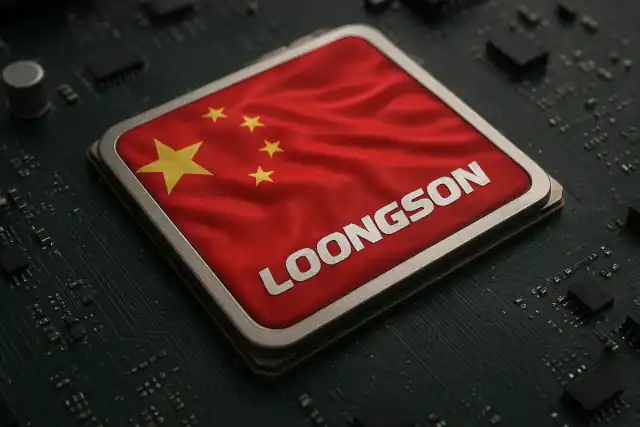
Tramplin Electronics Holdings recently unveiled the Irtysh C616, a server chip built on China’s Loongson LA664 core, marking a deepening partnership between the two nations as Western sanctions continue to restrict Russia’s access to advanced computing technology.
How to Prevent Ransomware Infection Risks
Understanding LoongArch
LoongArch is a completely independent instruction set architecture (ISA) developed by China’s Loongson Technology. Unlike the dominant x86 architecture (used by Intel and AMD) or ARM (licensed globally for mobile and server chips), LoongArch was designed from the ground up as a Chinese-controlled alternative.
An instruction set architecture is essentially the fundamental language that processors use to execute software—it defines how a chip interprets and processes commands. By creating its own ISA, China has established a computing platform that exists entirely outside Western regulatory control. LoongArch supports modern 64-bit computing and has been designed to run Linux operating systems, databases, compilers, and application software developed specifically for the architecture.
Why VPN Security Should Be Every Enterprise’s Top Priority
A Viable Alternative for Russia
The Irtysh C616 addresses Russia’s critical infrastructure needs using 14-nanometer manufacturing processes to deliver performance comparable to mainstream servers from several years ago—adequate for government, energy, and transportation sectors. Tramplin Electronics has also expressed interest in licensing Loongson’s mobile processor cores, potentially expanding the partnership beyond servers.
This move follows the collapse of Russia’s previous chip strategies. The promising Baikal processor project has stalled due to loss of ARM licenses and access to Western manufacturing. Russia’s homegrown Elbrus architecture, meanwhile, has struggled with weak compiler support and a sparse software ecosystem, making it unsuitable for nationwide deployment.
LoongArch offers what these alternatives could not: a complete, mature technology stack that includes compilers, operating systems, databases, and development tools built over years of Chinese investment. For Russia, this represents not just a chip design but an entire computing foundation immune to foreign supply chain disruptions.
Russian software teams are already working to strengthen the LoongArch ecosystem domestically, developing tools and system software for local requirements to serve critical industries.
How Close Are Quantum Computers to Breaking RSA-2048?
Reshaping the Global Chip Landscape
The partnership reflects a broader transformation in semiconductors. The computing world has long been dominated by x86 and ARM architectures, but LoongArch’s emergence suggests a shift toward a tripolar structure.
Significantly, LoongArch achieves competitive performance on mature manufacturing nodes. While cutting-edge Western processors require 3nm or 5nm processes, LA664 delivers respectable results at 14nm—making the technology accessible to nations without access to the most advanced fabrication facilities.
The LA664 core powers China’s 3A6000 and 3C6000 processors, which Loongson positions as competitive with Intel’s 11th-generation Core chips and recent Xeon server products. Loongson’s licensing model, based on shipment royalties and technical support fees, creates sustainable revenue while expanding LoongArch’s global presence.
Why Windows 10 Users Are Flocking to Zorin OS 18 Instead of Linux Mint?
Technology as Strategic Alliance
The arrangement benefits both parties: Russia gains functional processors and a development roadmap free from Western dependencies, while Loongson secures international revenue and proves LoongArch as a viable alternative architecture.
More broadly, the partnership demonstrates how technology cooperation is evolving from commercial transactions into strategic alliances. In an era where chip access has become a geopolitical tool, the ability to offer or receive technology transfers increasingly functions as diplomatic currency.
As Russia proceeds with Irtysh C616 production and potentially expands LoongArch adoption across industries, this collaboration may serve as a template for other nations seeking alternatives to Western-controlled technology platforms. The Russia-Loongson partnership clearly signals that the global semiconductor landscape is entering a new phase.