Will South Korea’s LFP Battery Industry Benefit from US-China Trade Tensions?
Will South Korea’s LFP Battery Industry Benefit from US-China Trade Tensions?
- Apple’s Native Linux Container Tool Has Arrived — But Can It Really Replace Docker?
- 60% of MD5 Password Hashes Can Be Cracked in Under an Hour with a Single GPU
- Dirty Frag: Root Access on Every Major Linux Distribution — No Patch, No Warning
- Proton Mail: Data Transferred to FBI Again!
- How Close Are Quantum Computers to Breaking RSA-2048?
- What is the best alternative to Microsoft Office?
Will South Korea’s LFP Battery Industry Benefit from US-China Trade Tensions?
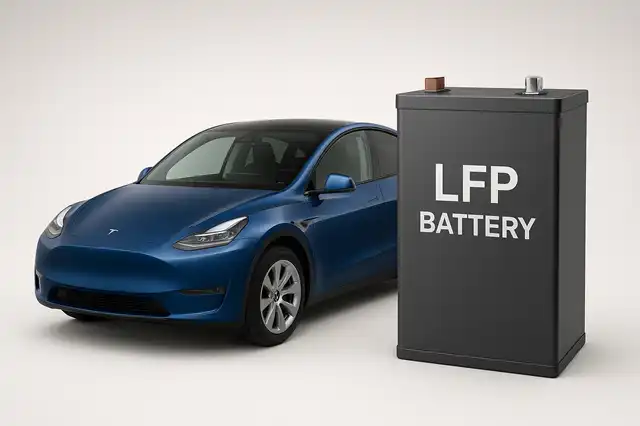
South Korea’s three major battery manufacturers—LG Energy Solution, Samsung SDI, and SK On—are rapidly pivoting toward lithium iron phosphate (LFP) battery production, hoping to capitalize on growing global demand and US trade restrictions against China.
However, whether this strategic shift will translate into rapid growth remains uncertain, as Korean companies face significant challenges in catching up to China’s dominant position in the LFP market.
Do Electric Vehicles Harm Human Health Through Electromagnetic Radiation?
The Strategic Shift to LFP Production
After years of focusing on nickel-cobalt-manganese (NCM) ternary batteries for premium electric vehicles, Korean battery makers are now embracing LFP technology. LG Energy Solution has been the most aggressive, already producing LFP batteries at its Nanjing facility since late 2023 and beginning mass production at its Michigan plant in June 2024. The company plans to expand LFP production to its Poland facility in early 2025 and its Ochang Energy Plant in South Korea by 2027.
SK On and Samsung SDI are following suit with their own production timelines. SK On will convert part of its Georgia manufacturing line to produce LFP batteries for energy storage systems starting in the latter half of 2025, while Samsung SDI plans to allocate production capacity at its joint venture with Stellantis beginning in late 2025.
Will Japanese EVs Flood the US Market soon?
Market Drivers: ESS Demand and AI Growth
The primary catalyst behind this shift is the explosive growth of the energy storage system market. According to SNE Research, the global ESS market is projected to expand from 235 million kilowatt-hours in 2024 to 618 million kilowatt-hours by 2035—more than 2.5 times its current size. This growth is being driven by the expansion of artificial intelligence data centers, renewable energy integration, and grid stabilization needs.
LFP batteries have become the de facto standard for ESS applications, commanding over 90 percent of the global ESS battery market. Their advantages are clear: lower costs compared to ternary batteries, superior thermal stability due to their hexagonal crystal structure, and reduced fire risk—all critical factors for stationary storage applications where energy density is less important than safety and economics.
Stop Whining About China: What Toyota’s EV Success Teaches Foreign Automakers
The China Challenge
Despite these opportunities, Korean manufacturers face a formidable obstacle: China’s overwhelming dominance in LFP production. CATL alone holds more than 30 percent of the global ESS battery market share, while the combined share of all three Korean companies remains below 10 percent. China has been producing LFP batteries for years, giving Chinese manufacturers substantial advantages in cost optimization, supply chain integration, and production expertise.
The challenge for Korean companies extends beyond market share. As one industry observer noted, while converting existing ternary battery production lines to LFP isn’t technically difficult, differentiating their products from established Chinese competitors represents the biggest hurdle.
Tale of Two Trucks: Stellantis Retreats While BYD Advances in Electric Pickup Markets
The US Trade Ban Opportunity
This is where US-China trade tensions become relevant. The Trump administration has intensified “de-Sinicization” policies, strengthening restrictions on prohibited foreign entities (PFE) from China. These measures create a potential opening for Korean manufacturers, as they are effectively the only non-Chinese producers capable of mass-producing LFP batteries at scale.
The opportunity extends beyond ESS applications. Major American automakers including Tesla and General Motors are expanding their LFP-equipped electric vehicle lineups, seeking alternatives to Chinese suppliers. Korean companies are positioning themselves to serve this demand within the US market, where Chinese batteries may face increasing regulatory barriers.
Korean EVs Benefit from Trade War and Sales Surge in US
Realistic Growth Prospects
While the US trade restrictions create favorable conditions, calling this a guarantee of “rapid growth” would be premature. Several factors temper expectations:
Manufacturing scale: Even combined, the three Korean companies currently lack the production capacity and cost efficiency that Chinese manufacturers have achieved through years of specialization in LFP technology.
Market dynamics: ESS demand, while growing steadily, still represents only 20-25 percent of electric vehicle battery demand. The market opportunity, though significant, shouldn’t be overstated.
Competitive positioning: Korean manufacturers are entering a market where Chinese companies have already established strong positions, technical expertise, and optimized supply chains.
Diversification strategy: As industry sources indicate, Korean companies view LFP as part of portfolio diversification rather than a complete strategic pivot, suggesting they’re hedging rather than betting heavily on this segment.
Why Don’t Tesla Vehicles Made in US and Europe Use Safer LFP Batteries?
Conclusion
South Korea’s LFP battery industry will likely experience meaningful growth driven by ESS market expansion and opportunities created by US-China trade restrictions. However, characterizing this as “rapid growth” may be optimistic given the substantial gap with Chinese competitors and the relatively modest current market share of Korean manufacturers.
The real question isn’t whether Korean companies will benefit—they almost certainly will—but rather how quickly they can close the competitive gap with China and what market share they can realistically capture. Their success will depend on their ability to differentiate products, achieve cost competitiveness, and execute on their ambitious production expansion plans while Chinese manufacturers face increasing restrictions in key markets like the United States.
For now, the US trade ban provides an opportunity, but converting that opportunity into dominant market position will require sustained investment, technological innovation, and time—making “steady growth” a more accurate characterization than “rapid growth” for South Korea’s LFP battery industry prospects.