Xiaomi XRING O1: Xiaomi Breakthrough in 3nm Chip Technology
Xiaomi XRING O1: Xiaomi Breakthrough in 3nm Chip Technology
- Apple’s Native Linux Container Tool Has Arrived — But Can It Really Replace Docker?
- 60% of MD5 Password Hashes Can Be Cracked in Under an Hour with a Single GPU
- Dirty Frag: Root Access on Every Major Linux Distribution — No Patch, No Warning
- Proton Mail: Data Transferred to FBI Again!
- How Close Are Quantum Computers to Breaking RSA-2048?
- What is the best alternative to Microsoft Office?
Xiaomi XRING O1: Xiaomi Breakthrough in 3nm Chip Technology
Historic Achievement in Semiconductor Independence
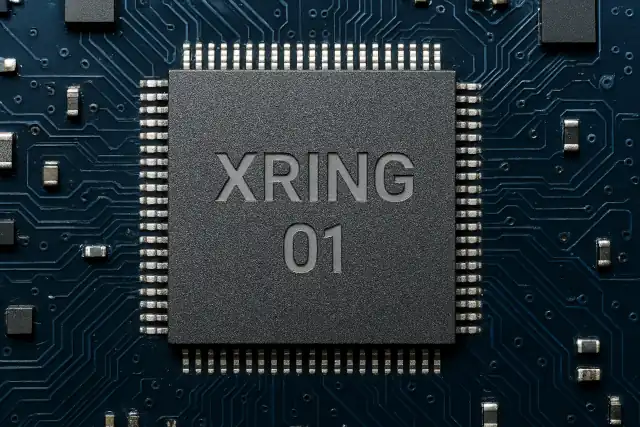
On May 22, 2025, Xiaomi unveiled the XRING O1, marking a pivotal moment in China’s semiconductor industry.
This self-developed flagship processor represents the first mainland Chinese company achieving 3nm chip design capabilities, positioning Xiaomi as the fourth global company—after Apple, Qualcomm, and MediaTek—to independently develop a 3nm mobile processor.
Hidden Threat: Cryptomining Malware Embedded in Free Gaming Software
Development Journey and Investment
The XRING O1 is the culmination of Xiaomi’s decade-long commitment to semiconductor innovation. After releasing the Surge S1 processor in February 2017, which failed commercially due to limited network compatibility, Xiaomi regrouped and established Shanghai XRING Technologies in December 2021. The subsidiary received initial capital of approximately $210 million (RMB 1.5 billion), later increased to $270 million (RMB 1.92 billion) by June 2023.
By April 2025, cumulative research and development investment exceeded $18.8 billion (RMB 135 billion), with a dedicated team of over 2,500 engineers. The company is led by former Qualcomm senior director Qin Muyun and former UNISOC CEO Zeng Xuezhong, bringing deep industry expertise to the project.
How to Prevent Ransomware Infection Risks
Technical Specifications
Manufacturing Process
The XRING O1 utilizes TSMC’s second-generation 3nm process (N3E), integrating 19 billion transistors across a compact 109mm² die area. This represents a remarkable achievement in transistor density—only 5% fewer transistors than Apple’s A18 Pro, despite a 4% larger die size.
Innovative CPU Architecture
Breaking from traditional eight-core mobile SoC designs, the XRING O1 implements a revolutionary 10-core, four-cluster architecture:
- 2× Cortex-X925 ultra-large cores @ 3.9 GHz (peak performance)
- 4× Cortex-A725 performance cores @ 3.4 GHz (gaming/intensive tasks)
- 2× Cortex-A725 efficiency cores @ 1.9 GHz (balanced workloads)
- 2× Cortex-A520 ultra-efficiency cores @ 1.8 GHz (daily use)
This hierarchical design enables dynamic core scheduling based on workload demands, delivering peak performance while maintaining exceptional energy efficiency. For typical daily tasks, only the four efficiency cores operate, with performance cores activating for gaming and the X925 cores reserved for maximum computational demands.
Graphics and AI Processing
The processor features a 16-core Immortalis-G925 GPU from ARM’s latest generation, supporting hardware-level ray tracing and dynamic performance scheduling for console-quality mobile gaming experiences.
For artificial intelligence workloads, the chip integrates a custom 6-core NPU delivering 44 TOPS of computing power. The NPU has hardened over 100 commonly-used AI operators and supports multi-algorithm parallel computing, working synergistically with Xiaomi’s third-generation end-to-end AI models.
Connectivity Solution
Unlike fully-integrated competitors, the XRING O1 uses an external MediaTek T800 5G modem manufactured on TSMC’s 4nm process. This separate component supports both sub-6GHz and mmWave 5G networks, achieving download speeds up to 7.9 Gbps and upload speeds up to 4.2 Gbps.
Performance Benchmarks
Real-world testing demonstrates competitive flagship performance:
Geekbench 6 Scores:
- Single-core: 2,709-3,119 points
- Multi-core: 8,125-9,673 points
These results position the XRING O1 alongside Apple’s A18 Pro and approaching performance parity with Qualcomm’s Snapdragon 8 Gen 3 and MediaTek’s Dimensity 9400.
How to Prevent Ransomware Infection Risks
Comparison with Latest Snapdragon Processors
Snapdragon 8 Elite (October 2024)
The first-generation Snapdragon 8 Elite, Qualcomm’s current flagship, presents a formidable competitor:
Architecture: 8-core design with 2 prime cores @ 4.32 GHz and 6 performance cores @ 3.53 GHz, using Qualcomm’s custom Oryon cores.
Manufacturing: Built on TSMC’s 3nm process, similar to XRING O1.
GPU: Adreno 830 with claimed 40% performance improvement over previous generation.
Benchmark Performance (Geekbench 6):
- Single-core: ~3,122 points
- Multi-core: ~9,507 points
Advantages over XRING O1: Higher clock speeds, integrated 5G modem (Snapdragon X80, up to 10 Gbps), more mature optimization, and 45% improved AI performance via Hexagon NPU.
Snapdragon 8 Elite Gen 5 (September 2025)
Qualcomm’s latest flagship, announced September 2025, represents current cutting-edge mobile processing:
Architecture: 8-core with 2 third-generation Oryon prime cores @ 4.6 GHz and 6 performance cores @ 3.62 GHz.
Manufacturing: 3nm process technology.
GPU: Adreno 840 delivering 23% improved performance, 20% better power efficiency, and 25% enhanced ray tracing over Adreno 830.
Benchmark Performance (Geekbench 6):
- Single-core: 3,588 points
- Multi-core: 10,207 points
AI Capabilities: Hexagon NPU with 37% performance increase, supporting agentic AI assistants through continuous on-device learning.
Thermal Challenges: Despite impressive peak performance, the 8 Elite Gen 5 experiences significant thermal throttling under sustained loads, dropping to 58% of maximum performance after three minutes of intensive use.
The Rise of “Vibescamming”: When AI Becomes a Cybercriminal’s Best Tool
Competitive Analysis
Performance Gap
The Snapdragon 8 Elite Gen 5 demonstrates approximately 15-18% higher single-core performance and 5-10% better multi-core performance compared to the XRING O1. However, the Chinese processor’s innovative 10-core architecture provides more flexible power management, potentially offering better sustained performance under extended workloads.
Design Philosophy Differences
Xiaomi’s approach emphasizes balanced performance through hierarchical core clustering, while Qualcomm prioritizes raw peak performance with higher clock speeds. The XRING O1’s architecture may prove more thermally stable for prolonged intensive tasks, though comprehensive thermal testing is needed.
Integration Strategy
The XRING O1’s use of an external MediaTek modem represents a pragmatic approach given current geopolitical constraints on advanced semiconductor technology access. While this adds complexity compared to Qualcomm’s fully-integrated solutions, it enabled Xiaomi to bring a competitive flagship processor to market despite limited experience in modem design.
AI and Graphics
Qualcomm maintains advantages in AI processing capabilities with more mature NPU technology and software optimization. However, Xiaomi’s custom 44 TOPS NPU with hardware-accelerated operators demonstrates competitive on-device AI performance for typical smartphone applications.
How to Prevent Ransomware Infection Risks
Market Impact and Strategic Significance
The XRING O1’s release carries implications beyond technical specifications. As the first mainland Chinese 3nm chip design, it demonstrates domestic capability in advanced semiconductor development despite ongoing technology restrictions. China’s state media CCTV described it as a breakthrough bringing Chinese chip design closer to international advanced levels.
For Xiaomi specifically, self-developed processors reduce dependence on Qualcomm and MediaTek, providing greater control over product differentiation, cost structure, and supply chain resilience. The chip debuts in the Xiaomi 15S Pro smartphone, Pad 7 Ultra tablet, and Watch 4S, demonstrating Xiaomi’s commitment to deploying its silicon across multiple product categories.
Why is it difficult for viruses to “infect” Linux OS?
Future Outlook
While the XRING O1 doesn’t yet match the absolute performance of Qualcomm’s latest Snapdragon 8 Elite Gen 5, it represents an impressive first-generation flagship processor. The technology demonstrates that Chinese companies can design competitive advanced-node processors when given access to leading-edge manufacturing.
Success of subsequent generations will depend on continued manufacturing access, development of integrated 5G modems, enhancement of AI processing capabilities, and thermal optimization for sustained performance. Xiaomi’s substantial $18.8 billion investment and 2,500-person engineering team suggest serious long-term commitment to competing in the premium mobile processor market.
The Most Windows-Friendly Linux Distributions for General Consumers: A Complete Guide
Conclusion
The Xiaomi XRING O1 marks a significant milestone in both Chinese semiconductor independence and Xiaomi’s evolution as a technology company. While performance currently trails Qualcomm’s latest offerings by 10-18% in benchmark tests, the innovative 10-core architecture, competitive power efficiency, and successful execution of a 3nm design demonstrate impressive technical capability for a first-generation flagship processor.
As global smartphone brands including Apple, Samsung, Huawei, and now Xiaomi pursue semiconductor independence, the industry landscape continues fragmenting from the traditional Qualcomm/MediaTek duopoly. Whether Xiaomi can maintain development momentum and close the performance gap in subsequent generations will significantly impact both the company’s premium smartphone strategy and China’s broader semiconductor ambitions.