Sodium-Ion Batteries Arriving: Paving the Way for the $10000 EV
Sodium-Ion Batteries Arriving: Paving the Way for the $10000 EV
- Apple’s Native Linux Container Tool Has Arrived — But Can It Really Replace Docker?
- 60% of MD5 Password Hashes Can Be Cracked in Under an Hour with a Single GPU
- Dirty Frag: Root Access on Every Major Linux Distribution — No Patch, No Warning
- Proton Mail: Data Transferred to FBI Again!
- How Close Are Quantum Computers to Breaking RSA-2048?
- What is the best alternative to Microsoft Office?
Sodium-Ion Batteries Arriving: Paving the Way for the $10000 EV
The electric vehicle (EV) revolution has long been hampered by the high cost and supply chain volatility of lithium. But with recent breakthroughs, particularly the official launch of Zoolnasm’s 10,000-ton sodium iron sulfate cathode production base in Meishan, Sichuan, in January 2026, the era of affordable, mass-market EVs is no longer a distant dream—it’s a near-term reality. This landmark project, the world’s first of its kind, signals a fundamental shift in battery technology that promises to democratize electric mobility.
For years, sodium-ion batteries (SIBs) were trapped in a classic “chicken and egg” scenario: carmakers wouldn’t commit without a stable, large-scale supply, and manufacturers wouldn’t build gigafactories without firm orders.
The Meishan project shatters this deadlock, providing the mass-market scale necessary to integrate sodium-ion technology into mainstream vehicle production.
Tesla’s 4680 Battery Dream Crumbles? $2.9 Billion Contract Reduced by 99.99%
Why the “Meishan Project” Changes Everything
The significance of Zoolnasm’s new production base cannot be overstated. It represents more than just an increase in manufacturing capacity; it’s a strategic pivot that addresses the core challenges facing EV adoption: cost, performance, and sustainability.
1. The End of “Lithium Anxiety” and Cost Barriers
The most substantial hurdle for widespread EV adoption has been the price of the battery pack, primarily driven by the cost of lithium. While Lithium Iron Phosphate (LFP) batteries have made EVs more accessible, they remain susceptible to the volatile global pricing of lithium carbonate.
-
The Zoolnasm Breakthrough: By pioneering the mass production of Sodium Iron Sulfate (NFS), Zoolnasm has dramatically driven down the cost of cathode materials. With prices now targeting the 10,000 RMB (approximately $1,400 USD) per ton range, this marks a 50% cost reduction compared to current LFP cathode materials.
-
The Impact: This direct material cost saving translates into a significant reduction in the overall battery pack price, making it feasible for manufacturers to target EV price points previously unimaginable. For budget-friendly EVs, this could mean a retail price drop of thousands of dollars for the end consumer.
2. All-Weather Reliability and Enhanced Safety
Current lithium-ion batteries often experience a noticeable reduction in range and performance in cold weather. Sodium-ion batteries, particularly those utilizing sodium iron sulfate, exhibit superior characteristics in these conditions.
-
Cold Performance: Sodium iron sulfate batteries demonstrate impressive cold-weather performance, capable of retaining over 90% of their capacity even at -20°C. This makes EVs a far more practical option for colder climates, addressing a major pain point for many potential buyers.
-
Safety: A critical advantage of SIBs is their enhanced safety profile. Unlike some lithium-ion chemistries, sodium-ion batteries can be discharged to 0 volts without damage for transport and storage, significantly reducing the risk of thermal runaway and fire hazards during shipping and in accident scenarios.
Toyota’s EV Success in China Proves Incompetence Isn’t an Excuse
The Road to Your Next Car: 2026-2030
The timeline for integrating sodium-ion batteries into your next vehicle is accelerating rapidly, now that the supply chain bottleneck is being cleared.
Phase 1: The “Second Car” Revolution (2026-2027)
Expect the initial wave of sodium-ion powered EVs to appear in A0 and A00-class vehicles—compact and mini-EVs like the Wuling Bingo, BYD Seagull, or similarly sized urban commuters. For city dwellers and those requiring a practical “second car” for daily errands and short commutes (under 150 miles/250km), a sodium-powered car will represent an unprecedented combination of affordability and efficiency.
Phase 2: The Hybrid Strategy (2027-2028)
Leading battery manufacturers, such as CATL, are already developing and implementing “AB Battery” solutions. This innovative approach involves combining both lithium and sodium cells within a single battery pack. This allows vehicles to leverage the higher energy density of lithium for extended range when needed, while benefiting from the lower cost, enhanced cold-weather performance, and improved safety of sodium for typical daily driving and initial power delivery.
Phase 3: Global Expansion and Diversification (2030)
By 2030, the sodium-ion battery market is projected to skyrocket to 1,000 GWh. At this scale, sodium won’t just power electric cars; it will become a cornerstone of various other applications, including grid-scale energy storage, residential backup power systems, and heavy industrial machinery, establishing itself as a versatile and indispensable energy solution.
Will South Korea’s LFP Battery Industry Benefit from US-China Trade Tensions?
Conclusion: The Salt Revolution is Here
The completion and operational status of the Zoolnasm Meishan base unequivocally signals that sodium-ion battery technology is no longer a distant “future” concept—it is a tangible “now” solution.
By drastically shortening the delivery cycle for key materials to just one week and scaling production to an impressive 5 GWh of annual battery equivalent capacity, the industry has finally unlocked the potential for truly affordable, safe, and sustainable electric mobility.
The long-standing lithium-ion monopoly is drawing to a close, and the era of the sodium-powered EV has officially begun.
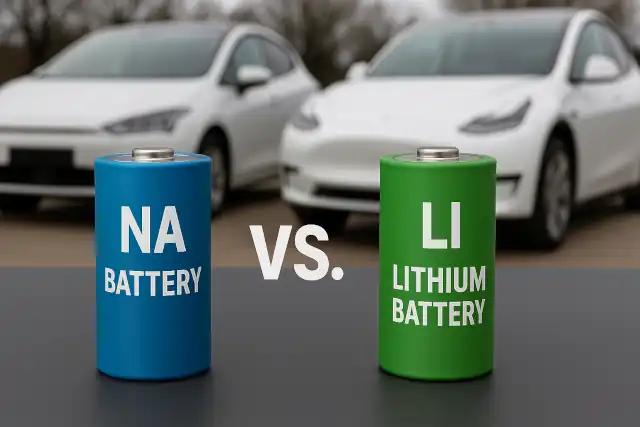
Cost and Performance Comparison: Lithium-ion (LFP) vs. Sodium-ion (NFS) EVs
To illustrate the impact of this shift, let’s look at a comparative breakdown of key metrics for a typical entry-level EV.
| Feature / Metric | Current Lithium Iron Phosphate (LFP) EV (e.g., ~$18,000 – $25,000 USD) | Projected Sodium Iron Sulfate (NFS) EV (e.g., ~$10,000 – $15,000 USD) | Notes & Implications |
| Cathode Material Cost | ~$2,800 – $3,500 USD per ton (LFP) | ~$1,400 USD per ton (NFS) | Significantly lower material cost for NFS. This is the primary driver for the reduced overall vehicle price. |
| Battery Pack Cost | ~$6,000 – $8,000 USD (for ~30-40 kWh pack) | ~$3,000 – $5,000 USD (for ~30-40 kWh pack) | Direct impact of cheaper materials and simplified manufacturing. Makes EVs accessible to a much wider demographic. |
| Vehicle Purchase Price | ~$18,000 – $25,000 USD (entry-level) | ~$10,000 – $15,000 USD (entry-level) | The “Holy Grail” of affordable EVs. Opens up new markets globally, especially in developing economies. |
| Energy Density (Wh/kg) | ~140-160 Wh/kg | ~120-140 Wh/kg | Slightly lower for current NFS. This means for the same weight, LFP might offer slightly more range. However, for urban/commuter cars, this difference is negligible. Ongoing R&D is rapidly closing this gap for NFS. |
| Typical Range | ~180-250 miles (300-400 km) | ~120-200 miles (200-320 km) | Perfectly adequate for daily commuting and city driving. Ideal for multi-car households or as a primary vehicle in dense urban areas. |
| Cold Weather Performance | ~10-20% capacity degradation at -20°C | ~5-10% capacity degradation at -20°C (retains ~90% capacity) | Superior in cold climates. Maintains range and performance much better, reducing “winter anxiety” for drivers. |
| Charge Time (DC Fast) | ~30-45 mins (10-80%) | Expected to be similar or slightly faster due to higher rate capability | Early indicators suggest SIBs can handle high C-rates well, potentially leading to competitive or even improved fast-charging times. |
| Safety (Thermal Runaway) | Good (inherently stable LFP) | Excellent (can be discharged to 0V; lower inherent risk) | Enhanced safety. The ability to discharge to 0V is a significant advantage for transport, storage, and crash recovery. |
| Raw Material Availability | Moderate (lithium extraction can be resource-intensive/geopolitically sensitive) | High (sodium, iron, sulfur are abundant globally) | Highly sustainable and secure supply chain. Reduces reliance on specific regions or rare minerals, promoting energy independence. |
| Cycle Life | ~3,000 – 6,000 cycles | Expected ~3,000 – 5,000+ cycles | Comparable cycle life. Ensures longevity of the battery pack, matching or exceeding typical vehicle lifespan. |
| Environmental Impact | Good (less toxic than NMC) | Excellent (abundant, non-toxic materials, easier recycling) | Lower overall environmental footprint. Contributes to a greener lifecycle from mining to disposal. |
| Target Market | Mainstream EVs, SUVs, commercial vehicles | Entry-level EVs, micro-EVs, urban cars, energy storage, two-wheelers | Expands EV access to budget-conscious buyers. Creates new market segments and accelerates global EV adoption. |