The Solid-State Showdown: China vs. Japan in the Next-Gen Battery Race
The Solid-State Showdown: China vs. Japan in the Next-Gen Battery Race
- Linux Kernel Drops 40-Year-Old AppleTalk Protocol — AI-Generated Patch Flood Was the Last Straw
- Apple’s Native Linux Container Tool Has Arrived — But Can It Really Replace Docker?
- 60% of MD5 Password Hashes Can Be Cracked in Under an Hour with a Single GPU
- Dirty Frag: Root Access on Every Major Linux Distribution — No Patch, No Warning
- How Close Are Quantum Computers to Breaking RSA-2048?
- What is the best alternative to Microsoft Office?
The Solid-State Showdown: China vs. Japan in the Next-Gen Battery Race
The electric vehicle (EV) revolution is accelerating, but the current generation of lithium-ion batteries still faces hurdles in terms of range, charging speed, cost, and safety.
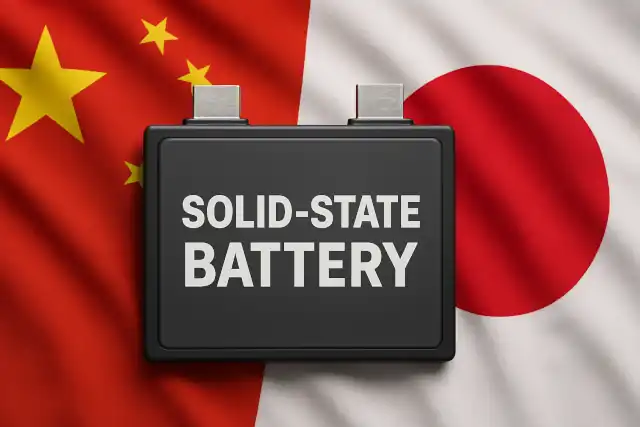
Enter solid-state batteries (SSBs), hailed as the holy grail of EV power, promising to overcome these limitations. Two major players, China and Japan, are locked in a fierce technological battle to dominate this transformative industry.
While both nations largely converge on sulfide-based solid-state electrolytes due to their superior ionic conductivity, their strategic approaches, industrial ecosystems, and timelines present fascinating differences.
The Japanese Strategy: Deep Dive, High Bar
Japan, with pioneers like Toyota, Nissan, Honda, and Panasonic, has been at the forefront of solid-state battery research for decades. Their strategy is characterized by:
-
“All-Solid-State or Nothing” Philosophy: Unlike some Chinese counterparts that are exploring “semi-solid-state” (hybrid batteries with some liquid electrolyte) as an interim solution, Japanese players are largely focused on pure, all-solid-state designs. They aim to jump directly to the ultimate iteration of the technology, bypassing intermediate steps.
-
Sulfide Dominance: Japan has heavily invested in sulfide solid electrolytes. Toyota, in particular, holds a staggering number of patents in this domain, indicating deep foundational research into material science, stability, and interface engineering.
-
Vertical Integration and Strategic Alliances: Japanese automakers are forming strong alliances with chemical and material companies. For instance, Toyota’s partnership with petrochemical giant Idemitsu Kosan is crucial for scaling up the production of high-quality, cost-effective sulfide materials.
-
Extreme Performance Targets: Japanese companies are setting ambitious goals. Toyota aims for 10-minute charging times and over 1,200 km of range. Nissan is aggressively pursuing metal lithium anodes for maximum energy density.
-
Long-Term Vision: Japan views solid-state batteries as a long-term strategic asset, prioritizing technological superiority and intellectual property for sustainable competitive advantage.
-
Key Strengths: Unparalleled patent portfolio, deep material science expertise, and a commitment to pushing the performance envelope.
-
Key Challenges: High current manufacturing costs, the extreme sensitivity of sulfide materials to moisture, and the complexity of scaling up all-solid-state production.
The Chinese Approach: Pragmatism, Pace, and Scale
China’s rapid ascent in the EV and battery sectors has been driven by its unparalleled manufacturing capabilities, robust supply chains, and a pragmatic approach to technology adoption. Their solid-state battery strategy differs as follows:
-
Phased Development: Leading Chinese battery manufacturers like CATL and BYD, along with EV makers like Nio and GAC, have embraced a step-by-step approach. Many launched “semi-solid-state” batteries first to gain real-world data while perfecting the all-solid-state versions currently in pilot testing.
-
Rapid Engineering and Industrialization: China’s strength lies in quickly moving from lab prototypes to mass production. In early 2026, major players like BYD and Geely have already begun testing fully integrated solid-state packs in vehicles, with small-batch production expected by 2027.
-
Full-Stack Vertical Integration: Chinese companies control the entire battery supply chain, from mining and refining raw materials to manufacturing cells. This allows for superior cost control and faster iteration cycles.
-
Policy Support and Standardization: The Chinese government is actively promoting development. In July 2026, China is set to release the world’s first official national standards for solid-state batteries to unify classification and safety benchmarks.
-
Cost Leadership: China’s goal is “solid-liquid price parity” by 2030, aiming to make solid-state batteries as affordable as current high-end liquid batteries through massive scale.
-
Key Strengths: Rapid engineering, massive manufacturing scale, cost-effectiveness, and robust supply chain control.
-
Key Challenges: Foundational research in specific material sciences has historically lagged behind Japan, though the gap is closing rapidly through high R&D spending.
Technical Performance Outlook (2026 Projections)
| Performance Metric | Current Liquid Li-ion | Chinese Full Solid-State | Japanese Full Solid-State |
| Energy Density | 150–280 Wh/kg | 400–500 Wh/kg | 450–500+ Wh/kg |
| Range | 500–800 km | 1000 km+ | 1200 km+ (Target) |
| Fast Charging | 30–45 mins | 12–15 mins | 10 mins (Target) |
| Safety | Risk of thermal runaway | Extremely High | Extremely High |
Who Will Win the Race?
Predicting a definitive winner is complex, as “winning” can mean different things:
-
Technological Prowess: Japan currently holds a significant lead in fundamental research and patent count. Their deep scientific understanding could give them an edge in resolving long-term degradation issues.
-
Mass Market Adoption: China is likely to achieve widespread commercialization and cost-effectiveness faster. Their speed in building GWh-scale production lines and establishing national standards gives them a head start in the “race to the street.”
-
Performance Ceilings: Ultimately, both aim for similar high-performance benchmarks. The “winner” will be the one who can achieve these specs reliably, safely, and at a price the average consumer can afford.
It is less of a knockout punch and more of a marathon. Japan aims to build the perfect battery, while China aims to build a very good battery and scale it globally. The next two years (2027–2028) will be the true turning point as the first “demonstration” fleets from both nations hit the road.