Starlink’s Worst Nightmare Is Launching from China’s SpaceSail
Starlink’s Worst Nightmare Is Launching from China’s SpaceSail
- Linux Kernel Removes strncpy After Six Years and 362 Patches
- Linux Kernel Drops 40-Year-Old AppleTalk Protocol — AI-Generated Patch Flood Was the Last Straw
- Apple’s Native Linux Container Tool Has Arrived — But Can It Really Replace Docker?
- 60% of MD5 Password Hashes Can Be Cracked in Under an Hour with a Single GPU
- Dirty Frag: Root Access on Every Major Linux Distribution — No Patch, No Warning
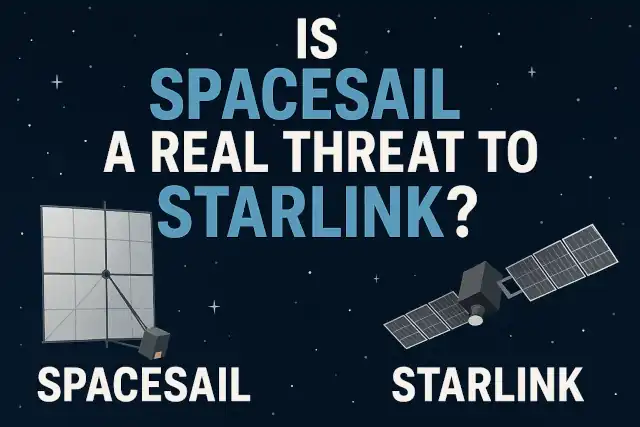
Starlink’s Worst Nightmare Is Launching from China’s SpaceSail: Is SpaceSail a Real Threat to Starlink?
February 2026
When Brazil’s telecommunications regulator Anatel officially authorized China’s SpaceSail to operate 324 low-Earth orbit (LEO) satellites in the country on February 12, 2026, it marked a turning point in the global satellite internet race.
For the first time in Latin America, Elon Musk’s Starlink has a licensed, government-backed competitor on its doorstep. But does SpaceSail truly pose a real threat — or is it more geopolitical symbolism than commercial rivalry?
The Challenger: Who Is SpaceSail?
SpaceSail, known in China as Qianfan (“Thousand Sails”), is a Shanghai-based satellite internet company backed by the Chinese government. It launched its first batch of 18 satellites in August 2024 and has been rapidly scaling its constellation ever since. The company’s long-term ambition is staggering: it aims to deploy more than 15,000 satellites in low-Earth orbit by 2030, forming a global internet network designed explicitly to rival Starlink’s infrastructure.
Brazil represents SpaceSail’s first foray into international markets — a strategic debut timed with Chinese President Xi Jinping’s state visit to Brasília in late 2024, during which SpaceSail signed a memorandum of understanding (MoU) with Telebras, Brazil’s state-owned telecommunications company. The partnership aims to deliver broadband services to schools, hospitals, rural communities, and Amazonian villages — regions where reliable internet has long been a distant promise.
Starlink’s Dominant Position
To understand the scale of the challenge ahead, consider what SpaceSail is up against. Starlink currently dominates 46 percent of Brazil’s satellite internet market, with approximately one million subscribers across the country — including farmers, indigenous communities, and businesses operating in areas beyond the reach of fiber optic cables or mobile networks. Globally, Starlink has launched more than 5,000 satellites since 2019 and plans a constellation of up to 42,000.
SpaceSail, by contrast, is starting from zero market share in Brazil and will not begin commercial operations until Q4 2026 at the earliest — and Anatel has given the company up to two years to actually launch services. The head start Starlink enjoys is not just measured in satellites, but in brand recognition, established distribution networks, and deep customer relationships.
Why Brazil Is Opening the Door
The timing and context of SpaceSail’s authorization is inseparable from Brazil’s fractured relationship with Elon Musk. In 2024, a Brazilian Supreme Court justice temporarily suspended X (formerly Twitter) throughout the country and froze Starlink’s bank accounts after Musk refused to comply with court orders to block certain accounts accused of spreading misinformation. Although the ban was eventually lifted after Musk paid outstanding fines and appointed a local legal representative, the episode left lasting unease.
Brazil’s Communications Minister Juscelino Filho publicly denied that the SpaceSail deal was retaliatory, stating that “Brazil is always with open arms to everyone who can offer quality services with fair prices.” He added pointedly: “Nothing in any industry is good when you only have one provider.” The government’s intent to reduce dependency on a single foreign operator — particularly one whose owner has clashed with Brazilian institutions — is unmistakable.
The move also fits within a broader trend of deepening Brazil-China technological cooperation. Chinese investments in Brazil have accelerated across multiple sectors, from BYD electric vehicles to smartphone manufacturing partnerships. SpaceSail’s authorization is the telecommunications chapter of that story.
Where the Real Competition Will Play Out
In the short term, SpaceSail is unlikely to seriously dent Starlink’s existing customer base. Starlink’s million-plus Brazilian subscribers are not about to switch providers overnight, and SpaceSail will first need to build out terrestrial gateway infrastructure — ground stations that link its satellites to Brazil’s fiber optic backbone — before it can serve a single customer. The company has begun technical feasibility studies for these installations, but they represent a significant logistical and financial undertaking.
The more meaningful battleground is among the tens of millions of Brazilians who remain entirely unconnected. Brazil has vast rural and remote regions — particularly in the Amazon basin — where neither fiber nor mobile networks are viable. This underserved population represents an enormous untapped market, and both SpaceSail and Starlink are essentially racing to be the first reliable option for these communities.
SpaceSail’s partnership with Telebras gives it a structural advantage in the public sector. Government contracts for connecting schools, hospitals, and public services could become the foundation of SpaceSail’s Brazilian business, even if Starlink continues to dominate the commercial and consumer segments.
The Price Factor
One area where SpaceSail could genuinely disrupt the market is pricing. Chinese technology companies have a well-documented history of deploying aggressive pricing strategies to gain market share in new territories. If SpaceSail enters the Brazilian market at significantly lower price points than Starlink — which currently charges substantial monthly fees for its hardware and service — it could pressure Starlink to reduce its own costs, ultimately benefiting all Brazilian consumers.
Brazil’s government, in fact, appears to be counting on this. Increased competition from SpaceSail is widely expected to drive down installation costs and monthly subscription fees across the satellite internet sector.
The Bigger Picture: A Global Satellite Space Race
SpaceSail’s Brazil entry is not an isolated move. It is part of China’s broader ambition to establish a global satellite internet infrastructure that can compete with — and in some markets, replace — Starlink. The geopolitical stakes are high: the United States has expressed concerns about China’s growing influence in Latin America, a region it has traditionally viewed as within its sphere of influence. Satellite internet, which has become critical communications infrastructure, is now a front in that larger contest.
Amazon is also preparing to enter the Brazilian satellite internet market with its Project Kuiper, though it remains in earlier regulatory stages. The satellite broadband landscape in Brazil — and globally — is moving from a Starlink monopoly toward a multi-player competition with significant geopolitical dimensions.
Verdict: A Slow Burn, Not an Immediate Threat
Is SpaceSail a real threat to Starlink in Brazil? In the immediate term, no. Starlink’s lead in infrastructure, subscribers, and brand recognition is too large to overcome quickly, and SpaceSail has yet to prove it can operate reliably at scale outside China.
But in the medium to long term, SpaceSail is a threat that Starlink cannot afford to dismiss. Backed by the Chinese government, partnered with Brazil’s state telecom, targeting the vast unconnected population, and positioned to undercut on price, SpaceSail has the ingredients to build a significant presence. Add to that the political winds in Brasília blowing against over-reliance on Musk’s empire, and SpaceSail may find a more receptive environment than any pure commercial analysis would suggest.
The satellite internet war in Brazil — and across Latin America — is just beginning. SpaceSail has fired its opening shot. Whether it can sustain the battle is the question that 2026 and beyond will answer.
Sources: Anatel regulatory filings, BNamericas, South China Morning Post, Fortune, Newsweek, Capacity Media, Benzinga, Olhar Digital