X Money Goes Live: The Super App Bet Is Real
X Money Goes Live: The Super App Bet Is Real
- 60% of MD5 Password Hashes Can Be Cracked in Under an Hour with a Single GPU
- Dirty Frag: Root Access on Every Major Linux Distribution — No Patch, No Warning
- Ubuntu 26.04 LTS (Resolute Raccoon): The Most Ambitious Ubuntu LTS in a Decade
- Proton Mail: Data Transferred to FBI Again!
- How Close Are Quantum Computers to Breaking RSA-2048?
- How to Prevent Ransomware Infection Risks?
- What is the best alternative to Microsoft Office?
X Money Goes Live:
The Super App
Bet Is Real
Elon Musk’s payments platform exits internal testing with a 6% APY, an all-black metal Visa debit card, and a Star Trek legend as its unlikely first ambassador.
After years of hints, regulatory groundwork, and internal testing, Elon Musk’s X Money has moved from ambition to product. In early March 2026, the first real screenshots of the platform began circulating — not through a polished press release, but via William Shatner, Captain Kirk of Star Trek fame, who became the unlikely face of one of the most closely watched fintech launches in recent memory.
The beta is limited, the full feature set is still being revealed, and skeptics abound. But for the first time, real users have real accounts, and Musk’s dream of a WeChat-style “everything app” for the West has a working prototype.
From X.com to X Money: A 27-Year Arc
The story begins in 1999, when a 27-year-old Musk founded X.com, an online bank with an audacious goal: a single platform for banking, payments, credit cards, investments, and loans. The company later merged with Confinity — co-founded by Peter Thiel, Max Levchin, and others — and was rebranded as PayPal before eBay acquired it for approximately $1.5 billion in 2002. Musk was ousted as CEO before the deal closed.
That vision of managing all personal finance through one app sat dormant for over two decades. When Musk acquired Twitter and rebranded it X in 2022, insiders noted the domain name was more than nostalgia. A financial layer was always part of the plan.
“This is intended to be the place where all the money is — the central source of all monetary transactions. It’s really going to be a game-changer.”
— Elon Musk, February 2026 (xAI all-hands meeting)
The Beta Launch: Timeline of Events
At an internal all-hands meeting at xAI, Musk publicly confirms X Money has completed closed internal testing and expects a limited external beta within one to two months, followed by a global rollout to all X users.
X’s head of product, Nikita Bier, announces that ticker-linked in-app stock and crypto trading will launch in the coming weeks, powered by execution partners rather than X acting as a broker itself.
William Shatner posts screenshots of the X Money beta UI on X, revealing account balance, deposit, transfer, receive, and rewards screens. Beta access is distributed via a charity auction: 42 invitations at $1,000 each, with proceeds going to Shatner’s Hollywood Charity Horse Show Organization. The number 42 is a nod to The Hitchhiker’s Guide to the Galaxy. Musk’s first X Money transfer — to Shatner himself — was exactly $42. Each auction winner also received a $25 X welcome gift card and $1 that originated from Musk’s test payment.
Musk posts “X Money” on his own profile and retweets a user’s post, adding: “This will be big.” A second round of 166 beta invitations is auctioned at the same $1,000 charity price point following strong demand.
Shatner shares additional screenshots, revealing three main tabs — Account, Rewards, and Activity — and three core action buttons: Deposit, Transfer, and Receive. The external beta now appears live and expanding.
What X Money Actually Offers (Beta)
Based on confirmed beta screenshots and official statements, here is what is currently live or disclosed:
6% APY on Deposits
Annual Percentage Yield — meaning interest is compounded and expressed as an annual rate. Screenshots show 6.00% APY when users set up direct deposit. For context: Apple Savings is near 3.65%, SoFi near 3.8%, and Robinhood Gold around 4%. Note: this rate is likely a beta-phase acquisition incentive and may not be sustained long-term.
Metal Visa Debit Card
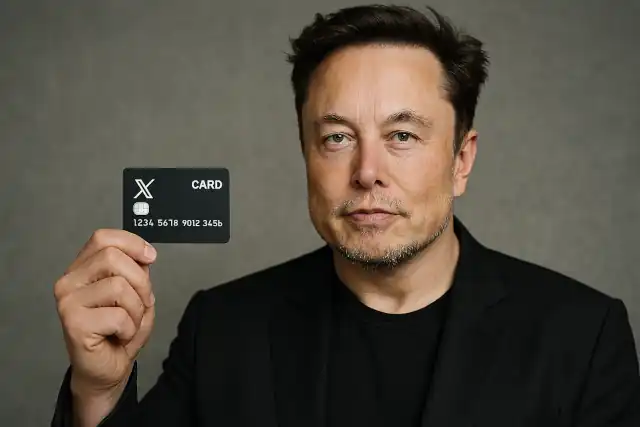
An all-black metal physical card, engraved with the user’s X handle. Issued via Visa. A virtual card version is also available. The minimalist design echoes Apple Card and Robinhood Gold aesthetics.
Cashback on Purchases
A “Cashback” label and dedicated Rewards tab appear in beta screenshots. Specific cashback rates have not yet been officially disclosed.
Zero Foreign Transaction Fees
No charges for purchases made in foreign currencies — a meaningful perk for frequent travelers and international shoppers.
FDIC Insurance up to $250,000
Deposits are custodied by Cross River Bank, a member of the FDIC. Each individual account is insured up to $250,000 — standard retail banking protection.
Peer-to-Peer Transfers
Instant transfers via Visa Direct, comparable to Venmo, Zelle, and Cash App. Users can also replace their bank’s routing number with X’s to receive direct payroll deposits.
To qualify for beta access, users must be US residents aged 18 or older with an active X account in good standing. No timeline has been announced for international access.
The Regulatory Foundation
X didn’t arrive here unprepared. Over the past few years, the company has secured money transmitter licenses in more than 40 US states and registered with the Financial Crimes Enforcement Network (FinCEN) — the regulatory infrastructure necessary to legally operate a payments platform at scale in the United States. The partnership with Cross River Bank provides FDIC-backed deposit insurance, and Visa handles card issuance and payment network access.
This regulatory groundwork is one reason the launch feels more credible than a typical tech-company fintech experiment. X has done the compliance work. The question is whether the product experience and business model can sustain what the beta is promising.
X Money vs. the Competition
| Platform | APY | Metal Card | FDIC Insured | Zero FX Fees | Crypto Support | Social Layer |
|---|---|---|---|---|---|---|
| X Money (Beta) | 6% (beta) | ✓ | ✓ | ✓ | ✗ (not yet) | ✓ 600M users |
| Apple Savings | ~3.65% | ✓ | ✓ | ✓ | ✗ | ✗ |
| Robinhood Gold | ~4.0% | ✓ | ✓ | ✗ | ✓ | ✗ |
| SoFi | ~3.8% | ✗ | ✓ | ✗ | ✓ | ✗ |
| PayPal / Venmo | ~4–5% | ✗ | ✓ | ✗ | ✓ | Limited |
What About Crypto?
Musk has repeatedly and publicly championed Dogecoin, and speculation about cryptocurrency integration in X Money has been rampant. The current beta, however, shows no sign of any crypto support. There are no disclosed timelines, no on-chain payment options in screenshots, and no confirmed plans for Dogecoin or any other digital asset integration at launch.
That said, X’s head of product has separately announced in-app stock and crypto trading capabilities — via execution partners — coming in the near term. Whether these will be integrated into the X Money wallet or remain a separate feature is unclear. X Money’s initial positioning is as a conventional US dollar-denominated neobank, not a crypto product.
The Bigger Picture: Super App Ambitions
Musk has been explicit: X Money is not a standalone product. It is the financial layer of a broader “everything app” strategy. Paired with X Chat (currently in beta as a WhatsApp alternative), in-app trading, and Grok AI integration, the vision is for users to communicate, consume news, trade assets, pay friends, and receive their salary — all within a single platform.
Visa CEO Ryan McInerney has publicly stated that the Visa partnership would enable the platform’s roughly 600 million monthly active users to fund their X Money accounts. That distribution advantage is enormous compared to challenger banks that must acquire customers one at a time.
APY sustainability: A 6% yield during beta is almost certainly a customer acquisition subsidy. Many fintech products launch with rates that are slashed once scale is achieved. The terms and conditions around the rate — balance caps, direct deposit requirements, promotional period limits — have not been fully disclosed.
US-only for now: The beta is restricted to US residents. International expansion timelines are undefined.
Trust, not just features: X has faced reputational headwinds since Musk’s 2022 acquisition. Whether mainstream users will entrust their payroll and savings to the platform is the deeper question that no feature list can answer.
APY definition note: APY stands for Annual Percentage Yield — a standard banking term reflecting the real rate of return accounting for compounding. It is not short for “Advanced Per Year.”
Bottom Line
X Money is no longer a roadmap slide. Real users have real accounts. The product has FDIC backing, a Visa partnership, and a regulatory foundation built over years. The 6% APY, all-black metal card, and zero foreign transaction fees are genuinely competitive — assuming the rates hold.
Whether X can build enough trust to become Americans’ primary financial account — the WeChat of the West — remains the open question. But after a 27-year arc from X.com to X Money, Musk has at minimum proven he’s still serious about the vision. The beta is just the beginning.