Apple’s self-developed baseband failed: iPhone 16 still uses high-priced Qualcomm products
Apple’s self-developed baseband failed: iPhone 16 still uses high-priced Qualcomm products
Apple’s self-developed baseband failed: iPhone 16 still uses high-priced Qualcomm products.
Previous market rumors pointed out that after Apple launches the iPhone 15 series in 2023, processor manufacturer Qualcomm will no longer be Apple’s exclusive supplier of 5G baseband chips, and will instead use self-developed 5G baseband chips.
However, there are now media reports that due to problems with Apple’s internal solutions, the launch of self-developed 5G baseband chips will be delayed.
Therefore, Qualcomm will provide 5G baseband chips for the iPhone 16 series, which is expected to be launched in 2024.
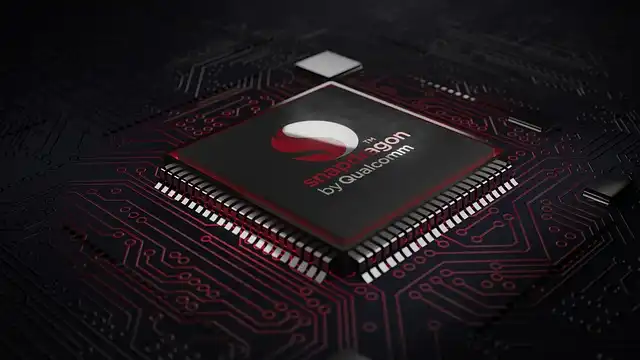
The report pointed out that Qualcomm may supply the Snapdragon X70 5G baseband chip to Apple when the iPhone 16 series is expected to be released in 2024.
Its energy efficiency will be improved over the existing Snapdragon X65 baseband chip, but its maximum download speed will remain at 10Gbps.
Foreign Barclays securities analysts Blayne Curtis and Tom O’Malley said that the continued problems with Apple’s self-developed 5G baseband chips are also the reason why the launch of the iPhone SE 4 has been delayed by at least two years.
According to previous statistics, if Qualcomm eventually becomes the exclusive supplier of a certain component, it will charge customers high usage fees.
Based on previous experience, for the Snapdragon 8 Gen 2 mobile processor, Qualcomm charges customers $160 per chip, which is more expensive than Apple’s A16 Bionic.
The Snapdragon 8 Plus Gen 1 isn’t cheap, either, with Qualcomm charging customers $130 for the spacer.
Therefore, after Qualcomm will become the exclusive 5G baseband chip supplier for the iPhone 16 series, it is not difficult to imagine how much each Qualcomm baseband chip will charge for usage.
The report emphasized that assuming Qualcomm charges Apple the same $160 as the Snapdragon X70, it will be uncompetitive to launch the iPhone SE 4 with it.
Because the cost of 5G baseband chips will erode all profits.
Unfortunately, although Apple started the development of self-developed baseband chips in 2020, Apple has not had any interesting results in this regard in the past three years.
It is reported that Apple will complete the research and development of the first batch of self-developed 5G baseband chips in 2025.
Therefore, the market is looking forward to seeing the performance of these chips.
Apple’s self-developed baseband failed: iPhone 16 still uses high-priced Qualcomm products