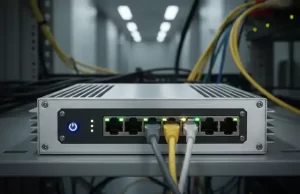
40% of the world’s servers with ARM processors are in China
40% of the world’s servers with ARM processors are in China
40% of the world’s servers with ARM processors are in China.
In recent years, the two major architectures of ARM and RISC-V have strengthened the challenge to x86, but each has its own advantages and disadvantages. T
he advantage of the ARM architecture is that it is widely used, the ecology is mature, and development and adaptation are more convenient.
The advantage of the RISC-V architecture is that it is completely free, open source, and can be grasped independently, but it is still in its infancy.

According to a research report by investment bank Bernstein, it is estimated that 10% of the world’s servers have already used the ARM architecture, and among the ARM servers, as many as 40% are located in China.
However, the proportion of ARM servers in China fluctuates.
It approached 50% in the second quarter of 2022, and then declined.
It may be that the Chinese market has concerns about ARM licensing restrictions, and the future road may become narrower and narrower.

At present, major Chinese chip manufacturers using the ARM architecture include Huawei, Phytium, and Alibaba.
Among them, Huawei and Phytium have been pulled into the “blacklist” by the United States.
Not only will they lose the future authorization of the ARM architecture, but they will also not be able to use TSMC’s advanced technology.
Although Ali Pingtou has no restrictions on the manufacturing process, it cannot obtain the authorization of the ARM Neoverse V series high-performance architecture, so he is more focused on the development of RISC-V.

In the international market, there are more ARM server chip manufacturers, including AWS (Amazon), Ampere, Fujitsu, Google, Microsoft, NVIDIA, SiPearl , Socionext and so on.