Huawei’s HarmonyOS Drops Support for Android Apps
Huawei’s HarmonyOS Drops Support for Android Apps
Huawei’s HarmonyOS Drops Support for Android Apps.
Aligned with the national push for self-sufficiency in hardware, this shift indicates that Huawei aims for greater control over its ecosystem, with the potential to reshape the gaming industry landscape.
Reported by GameLook / Four years ago in 2019, three months after the announcement of the first round of US sanctions and ten days before the disclosure of the second round of sanctions, Huawei unveiled its own operating system, HarmonyOS, at the HDC 2019 conference.
In a subsequent media interview, Huawei’s founder Ren Zhengfei gave a dose of caution to the enthusiastic crowd: “The most crucial aspect of an operating system is building an ecosystem. It takes about two to three years to rebuild a good ecosystem.”
Therefore, despite planning since 2012, the fledgling HarmonyOS still took the most prudent route by remaining compatible with Android APKs. This approach meant that many users didn’t feel much difference with HarmonyOS – if they knew how to use Android before, they could use a Huawei phone with HarmonyOS just the same.
Four years later, Huawei has finally played its hand.
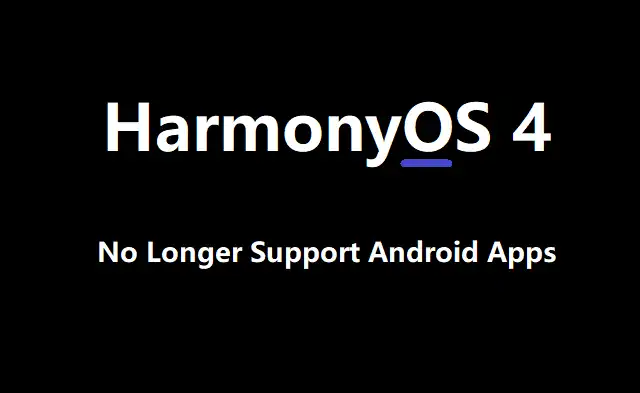
At the recent 2023 Huawei Developer Conference (HDC.Together), in addition to introducing HarmonyOS 4 and developer kits, Huawei presented the HarmonyOS NEXT developer preview version and the most significant announcement: starting from Q1 2024, HarmonyOS NEXT, open to all developers, will no longer support Android.
Huawei’s President of Terminal Cloud Services, Zhu Yonggang, predicted that the upgraded user base for the HarmonyOS NEXT developer preview version, which won’t support Android apps for the next year, will surpass 100 million.
According to GameLook’s analysis, while these initial 100 million users might not all be smartphone users, Huawei has officially embarked on an independent HarmonyOS ecosystem development path, separate from the compatibility with Android apps offered by HarmonyOS 4.0.
This move is both a risky gamble and a necessary first step for HarmonyOS.
With no support for Android apps, what’s Huawei’s strategy for HarmonyOS?
Unlike previous versions, HarmonyOS NEXT’s foundation is fully self-developed, without AOSP code.
As a result, it can only support HAP format applications, and attempting to install Android APKs will prompt an “Unable to open this file” message.
This means that after HarmonyOS NEXT is rolled out next year, if Huawei smartphone users choose to upgrade to HarmonyOS NEXT instead of HarmonyOS 4.0, their phones won’t be able to install Android apps, including games.
How risky is this step that Huawei has taken?
According to statistics from PConline, as of August 1, 2023, Huawei’s app store’s “HarmonyOS Zone” only has 91 apps, among which there are only 66 pure HarmonyOS apps.
Apps like WeChat, Alipay, TikTok, and Kwai are missing. It’s reported that by 2025, HarmonyOS NEXT’s minimum goal is to adapt to the top 100 apps, and by 2027, adapt to the top 500 apps, aligning with the new Kirin flagship platform’s market push.
Addressing the shortcomings of the app ecosystem, Huawei launched the “Hongfei Plan,” with plans to invest billions over the next three years to provide technical and financial support to developers and ecosystem partners.
Among the top apps, games – popular among regular users – have become the focus of Huawei’s efforts.
Therefore, at this year’s HDC Gaming Service Forum, a significant scene unfolded: more than 20 gaming companies including NetEase, Joyy, 37 Interactive, Alibaba, Perfect World, Cocos, Hero Entertainment, and Zongheng attended the HarmonyOS ecosystem collaboration launch ceremony.
Huawei gave them a resounding descriptor: “Game Pioneers.” Afterward, many gaming companies issued press releases expressing their support for Huawei’s HarmonyOS.
In GameLook’s view, the gaming industry has become the most crucial single sector for the “HarmonyOS without Android app support” to succeed on smartphones.
Many apps and APPs don’t share their in-app purchases and consumer spending revenue with Huawei users, but games both generate revenue for Huawei and build genuine trust from users in HarmonyOS.
It’s worth noting that while many internet giants, who are “wealthier and more powerful” than gaming companies, haven’t shown a clear stance towards HarmonyOS, Chinese gaming companies have almost universally supported it.
This response has exceeded public expectations, and GameLook truly wants to give a thumbs-up to the gaming industry here. In the most critical moments, the gaming industry never backs down and fully supports Chinese companies.
However, from an objective standpoint, gaming companies are also practical. This support stems from Huawei’s determination to showcase HarmonyOS’s ecosystem development, as well as Huawei’s massive user base in the domestic smartphone market.
According to QuestMobile’s “2023 Intelligent Terminal Semi-Annual Report,” as of June 2023, Huawei holds the highest share in the intelligent terminal brand market, at 22.9%.
If combined with Honor not having separated from Huawei, the two could even surpass the combined share of OPPO and Vivo.
And according to Huawei’s own data, the number of devices in the HarmonyOS ecosystem has exceeded 700 million, with over 2.2 million developers onboard.
Considering that the current “8-2 pattern” between iOS and Android remains, and Huawei is the only smartphone manufacturer that can compete with Apple in the market for devices priced above 5000 yuan, owning a group of high-value users, it’s possible that in the future, with the implementation of HarmonyOS NEXT, China could witness a “true tripartite division” between Apple, Android, and HarmonyOS.

Where do HarmonyOS games come from? Cocos is ready, Unity special edition is on the way.
Since HarmonyOS is set to become an influential force in the world of mobile operating systems, developing games for it has naturally become a priority.
According to the plan, HarmonyOS NEXT developer preview will open to partner companies in August, and in the first quarter of 2024, it will be available to all developers.
Whether users choose HarmonyOS 4.0 that supports Android apps or HarmonyOS NEXT that doesn’t, depends on the number of apps and games adapted to HarmonyOS, as well as Huawei’s investment and determination.
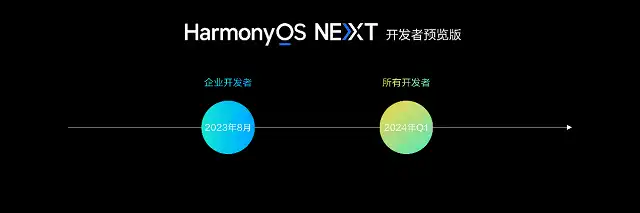
Assuming HarmonyOS NEXT is implemented by Q1 next year, the first batch of game developers should already be working on games adapted for the HarmonyOS system.
In theory, game developers have a window of over six months for this. Looking at HarmonyOS’s past upgrade path, updates follow an order from newer to older models.
Considering the vast number of older devices, the preparation time for game developers is indeed tight.
Noteworthy among the 20+ game developers collaborating with the HarmonyOS gaming forefront is Cocos, a development engine, apart from research and distribution roles.
As early as May 2021, Cocos began cooperating with Huawei on engine-level development, making it the world’s first game engine to support HarmonyOS, enabling one-click export of HarmonyOS applications.
Another commonly used game engine, Unity, also revealed at this year’s HDC that it would soon release a version supporting the HarmonyOS ecosystem.
It will support developers in one-click exporting of game packages compatible with the open-source version of HarmonyOS.
Meanwhile, NetEase showcased the first Unity China engine game adapted for the open-source HarmonyOS ecosystem, “Ghost” mobile game, at HDC.
JoyPac shared the entire adaptation process to HarmonyOS for their game “Happy Elements,” which took about half a year.
Of course, there’s a lot for game companies to consider, including adapting to HarmonyOS, performance optimization, anti-addiction measures, compatibility issues with various middleware and SDK components.
Taking Unity engine as an example, it depends on whether game companies have modified the Unity engine’s source code.
For instance, Tencent’s “Honor of Kings” and miHoYo’s “Genshin Impact” both collaboratively modified Unity’s source code to achieve functionalities that are usually difficult to implement.
How these technically advanced major companies handle HarmonyOS adaptation remains to be seen.
In other words, with engine and Huawei ecosystem support, game developers launching specialized versions of HarmonyOS games need not overly worry, but it certainly won’t be a walk in the park; some level of preparedness is required.
Where is the HarmonyOS ecosystem headed? Open or closed?
While Huawei still maintains HarmonyOS 4.0 that supports Android apps, and possibly even future versions like 5.0, continuing the dual-path model for some time, there might come a day when HarmonyOS completely drops support for Android apps.
This depends on how many smartphone users upgrade to HarmonyOS NEXT starting next year, and the speed at which app and game companies adapt to HarmonyOS.
Additionally, another focal point enters the scene: will HarmonyOS choose openness or closure?
Android’s openness and iOS’s closure have led mobile operating systems down two distinct paths.
Open ecosystems can rapidly expand and gain market share, while closed ecosystems offer more control, safety, and potentially higher profits for smartphone manufacturers.
If not for the fact that Android’s openness is required by Google, many Chinese smartphone manufacturers would likely prefer a closed ecosystem, similar to Apple’s approach.
The 50-50 split in the domestic smartphone distribution market is, in part, attributed to Android’s openness, which has allowed many game companies to bypass the smartphone manufacturers’ app stores through user acquisition.
A closed ecosystem would affect the acquisition of game products. If, like Apple devices, non-store downloads and installations are not supported, all app and game companies would have to collaborate with Huawei, or else they won’t be able to access Huawei’s user base. This would be a significant move.
In fact, Huawei is not the first domestic operating system trying to challenge Android’s dominance.
As early as 2011, Alibaba launched YunOS, which attracted collaboration with Acer.
However, before the planned release, the event was suddenly canceled, causing a stir in the tech industry.
Google later admitted pressuring Acer, threatening to revoke its Android authorization and cooperation if it used Yun OS.
It’s evident that completely breaking away from Android comes with challenges, but Huawei holds the foundational technology for HarmonyOS.
It’s not just Chinese manufacturers; overseas manufacturers have also attempted to launch their own operating systems based on Linux, such as Samsung’s BADA introduced in 2009. However, BADA met a similar fate, and subsequent Tizen systems also couldn’t compete with iOS and Android for market share, ultimately fading into history.
But today is different. The scale of the HarmonyOS ecosystem is much larger than before.
In Gamelook’s view, whether HarmonyOS continues to be open or chooses closure is possible.
If one day HarmonyOS chooses a closed ecosystem like Apple’s, the possibility of Huawei shifting its profit-sharing ratio with game products from 50-50 to 30-70 would be higher.