Are Battery-Powered Vehicles Killing the Spare Tire?
Are Battery-Powered Vehicles Killing the Spare Tire?
Are Battery-Powered Vehicles Killing the Spare Tire as a Standard Car Equipment?
According to the Los Angeles Times, “the vast majority of battery-powered and hybrid cars” do not come with a spare tire.
Honda informed a complaining customer that “having a spare tire could potentially damage the electric battery in the event of an accident, leading to battery failure.”
However, as reported by The Times, “automotive design experts say this explanation is dubious and a stretch.”
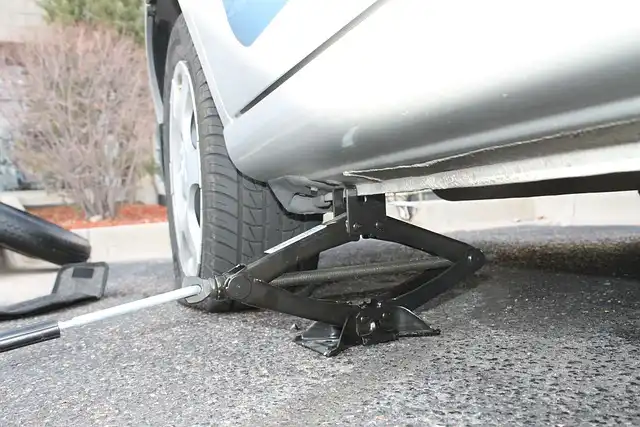
There’s a simpler explanation for ditching spare tires: they are too big and heavy, and people no longer truly need them.
Car manufacturers have been phasing out full-size spare tires in sedans and small SUVs for a while now.
In 2018, Consumer Reports noted that among the vehicles it had tested in the past five years, 60% came with compact spare tires (the “doughnut”), while only 10% had full-size spare tires.
Even some of the best-selling electric cars and SUV models like Tesla, Chevrolet Bolt, Volkswagen ID.4, Ford Mustang Mach-E, Hyundai Ioniq 5, BMW i4, and Mercedes EQS do not include spare tires, despite their high price tags.
Hybrid cars follow suit; for instance, the Toyota Prius hasn’t had a spare tire since 2016.
This isn’t because people magically stopped getting flat tires.
According to LookupAPlate.com, U.S. drivers endure the agony of 94 million flat tires each year, as the website collects reports about unruly drivers.
Designers say that finding space for a spare tire is especially challenging for vehicles powered by anything other than gasoline.
Geoff Wardle, the Executive Director of Transportation Systems and Design at ArtCenter College of Design, says, “Electric cars need to allocate the traditional space under the trunk floor for batteries, electrical control units, or hydrogen tanks to improve range. Scott Grasman, Dean of the College of Engineering at Kettering University in Flint, Michigan, notes that space constraints are even more pronounced in hybrid cars, which need room for both battery systems and internal combustion engines.”
The article points out that added weight always poses challenges to meeting fuel efficiency requirements, but spare tires also increase manufacturing costs. “The tires for electric cars may be more expensive than those for gasoline cars of the same size. This is because electric cars are often heavier than gasoline cars and require more robust tires. And since their engines are relatively quiet, they don’t need tires that generate as much road noise.”
However, Gil Tal, Director of the Plug-in Hybrid & Electric Vehicle Research Center at the University of California, Davis, also told The Times that today’s tires are much better and more durable than those in the past:
He says that because federal regulations require new cars to have tire pressure monitoring systems, drivers are promptly alerted if their tires need inflation. He says, “In most cases, a flat tire… is the result of driving for an extended period with low pressure. If you’re driving a modern car, it will tell you long before you have a catastrophic failure like a blowout.”
So, what are car manufacturers doing now? The article mentions that some manufacturers are opting for inflatable spares that take up only a third of the space.
Some cars come equipped from the factory with a tire puncture repair kit because many people don’t know how to change a tire and might just call for a tow.
For these drivers, car makers can rest assured that a can of “Fix-a-Flat” will be more useful…(other companies like Tesla and General Motors also offer roadside assistance programs).
Some automakers are also using self-sealing or run-flat tires, but as Wardle told The Times, these tires are “good if you pick up a nail, but if you hit a pothole and the rim and sidewall are damaged, they’re no use.”