Apple Unveils M5 Chip: 15% CPU Boost and 30% Graphics Performance Leap
Apple Unveils M5 Chip: 15% CPU Boost and 30% Graphics Performance Leap
- Why Enterprise RAID Rebuilding Succeeds Where Consumer Arrays Fail?
- Linus Torvalds Rejects MMC Subsystem Updates for Linux 7.0: “Complete Garbage”
- The Man Who Maintained Sudo for 30 Years Now Struggles to Fund the Work That Powers Millions of Servers
- How Close Are Quantum Computers to Breaking RSA-2048?
- Why Windows 10 Users Are Flocking to Zorin OS 18 Instead of Linux Mint?
- How to Prevent Ransomware Infection Risks?
- What is the best alternative to Microsoft Office?
Apple Unveils M5 Chip: 15% CPU Boost and 30% Graphics Performance Leap
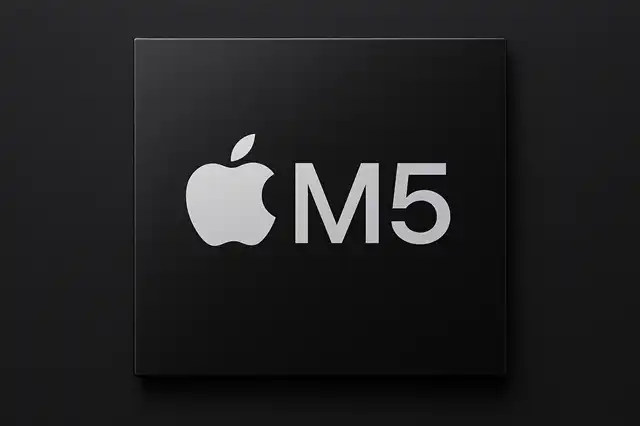
Cupertino, CA — Apple has officially announced its highly anticipated M5 processor, marking another significant advancement in the company’s custom silicon lineup.
Built on TSMC’s cutting-edge N3P manufacturing process, the new chip delivers substantial performance improvements across computing, graphics, and artificial intelligence capabilities.
Core Architecture and Performance
The M5 maintains a 10-core CPU configuration similar to its predecessor, but with a refined arrangement of 6 performance cores and 4 efficiency cores. Despite the unchanged core count, Apple reports an impressive 15% improvement in multi-threaded CPU performance compared to the M4 chip.
On the graphics front, the M5’s 10-core GPU represents a more dramatic leap forward, delivering 30% better graphics performance than the M4. What sets this generation apart is the integration of a neural accelerator within each GPU core, enabling the chip to achieve four times the overall AI computational power of its predecessor.
Enhanced Memory and Ray Tracing
Memory bandwidth has received a substantial upgrade, jumping from 120GB/s in the M4 to 153GB/s in the M5—a 30% increase that should benefit memory-intensive applications and multitasking workflows. The chip also introduces hardware-accelerated ray tracing support, which Apple claims can boost performance in compatible applications by up to 45%.
AI and Neural Engine Capabilities
The M5 retains a 16-core Neural Processing Unit (NPU) that works in concert with the neural accelerators embedded in both the CPU and GPU cores. This integrated approach optimizes the entire chip for AI-related workloads while maintaining power efficiency.
Apple highlighted practical applications for Vision Pro users, noting that tasks like converting 2D photos into spatial scenes in the Photos app or generating Personas will execute more rapidly and efficiently thanks to the M5’s enhanced AI capabilities.
What’s Next: Pro and Max Variants
Notably absent from this announcement were the M5 Pro and M5 Max variants that typically accompany Apple’s chip launches. However, code discovered in macOS Tahoe suggests these high-end chips are in development and will arrive at a later date.
Industry speculation points to a potential design revolution for these premium chips. Reports suggest Apple may be adopting a modular architecture that separates CPU and GPU components, potentially allowing for more customizable configurations tailored to specific workloads—a departure from the company’s traditional monolithic chip design.
Market Implications
The M5’s release continues Apple’s aggressive push in the custom silicon space, maintaining competitive pressure on traditional chip manufacturers. The emphasis on AI acceleration and ray tracing performance suggests Apple is positioning its hardware for next-generation applications in augmented reality, professional creative work, and machine learning.
As the tech industry awaits the arrival of the M5 Pro and Max chips, the standard M5 already sets a high bar for performance and efficiency in the premium computing segment. Whether the rumored modular design materializes could signal a significant shift in how Apple approaches its professional-grade hardware offerings.