BYD’s Blade Battery 2.0 Can Charge to 97% in Nine Minutes
BYD’s Blade Battery 2.0 Can Charge to 97% in Nine Minutes
- Why Enterprise RAID Rebuilding Succeeds Where Consumer Arrays Fail?
- Linus Torvalds Rejects MMC Subsystem Updates for Linux 7.0: “Complete Garbage”
- The Man Who Maintained Sudo for 30 Years Now Struggles to Fund the Work That Powers Millions of Servers
- How Close Are Quantum Computers to Breaking RSA-2048?
- Why Windows 10 Users Are Flocking to Zorin OS 18 Instead of Linux Mint?
- How to Prevent Ransomware Infection Risks?
- What is the best alternative to Microsoft Office?
BYD’s Blade Battery 2.0 Can Charge to 97% in Nine Minutes — Rewriting the Rules of EV Refuelling
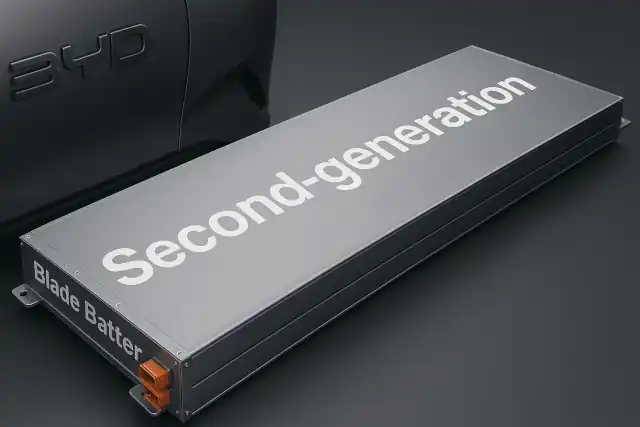
At a marquee Shenzhen event, the world’s largest EV maker unveiled second-generation Blade Battery technology paired with 1,500 kW Flash Chargers and committed to 20,000 charging stations by year-end.
charge time
charge time
peak output
CLTC range
production models
BYD held its long-anticipated “Disruptive Technology” event in Shenzhen on the evening of Thursday, March 5, 2026, unveiling a second-generation Blade Battery — branded internally as Blade Battery 2.0 — that promises to push EV recharging times closer to the few minutes required to refuel a petrol car. Paired with a new generation of 1,500-kilowatt Flash Charging stations, the technology represents one of the most significant advances in battery charging capability announced by any automaker to date.
The announcement arrives at a sensitive commercial moment. BYD’s February 2026 domestic sales plunged 41 percent year-on-year — its steepest monthly decline since the Covid-19 pandemic — as price competition in China’s electric vehicle market intensified sharply. The company is betting that genuinely transformative charging performance can differentiate its lineup and restore sales momentum.
“Flash charging in China changes the world.”
— BYD banner at the March 5, 2026 Shenzhen eventCharging Performance: The Verified Numbers
According to BYD’s official specifications, confirmed by multiple independent technology reporters present at the event, the Blade Battery 2.0 achieves the following charging rates when paired with BYD’s new 1,500 kW Flash Charger:
- 10% → 70%: approximately 5 minutes
- 10% → 97%: approximately 9 minutes
- 20% → 97% at −20°C (−4°F): approximately 12 minutes
- 20% → 97% at −30°C (−22°F): approximately 12 minutes
BYD CEO Wang Chuanfu explained during the event that the target of 97% — rather than 100% — is deliberate: the remaining 3% is reserved for regenerative braking efficiency. He also noted that with standard (non-Flash) public charging piles, the new battery still charges 30 to 50 percent faster than conventional EV batteries, broadening real-world benefits beyond those with access to BYD’s proprietary infrastructure.
In a widely circulated Weibo demonstration video, a Denza Z9GT and a Yangwang U7 were each plugged in at 9 percent state of charge. After 9 minutes and 51 seconds on a 1,500 kW Flash Charger, both vehicles reached 97%, with the gauge cluster displaying over 1,000 kilometres of projected range — a figure calibrated to China’s CLTC test cycle, which tends to be more optimistic than the EPA standard used in the United States.
Cold-Weather Performance: A Genuine Breakthrough
The cold-temperature charging figures are arguably the most significant achievement. Traditional lithium-iron-phosphate (LFP) batteries — the chemistry BYD uses in its Blade cells — are known to slow considerably in sub-zero temperatures. The Blade Battery 2.0’s ability to complete a 20%-to-97% charge in just 12 minutes at −30°C, only three minutes longer than at room temperature, represents a meaningful leap over conventional battery thermal management.
BYD attributed this performance to upgrades in the battery’s thermal management system alongside the high-voltage platform architecture underlying the new cell design. Energy density is reported to have increased to the 190–210 Wh/kg range, compared with roughly 150 Wh/kg in first-generation Blade cells, enabling longer range without a proportional weight increase. The company is also backing the new cells with a lifetime warranty on battery capacity.
First-Batch Production Models
BYD confirmed that ten production models across its BYD, Yangwang, Denza, and Fang Cheng Bao sub-brands will be the first to carry Blade Battery 2.0 and the Flash Charging platform. The full list confirmed at the event is as follows:
| Model | Brand | Segment | Notable Spec |
|---|---|---|---|
| Yangwang U7 | Yangwang | Full-size luxury sedan | 150 kWh · 1,006 km CLTC |
| Yangwang U8 (2026) | Yangwang | Ultra-luxury SUV | Updated platform |
| Yangwang U8L (2026) | Yangwang | Extended ultra-luxury SUV | — |
| Denza Z9 | Denza | Premium sedan | — |
| Denza Z9GT | Denza | Luxury electric wagon | 1,036 km CLTC range |
| Fang Cheng Bao Ti3 | Fang Cheng Bao | Compact SUV / affordable tier | Lower price point |
| Fang Cheng Bao Ti7 EV | Fang Cheng Bao | Midsize SUV | New EV version |
| BYD Seal 07 | BYD (Ocean) | Midsize sedan | Volume driver |
| BYD Sealion 06 | BYD (Ocean) | Compact crossover | Volume driver |
| BYD Song Ultra | BYD (Dynasty) | Midsize SUV | From ~¥160,000 |
Additional models revealed at the same event include a new Tang (Datang) flagship SUV from BYD’s Dynasty series and a Seal 08, though full specifications for those vehicles were not immediately published.
The nine-minute charge time is only achievable when using BYD’s new 1,500 kW Flash Chargers. These stations are not yet widely available. Charging on standard public infrastructure — even fast chargers — will yield significantly slower results, though still 30–50% faster than comparable conventional EVs on the same equipment.
Additionally, BYD’s range figures (1,000+ km) are stated on China’s CLTC test cycle, which typically overstates real-world range by approximately 35% versus the EPA standard. Drivers outside China should expect figures closer to 620–650 miles (EPA-equivalent) for the most range-capable models.
The Flash Charging Network: 20,000 Stations by Year-End
BYD’s new 1,500 kW Flash Chargers feature a distinctive T-shaped design with overhead sliding-rail cables, allowing a single charger to serve vehicles on either side. Each gun operates at up to 1,000 volts and 1,500 amperes, with a dual-gun configuration potentially delivering over 2,000 kW of combined station output. The stations incorporate integrated energy-storage batteries to buffer demand spikes and avoid placing undue strain on the grid — a concern Wang Chuanfu addressed directly during the event.
BYD’s network rollout strategy is equally ambitious. Rather than building entirely new sites, the company plans to embed Flash Chargers within existing public fast-charging stations — a “station within a station” model that Wang says can be installed about as quickly as an air conditioner unit. As of March 5, BYD had already completed more than 4,200 Flash Charging stations across China, with a stated goal of reaching 20,000 by end of 2026, including 2,000 dedicated highway stations covering roughly one-third of service areas and ensuring coverage every 100 kilometres. Idle fees — charged to vehicles that overstay their charge — will be implemented to keep stalls available.
Context: Why This Matters Now
BYD’s second-generation Blade Battery comes as the broader Chinese EV market faces intensifying competition and narrowing margins. Deutsche Bank forecasts a 6 percent year-on-year sales rebound for BYD in 2026, identifying the new battery and megawatt charging as the primary catalysts. For international markets, where EV adoption has been constrained partly by charging anxiety and slower infrastructure rollouts, technology of this calibre — if it reaches export models — could have substantial implications.
For perspective: most current EVs sold in the United States and Europe require 20 to 40 minutes for a comparable charge on a DC fast charger. Nine minutes to 97% effectively closes the convenience gap with petrol refuelling for most drivers. Whether BYD can replicate the infrastructure density outside China — where its Flash Charger network is expanding rapidly — will determine how broadly that promise is realised.