Can a 5V/2A iPhone Charger Cause Fatal Electrocution?
Can a 5V/2A iPhone Charger Cause Fatal Electrocution?
- Why Enterprise RAID Rebuilding Succeeds Where Consumer Arrays Fail?
- Linus Torvalds Rejects MMC Subsystem Updates for Linux 7.0: “Complete Garbage”
- The Man Who Maintained Sudo for 30 Years Now Struggles to Fund the Work That Powers Millions of Servers
- How Close Are Quantum Computers to Breaking RSA-2048?
- Why Windows 10 Users Are Flocking to Zorin OS 18 Instead of Linux Mint?
- How to Prevent Ransomware Infection Risks?
- What is the best alternative to Microsoft Office?
Can a 5V/2A iPhone Charger Cause Fatal Electrocution?
The tragic death of 46-year-old Ann-Marie O’Gorman in Ireland has raised urgent questions about the lethal potential of seemingly innocuous smartphone chargers.
On October 30, 2024, O’Gorman died from electrocution while using her charging iPhone in the bathtub—a stark reminder that even low-voltage devices can be deadly under certain conditions.
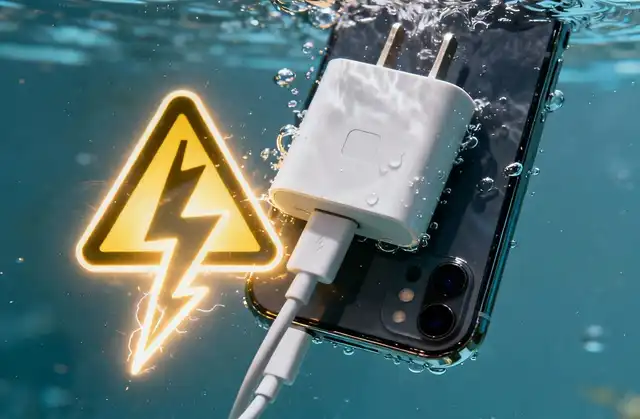
Understanding the Physics of Electrocution
At first glance, a standard iPhone charger outputting 5 volts at 2 amperes appears harmless compared to household electrical systems. However, the critical factor in electrocution isn’t voltage alone—it’s the current that flows through the human body and the path it takes.
Medical research has established that as little as 0.1 amperes (100 milliamperes) passing through the heart can cause ventricular fibrillation, a fatal cardiac arrhythmia. A 2-ampere charger, as forensic consultant Paul Collins noted in the O’Gorman case, provides “more than enough current to be lethal”—potentially 20 times the fatal threshold.
Why Water Changes Everything
The human body normally has relatively high electrical resistance, particularly through dry skin. However, water dramatically alters this safety margin. When submerged in bathwater, the body’s resistance drops significantly, allowing current to flow much more easily. Additionally, water containing dissolved minerals and salts becomes an excellent conductor, creating a direct pathway for electricity.
In O’Gorman’s case, forensic analysis suggested that when she reached for her phone that had fallen into the water, her arm made contact with the metal shower faucet. This created a complete circuit: electricity flowed from the charging device through the water, through her body, through the grounded metal fixture, and back to ground—with devastating consequences.
The Critical Role of Grounding
The coroner’s report revealed an important technical detail: the circuit breaker (trip switch) did not activate during the incident. This highlights a crucial vulnerability. Ground Fault Circuit Interrupters (GFCIs) are designed to detect current imbalances and shut off power within milliseconds, but they may not always trigger in bathtub scenarios, particularly if the current follows an unexpected path or if bathroom electrical systems lack proper GFCI protection.
In many regions, building codes now mandate GFCI outlets in bathrooms, but older homes may not have this protection. Even where GFCIs exist, they cannot eliminate risk entirely—electrocution can occur faster than these devices can respond.
The Manufacturer Responsibility Debate
O’Gorman’s husband raised an important point in court: while Apple prominently advertises the iPhone’s water resistance for accidental splashes and submersion, the company provides insufficient warnings about the lethal danger of using charging devices near water. The phone’s IP68 water resistance rating applies only to the device itself when unplugged—not when connected to mains electricity through a charger.
Current iPhone packaging and user manuals do contain safety warnings, but critics argue these cautions are buried in fine print rather than displayed as prominent, graphic warnings similar to those on cigarette packages or hazardous chemicals.
Preventing Future Tragedies
The coroner ruled O’Gorman’s death an “accidental death due to risk factors associated with using a mobile phone in the bathtub.” However, calling this death “accidental” obscures the fact that it was entirely preventable. Several measures could reduce similar risks:
-
Never use charging devices near water. This should be an absolute rule—not while bathing, near swimming pools, or in any wet environment.
-
Install GFCI protection in all bathroom outlets and ensure existing protection is regularly tested.
-
Manufacturers should provide prominent warnings on product packaging using clear, visual warnings about electrocution risks.
-
Public awareness campaigns should educate people that water-resistant phones are not safe to use while charging in wet environments.
-
Consider battery-only use in bathrooms. If you must use your phone near water, disconnect it from all charging cables first.
The Bottom Line
The answer to whether a 5V/2A iPhone charger can cause death is unequivocally yes—when combined with water and the human body, these seemingly modest electrical specifications become lethal. The O’Gorman case demonstrates that we have become dangerously complacent about electrical safety in the smartphone age.
Her husband’s plea for better warnings deserves serious consideration. As one forensic expert noted, had O’Gorman been able to withdraw her hand from the water immediately, she might have survived. But electrocution causes involuntary muscle contractions that can prevent victims from releasing themselves from the electrical source—a phenomenon known as “can’t let go.”
This “terrible tragedy,” as the coroner described it, should serve as a wake-up call. The convenience of staying connected should never come at the cost of our lives. The simple act of leaving our phones outside the bathroom while bathing could prevent future deaths—a small inconvenience that could save lives.