Can Huawei’s Kirin 9030 Pro Compete with Qualcomm’s Latest Flagship Processor?
Can Huawei’s Kirin 9030 Pro Compete with Qualcomm’s Latest Flagship Processor?
- Why Enterprise RAID Rebuilding Succeeds Where Consumer Arrays Fail?
- Linus Torvalds Rejects MMC Subsystem Updates for Linux 7.0: “Complete Garbage”
- The Man Who Maintained Sudo for 30 Years Now Struggles to Fund the Work That Powers Millions of Servers
- How Close Are Quantum Computers to Breaking RSA-2048?
- Why Windows 10 Users Are Flocking to Zorin OS 18 Instead of Linux Mint?
- How to Prevent Ransomware Infection Risks?
- What is the best alternative to Microsoft Office?
Can Huawei’s Kirin 9030 Pro Compete with Qualcomm’s Latest Flagship Processor?
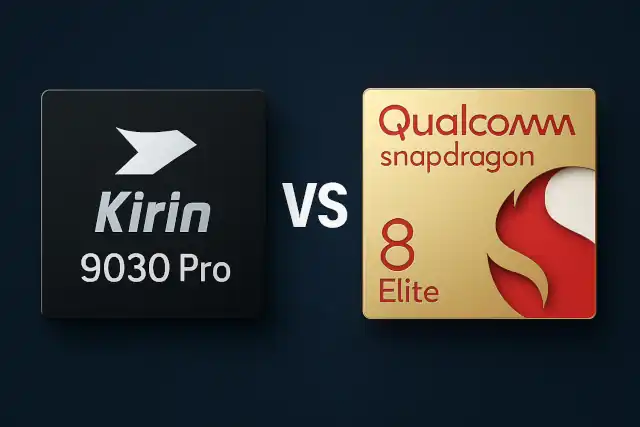
Kirin 9030 Pro vs Snapdragon 8 Elite Gen 5: A Technical Comparison
Introduction
The smartphone processor landscape has become increasingly competitive, with Huawei’s latest Kirin 9030 Pro and Qualcomm’s Snapdragon 8 Elite Gen 5 representing two dramatically different approaches to mobile computing.
While both chips power flagship devices in late 2025, they exist in fundamentally different technical ecosystems, reflecting the broader technological divergence in the global semiconductor industry.
Quick Comparison Table
| Specification | Kirin 9030 Pro | Snapdragon 8 Elite Gen 5 |
|---|---|---|
| Manufacturing Process | SMIC N+3 (5nm-class) | TSMC N3P (3nm) |
| CPU Configuration | 9-core, 14-thread | 8-core (2+6) |
| Prime Core Clock | 2.75 GHz (1 core) | 4.6 GHz (2 cores) |
| Performance Cores | 2.27 GHz (4 cores) | 3.62 GHz (6 cores) |
| Efficiency Cores | 1.72 GHz (4 cores) | N/A |
| Geekbench 6 Single-Core | ~1,131 | ~3,831 |
| Geekbench 6 Multi-Core | ~4,277 | ~11,515 |
| GPU | Maleoon 935 | Adreno 840 |
| 3DMark Wild Life Extreme | Not available | ~7,640 |
| Ray Tracing (Solar Bay) | Not available | ~13,397 |
| NPU Performance | Not disclosed | ~100 TOPS |
| AI Performance Boost | Not disclosed | 37% vs previous gen |
| Memory Support | LPDDR5X | LPDDR5X |
| 5G Modem | Integrated | Snapdragon X80 5G |
| Ray Tracing Support | Unknown | Hardware-accelerated |
| Unreal Engine 5 | Unknown | Full support |
| Available In | Huawei devices only | Multiple OEMs globally |
| Launch Devices | Mate 80 series, Mate X7 | Galaxy S26, Xiaomi 17, OnePlus 15 |
| Primary Markets | China, limited international | Global |
Apple and Google Ordered to Combat Spoofing Scams on iMessage and Google Messages in Singapore
Manufacturing Process: The Foundation of Performance
Snapdragon 8 Elite Gen 5
Qualcomm’s flagship processor is manufactured using TSMC’s advanced N3P (3nm) process technology, representing the cutting edge of semiconductor fabrication.
This process node delivers exceptional transistor density and power efficiency, enabling Qualcomm to push clock speeds to unprecedented levels while maintaining thermal control.
Kirin 9030 Pro
The Kirin 9030 Pro tells a more complex story. While officially unconfirmed by Huawei, industry sources indicate the chip is manufactured using SMIC’s N+3 process, which represents China’s first 5nm-class smartphone processor.
With a transistor density around 125 million transistors per square millimeter, it’s comparable to Samsung’s older 5LPE node but significantly behind TSMC’s current 3nm technology.
Some reports suggest it may still use 7nm manufacturing with architectural refinements, highlighting the uncertainty surrounding Huawei’s semiconductor supply chain following U.S. sanctions.
This fundamental difference in process technology creates a massive performance gulf before considering any other factors.
Why Can’t Criminals “Ghost Tap” Your iPhone or Android Wallet?
CPU Architecture: Power vs. Efficiency
Snapdragon 8 Elite Gen 5
The Snapdragon 8 Elite Gen 5 features Qualcomm’s third-generation Oryon CPU cores in a 2+6 configuration:
- 2 Prime cores clocked up to 4.6 GHz
- 6 Performance cores clocked up to 3.62 GHz
- Total of 8 cores
In Geekbench 6 testing, the chip achieves approximately 3,831 points in single-core and 11,515 points in multi-core performance. These scores place it on par with Apple’s A19 Pro in single-threaded workloads and ahead in multi-threaded tasks, even surpassing some laptop-grade processors. The CPU delivers 20% better performance compared to the previous Snapdragon 8 Elite while being 35% more power efficient.
Kirin 9030 Pro
The Kirin 9030 Pro adopts an unusual 9-core configuration with 14 threads:
- 1 Prime core at 2.75 GHz (likely Taishan architecture)
- 4 Performance cores at 2.27 GHz
- 4 Efficiency cores at 1.72 GHz
- Maleoon 935 GPU
Early Geekbench 6 results show scores of approximately 1,131 points single-core and 4,277 points multi-core. However, these results come with a significant caveat: industry insiders suggest the chip wasn’t running at full frequency during testing. Even accounting for potential underclocking, the performance gap is substantial—the Snapdragon 8 Elite Gen 5 is roughly 240% faster in single-core and 170% faster in multi-core performance.
Huawei claims a 35-42% performance improvement over previous generation Mate devices, but this comparison is relative to their own older processors, not industry-leading competitors.
World’s First Self-Destructing SSD: T-CREATE EXPERT P35S Enables One-Button Data Destruction
GPU Performance: Gaming and Graphics
Snapdragon 8 Elite Gen 5
The Adreno 840 GPU represents a significant leap forward for mobile gaming:
- 23% performance improvement over previous generation
- 20% better power efficiency
- 25% improvement in ray tracing performance
- Support for Unreal Engine 5, DirectX 12, and Vulkan 1.4
- 18MB High-Performance Memory (HPM) cache for improved bandwidth
In 3DMark Wild Life Extreme, the chip scores around 7,640 points, with Solar Bay (ray tracing) scores reaching approximately 13,397. These numbers place it ahead of both Apple’s A19 Pro and MediaTek’s Dimensity 9400 in GPU-intensive workloads.
Kirin 9030 Pro
The Maleoon 935 GPU is an upgrade from the Maleoon 920 found in previous Kirin processors, but detailed specifications remain undisclosed. Independent GPU benchmarks for the Kirin 9030 Pro are not yet available, making direct comparisons challenging. Based on historical patterns, Huawei’s GPU performance has typically lagged behind Qualcomm and Apple by a generation or more, and the manufacturing process disadvantage likely exacerbates this gap.
How Close Are Quantum Computers to Breaking RSA-2048?
AI and Neural Processing
Snapdragon 8 Elite Gen 5
Qualcomm has positioned the Snapdragon 8 Elite Gen 5 as an AI-first processor:
- 37% faster Hexagon NPU compared to previous generation
- Approximately 100 TOPS (trillion operations per second)
- Support for “agentic AI” assistants with on-device learning
- Performance varies by workload: 19% improvement in image classification, up to 55% in super-resolution tasks
- Upgraded Qualcomm Sensing Hub for real-time multimodal AI
Kirin 9030 Pro
Huawei has not disclosed detailed specifications for the NPU in the Kirin 9030 Pro. Given the company’s historical emphasis on AI capabilities in previous Kirin generations, it likely includes dedicated neural processing hardware, but without independent benchmarks or official specifications, direct comparison is impossible.
How to Defend Against Large-Scale DDoS Attacks: A Comprehensive Strategy
Real-World Performance Implications
The benchmark differences translate to tangible user experience gaps:
Everyday Tasks:
Both processors handle basic smartphone operations smoothly. The Snapdragon 8 Elite Gen 5’s advantage becomes apparent in demanding scenarios—app loading, multitasking, and computational photography.
Gaming:
The Snapdragon 8 Elite Gen 5 delivers console-quality graphics with Unreal Engine 5 support and hardware-accelerated ray tracing. The Kirin 9030 Pro can handle mobile games but likely at lower settings and frame rates for graphically intensive titles.
Content Creation:
Video editing, 3D rendering, and professional photography workflows heavily favor the Snapdragon 8 Elite Gen 5’s superior CPU and GPU performance.
AI Applications:
Both support on-device AI, but Qualcomm’s ecosystem benefits from broader industry support and optimization.
Understanding Zero-Day Vulnerabilities: How Hackers Exploit Windows Kernel Flaws
The Geopolitical Context
Understanding these processors requires acknowledging the geopolitical reality: Huawei’s semiconductor development operates under severe constraints.
U.S. sanctions have cut off access to advanced manufacturing technologies, forcing reliance on Chinese fabs like SMIC, which lag 2-3 generations behind TSMC.
The Kirin 9030 Pro represents an impressive achievement under these circumstances.
SMIC’s successful production of a 5nm-class smartphone processor (if confirmed) demonstrates China’s progress toward semiconductor self-sufficiency.
However, this progress still leaves Huawei’s chips significantly behind competitors with unrestricted access to cutting-edge manufacturing.
How Do I Know If My Router Has Been Hacked?
Market Positioning and Availability
Snapdragon 8 Elite Gen 5
Ships in flagship devices globally from manufacturers including:
- Samsung (Galaxy S26 series, expected early 2026)
- Xiaomi (17 series, available now)
- OnePlus (15 series)
- Motorola, Vivo, Oppo, and others
Pricing typically appears in devices ranging from $700-$1,400+.
Kirin 9030 Pro
Exclusively available in Huawei devices:
- Mate 80 Pro (16GB variants)
- Mate 80 Pro Max
- Mate 80 RS Ultimate Design
- Mate X7 foldable series
Primarily sold in China and select international markets where Huawei maintains presence. Pricing starts around ¥4,699 (~$650) but availability is regionally limited.
How Did Tesla and Major Companies Fall Victim to Cryptojacking?
Conclusion: Different Philosophies, Different Contexts
The comparison between the Kirin 9030 Pro and Snapdragon 8 Elite Gen 5 reveals less about individual engineering prowess and more about the importance of manufacturing technology and ecosystem access. Qualcomm’s chip represents the pinnacle of what’s achievable with unrestricted access to the world’s most advanced semiconductor manufacturing, while Huawei’s processor demonstrates impressive engineering within severe technological constraints.
For consumers, the choice is straightforward if both are available: the Snapdragon 8 Elite Gen 5 offers substantially superior performance across every measurable metric. However, the Kirin 9030 Pro’s significance extends beyond benchmark scores—it represents a milestone in China’s journey toward technological self-reliance and demonstrates that innovation can persist even under adversity.
The real story here isn’t about which processor wins a performance comparison, but rather how geopolitical forces are reshaping the global technology landscape, creating parallel ecosystems with diverging capabilities. As manufacturing technology continues advancing and geopolitical tensions persist, this gap may widen or narrow depending on factors far beyond pure engineering capability.
Note: Benchmark scores are based on early testing and may vary in production devices. The Kirin 9030 Pro’s specifications remain partially unconfirmed by Huawei as of November 2025.