Can NVIDIA Dominate 6G Infrastructure Through Its Partnership with Nokia?
Can NVIDIA Dominate 6G Infrastructure Through Its Partnership with Nokia? Why Are 6G Networks Being Built on NVIDIA’s CUDA Architecture?
- Why Enterprise RAID Rebuilding Succeeds Where Consumer Arrays Fail?
- Linus Torvalds Rejects MMC Subsystem Updates for Linux 7.0: “Complete Garbage”
- The Man Who Maintained Sudo for 30 Years Now Struggles to Fund the Work That Powers Millions of Servers
- How Close Are Quantum Computers to Breaking RSA-2048?
- Why Windows 10 Users Are Flocking to Zorin OS 18 Instead of Linux Mint?
- How to Prevent Ransomware Infection Risks?
- What is the best alternative to Microsoft Office?
Can NVIDIA Dominate 6G Infrastructure Through Its Partnership with Nokia? Why Are 6G Networks Being Built on NVIDIA’s CUDA Architecture?
NVIDIA’s Bold Move Into 6G: Why the GPU Giant is Betting on Next-Generation Wireless
The race to define 6G wireless technology is heating up, and NVIDIA—best known for powering artificial intelligence and gaming—is positioning itself as a central player in telecommunications infrastructure.
Through strategic partnerships with Nokia and purpose-built hardware platforms, NVIDIA aims to transform how next-generation wireless networks are built and operated.
Why Are 6G Smartphone Antennas So Incredibly Complex?
NVIDIA’s 6G Ambitions
NVIDIA’s interest in dominating 6G development stems from a fundamental shift in how modern telecommunications networks operate. Unlike previous generations that relied on specialized, proprietary hardware, 6G networks are being designed around software-defined infrastructure that can leverage AI for optimization, resource allocation, and intelligent signal processing.
This is where NVIDIA’s core strengths align perfectly. The company’s expertise in AI acceleration, GPU computing, and data center infrastructure positions it to provide the computational backbone for 6G networks.
NVIDIA envisions a future where telecommunications infrastructure runs on the same AI-accelerated computing platforms that power cloud services, autonomous vehicles, and scientific research.
The Aerial RAN Compute Platform
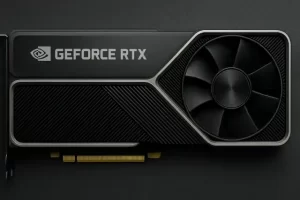
At the heart of NVIDIA’s 6G strategy is the Aerial RAN Compute platform—a specialized computing solution designed specifically for Radio Access Networks (RAN). This platform represents NVIDIA’s answer to the telecommunications industry’s need for high-performance, energy-efficient infrastructure that can handle both traditional wireless workloads and AI processing simultaneously.
The Aerial platform combines:
- GPU acceleration for AI workloads and signal processing
- CUDA support for telecommunications applications
- Software-defined architecture that allows operators to update and optimize networks through software rather than hardware replacements
- Integrated AI capabilities for network optimization, predictive maintenance, and intelligent resource allocation
NVIDIA AI-RAN and the Nokia Partnership
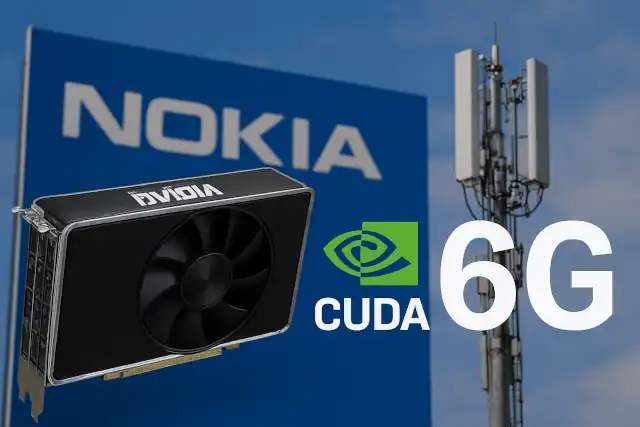
NVIDIA’s collaboration with Nokia is particularly significant. The NVIDIA AI-RAN platform, developed in partnership with Nokia, represents a convergence of Nokia’s telecommunications expertise with NVIDIA’s AI computing capabilities. This partnership aims to create what the companies call “AI-native” wireless infrastructure.
Key aspects of this collaboration include:
Integrated Architecture: Nokia’s RAN equipment natively supports NVIDIA’s CUDA parallel computing platform, meaning telecommunications software can be written to leverage GPU acceleration directly. This eliminates the traditional separation between specialized telecom hardware and general-purpose computing.
AI-Powered Optimization: The AI-RAN platform uses machine learning to dynamically optimize network performance, predict traffic patterns, allocate spectrum efficiently, and reduce energy consumption—capabilities that become increasingly critical as networks grow more complex.
Virtualized Infrastructure: By running on NVIDIA’s computing platforms, Nokia’s RAN solutions can be deployed more flexibly, whether in centralized data centers, edge computing locations, or distributed sites.
SoftBank Achieves Breakthrough in 5G Millimeter Wave Standalone FWA Technology
Why NVIDIA Invested in Nokia
NVIDIA’s investment in Nokia signals a strategic commitment beyond simple vendor relationships. Several factors drive this investment:
- Market Access: Nokia is one of the world’s largest telecommunications infrastructure providers with established relationships with carriers globally. NVIDIA’s investment provides a direct pathway to influence how next-generation networks are architected.
- Ecosystem Development: By investing in Nokia, NVIDIA ensures that a major equipment manufacturer is building products around NVIDIA’s computing platforms, creating a stronger ecosystem for NVIDIA’s telecommunications hardware and software.
- Standards Influence: As 6G standards are being developed, having a close partnership with a major player like Nokia gives NVIDIA influence over how AI and computing are integrated into future wireless specifications.
- Long-Term Revenue: Telecommunications infrastructure represents a massive, recurring revenue opportunity. If NVIDIA’s platforms become standard in 6G deployments, it could generate sustained income for decades as networks are built and upgraded worldwide.
- Energy Efficiency Goals: Modern wireless networks consume enormous amounts of power. NVIDIA’s GPU architecture, combined with AI optimization, promises significant energy savings—a critical concern for operators facing rising energy costs and sustainability pressures.
The Native CUDA Integration Advantage
The fact that 6G infrastructure natively supports CUDA is transformative. CUDA (Compute Unified Device Architecture) is NVIDIA’s parallel computing platform that has become the de facto standard for AI development. By integrating CUDA support directly into telecommunications infrastructure:
Developers can use familiar tools: Software engineers working on network optimization don’t need specialized telecommunications programming knowledge—they can use the same AI frameworks used across industries.
Innovation accelerates: The vast ecosystem of CUDA developers and existing AI models can be applied directly to telecommunications challenges.
Flexibility increases: Networks can be updated with new AI capabilities through software updates rather than hardware replacements, extending infrastructure lifespan and reducing costs.
The Broader Implications
NVIDIA’s push into 6G represents more than just another market expansion—it signals a fundamental convergence of telecommunications and computing infrastructure. If successful, NVIDIA could establish itself as essential to wireless networks as it has become to AI datacenters.
For telecommunications operators, this promises more intelligent, efficient, and adaptable networks. For NVIDIA, it opens a massive new market beyond traditional computing. And for the industry as a whole, it suggests that the future of connectivity will be inseparable from artificial intelligence.
As 6G standards continue to evolve through the late 2020s, NVIDIA’s early positioning—backed by strategic partnerships and purpose-built platforms—may prove decisive in shaping how the next generation of wireless technology is built.
Beyond 5G: How Terahertz Waves Will Power the Next Generation of 6G Wireless Networks
FCC Opens Entire 6GHz Band for Very Low Power (VLP) Devices