China Builds World’s Largest Electric Vehicle Charging Network
China Builds World’s Largest Electric Vehicle Charging Network — Now Three Times the Size of Its Gas Station Network
- Why Enterprise RAID Rebuilding Succeeds Where Consumer Arrays Fail?
- Linus Torvalds Rejects MMC Subsystem Updates for Linux 7.0: “Complete Garbage”
- The Man Who Maintained Sudo for 30 Years Now Struggles to Fund the Work That Powers Millions of Servers
- How Close Are Quantum Computers to Breaking RSA-2048?
- Why Windows 10 Users Are Flocking to Zorin OS 18 Instead of Linux Mint?
- How to Prevent Ransomware Infection Risks?
- What is the best alternative to Microsoft Office?
China Builds World’s Largest Electric Vehicle Charging Network — Now Three Times the Size of Its Gas Station Network
News on October 13 — China has established the world’s largest and most capable electric vehicle charging infrastructure, with authoritative data revealing the scale of this achievement as of the end of August 2025.
The nation has built a total of 17.348 million charging facilities, equivalent to two charging points for every five new energy vehicles on the road — a ratio that firmly positions China as the global leader in EV charging infrastructure.
Public Charging Stations Surpass Gas Stations
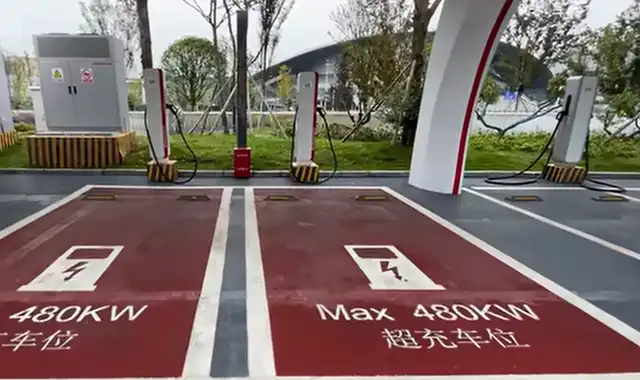
The growth in public charging infrastructure has been particularly dramatic. China now boasts over 300,000 public charging stations nationwide, representing a 303% increase compared to 2021. This figure significantly exceeds the country’s 110,000 gas stations, effectively tripling the refueling infrastructure and providing robust support for inter-provincial long-distance travel.
Highway service areas now feature more than 40,000 charging station sites — a fivefold expansion compared to five years ago. The network has achieved remarkable penetration into rural areas, with 97% of county-level cities and 80% of townships now covered by public charging facilities, essentially bridging the “last mile” gap between urban and rural charging accessibility.
Market Leaders and Technology Advances
The charging infrastructure market is dominated by several major operators. The top ten companies collectively control 77.8% of all public charging stations, with Tele Charge leading the market by operating 821,000 charging units (19.0% market share), followed by Star Charge with 707,000 units (16.4%), and Cloud Fast Charge with 669,000 units (15.5%).
On the technology front, China has deployed 37,000 high-power charging facilities nationwide, making ultra-fast charging technology that supports “1 kilometer per second” of charging a reality. The State Council and relevant departments have issued policy documents, including the “Notice on Promoting Scientific Planning and Construction of High-Power Charging Facilities,” setting a target of exceeding 100,000 high-power charging facilities by the end of 2027, supported by policies covering land use, power supply, and financial subsidies.
Battery Swapping Network Expands Rapidly
Beyond traditional charging, China’s battery swapping network is experiencing rapid expansion. As of August, the country has established 4,946 battery swap stations, with companies like NIO and Aulton New Energy accelerating their deployment.
NIO has built 3,482 battery swap stations, including 1,001 along highways that provide complete coverage of major transportation corridors. The company averages 97,000 battery swaps daily and aims to reach over 4,000 stations globally by the end of 2025.
This comprehensive charging and swapping infrastructure represents a fundamental transformation in China’s transportation energy landscape, positioning the country at the forefront of the global electric vehicle revolution.