March 7, 2026

PBX Science

VoIP & PBX, Networking, DIY, Computers.

China Just Beat Starlink at Its Own Game: $1.40/Month Direct-to-Satellite Service Launches

China Just Beat Starlink at Its Own Game: $1.40/Month Direct-to-Satellite Service Launches


China Just Beat Starlink at Its Own Game: $1.40/Month Direct-to-Satellite Service Launches

September 9, 2025 – Beijing — While U.S.-based SpaceX’s Starlink and other Western ventures have spent years promising direct-to-satellite mobile connectivity, China has just gone ahead and done it — and at a price point that could send shockwaves through the global telecom industry.

China Just Beat Starlink at Its Own Game: $1.40/Month Direct-to-Satellite Service Launches

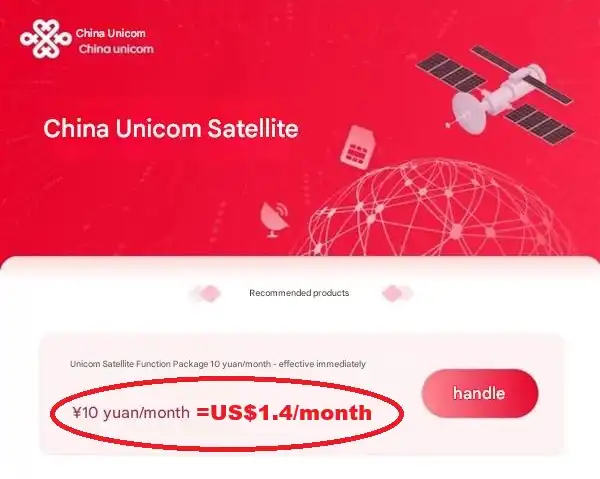
China Unicom, one of the country’s largest carriers, has rolled out the world’s first mass-market direct-to-satellite mobile plan priced at only 10 yuan (USD $1.40) per month. Approved by China’s Ministry of Industry and Information Technology (MIIT), the service — dubbed “Unicom Satellite” — lets compatible smartphones connect directly to satellites for voice calls and text messages.

By contrast, Starlink’s satellite internet subscription costs about USD $120 per month, not including the $600+ hardware kit. AST SpaceMobile, another U.S. challenger, has partnered with AT&T and Vodafone but remains in the testing phase with no commercial mass-market service yet available.

“China didn’t just match Starlink’s vision — it leapfrogged it,” said one telecom analyst. “The difference is that Unicom is offering this as a cheap consumer add-on, while Western providers still treat satellite as a premium service for niche users.”

Why It Matters

  • Price Disruption: At $1.40 per month, the service is cheaper than a single ride on Beijing’s subway — a fraction of the cost of existing satellite communications.

  • Mainstream Hardware: Works on flagship smartphones like the Huawei Mate 70 series, Xiaomi 15 Ultra, and Samsung Galaxy S25 Ultra — no bulky satellite phone required.

  • Strategic Edge: Positions China as the first country to normalize satellite connectivity as a public utility, not just an emergency backup.

Currently, the plan is limited to subscribers in eight provinces including Tianjin, Shanxi, and Guangdong, and works only in mainland China. Supported devices include premium models from Huawei, Honor, OPPO, vivo, Xiaomi, and Samsung.

A Global Wake-Up Call

The launch is more than just a domestic milestone — it could represent a turning point in global telecom competition. For years, Western firms have marketed satellite-to-phone technology as the next frontier, but progress has been slow and prices high. China’s move compresses that timeline dramatically.

If the model expands abroad — for example through Belt and Road partnerships — it could undercut U.S. and European players before they even achieve scale.

“This is China using pricing power and scale to define the market before anyone else,” the analyst added. “Starlink may still dominate in global internet coverage, but in mobile satellite telephony, China just fired the starting gun.”

China Just Beat Starlink at Its Own Game: $1.40/Month Direct-to-Satellite Service Launches


Windows Software Alternatives in Linux


Disclaimer of pbxscience.com

PBXscience.com © All Copyrights Reserved. | Newsphere by AF themes.