China’s Major Banks Move to Domestic CPUs: Mirroring US Security Approach
China’s Major Banks Move to Domestic CPUs: Mirroring US Security Approach
- Why Enterprise RAID Rebuilding Succeeds Where Consumer Arrays Fail?
- Linus Torvalds Rejects MMC Subsystem Updates for Linux 7.0: “Complete Garbage”
- The Man Who Maintained Sudo for 30 Years Now Struggles to Fund the Work That Powers Millions of Servers
- How Close Are Quantum Computers to Breaking RSA-2048?
- Why Windows 10 Users Are Flocking to Zorin OS 18 Instead of Linux Mint?
- How to Prevent Ransomware Infection Risks?
- What is the best alternative to Microsoft Office?
China’s Major Banks Move to Domestic CPUs: Mirroring US Security Approach
ICBC Awards $420 Million Server Contract to Domestic Supplier in Strategic Technology Shift
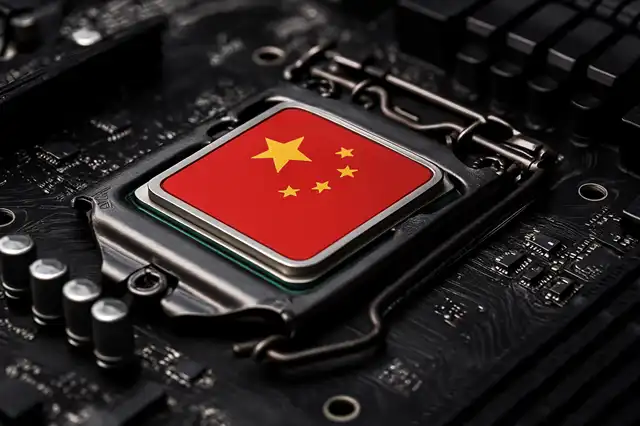
BEIJING — In a major step toward technological self-reliance, China’s financial institutions are progressively replacing American-made computer processors with domestically produced alternatives, citing system security concerns in a move that mirrors similar policies implemented by the United States.
The Industrial and Commercial Bank of China (ICBC), the world’s largest bank by assets, recently announced the results of its 2025 server procurement project, with Inspur servers equipped with Hygon CPUs emerging as the leading bidder.
The procurement project, valued at approximately 3 billion yuan (US$420 million), signals a decisive shift in China’s approach to critical financial infrastructure.
UBIOS: China’s Alternative to UEFI and the New Era of Firmware Standards
Security-Driven Technology Independence
The transition reflects China’s determination to reduce dependency on foreign technology in sectors deemed critical to national security and economic stability.
Chinese financial regulators have indicated that the country’s banking system will gradually phase out servers powered by Intel and AMD processors—both American companies that currently dominate the global CPU market.
This policy direction closely parallels measures taken by the United States, which has restricted the use of Chinese technology in sensitive government and infrastructure applications, citing national security concerns.
Both nations are increasingly prioritizing domestically controlled technology ecosystems for their most critical systems.
Why China Is Confident in Banning Nvidia GPUs: Can Domestic Alternatives Really Replace Them?
Hygon: China’s Semiconductor Champion
Hygon Information Technology Co., Ltd., the CPU manufacturer at the center of this procurement, represents a key pillar in China’s semiconductor industry development strategy.
Founded in 2016 as a joint venture between AMD and Chinese partners, Hygon initially licensed AMD‘s Zen microarchitecture to develop x86-compatible processors specifically for the Chinese market.
Key facts about Hygon:
- Technology foundation: Hygon’s processors are based on x86 architecture, making them compatible with existing software ecosystems while being manufactured and controlled domestically
- Product line: The company’s Dhyana series processors are designed for server and data center applications, targeting the exact market segment dominated by Intel Xeon and AMD EPYC chips
- Strategic importance: Hygon has been designated as a priority developer in China’s semiconductor self-sufficiency initiatives
- Performance capabilities: Recent Hygon processors offer competitive performance for enterprise workloads, though independent benchmarks suggest they typically lag behind the latest Intel and AMD offerings in raw performance
Why US Export Restrictions Haven’t Slowed China’s AI Development?
Implications for Global Technology Markets
The ICBC procurement decision is expected to set a precedent for other Chinese financial institutions. Industry analysts predict that China’s entire banking sector—which includes major institutions such as China Construction Bank, Agricultural Bank of China, and Bank of China—will follow similar procurement strategies in coming years.
This transition poses significant challenges for American semiconductor companies, which have historically derived substantial revenue from Chinese enterprise markets. Intel and AMD have both acknowledged that geopolitical tensions and resulting policy shifts represent material risks to their business operations.
China Speeds Up To Get Rid Of Foreign OS
Broader Context of Tech Decoupling
The shift in CPU procurement reflects a broader pattern of technological decoupling between the world’s two largest economies. Both China and the United States have implemented policies encouraging or mandating the use of domestically produced technology in sensitive sectors:
- The US has restricted Chinese telecommunications equipment, artificial intelligence chips, and other technologies
- China has promoted “信创” (Information Technology Application Innovation) initiatives to replace foreign technology across government and critical industries
- Both nations have imposed export controls on advanced semiconductor technology
As these parallel policies continue to evolve, the global technology industry faces an increasingly fragmented landscape, with implications for supply chains, research collaboration, and market access.
Looking Ahead
The success of China’s domestic CPU transition in the financial sector will likely influence similar efforts in telecommunications, energy, transportation, and government administration.
However, challenges remain, including ensuring performance parity with international alternatives, maintaining software compatibility, and developing a robust domestic ecosystem of supporting technologies.
For international technology companies, the message is clear: access to China’s massive enterprise market increasingly depends on geopolitical factors beyond traditional business considerations, mirroring the constraints Chinese companies face in Western markets.
The 3 billion yuan procurement represents one of the largest single technology infrastructure investments by a Chinese financial institution and signals the government’s commitment to achieving technological independence in critical sectors.