Chinchilla 70B Outperforms PNG and FLAC in Lossless Compression
Chinchilla 70B Outperforms PNG and FLAC in Lossless Compression
- Why Enterprise RAID Rebuilding Succeeds Where Consumer Arrays Fail?
- Linus Torvalds Rejects MMC Subsystem Updates for Linux 7.0: “Complete Garbage”
- The Man Who Maintained Sudo for 30 Years Now Struggles to Fund the Work That Powers Millions of Servers
- How Close Are Quantum Computers to Breaking RSA-2048?
- Why Windows 10 Users Are Flocking to Zorin OS 18 Instead of Linux Mint?
- How to Prevent Ransomware Infection Risks?
- What is the best alternative to Microsoft Office?
Chinchilla 70B Outperforms PNG and FLAC in Lossless Compression.
Researchers from Google DeepMind and Meta have published a paper titled “Language Modeling Is Compression,” revealing that DeepMind’s large language model, Chinchilla 70B, surpasses PNG and FLAC in lossless compression for both images and audio.
The paper highlights Chinchilla 70B’s ability to achieve a lossless compression rate of 43.4% on the ImageNet image database, surpassing the 58.5% achieved by the PNG algorithm.
In the case of audio data from the LibriSpeech dataset, Chinchilla is able to compress samples losslessly to their original size at a rate of 16.4%, outperforming the FLAC algorithm’s compression rate of 30.3%.
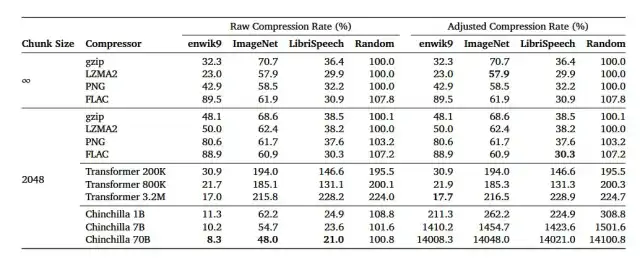
Chinchilla 70B was primarily designed for text processing, but its outstanding performance in compressing other types of datasets, even surpassing specialized algorithms, is a remarkable discovery.
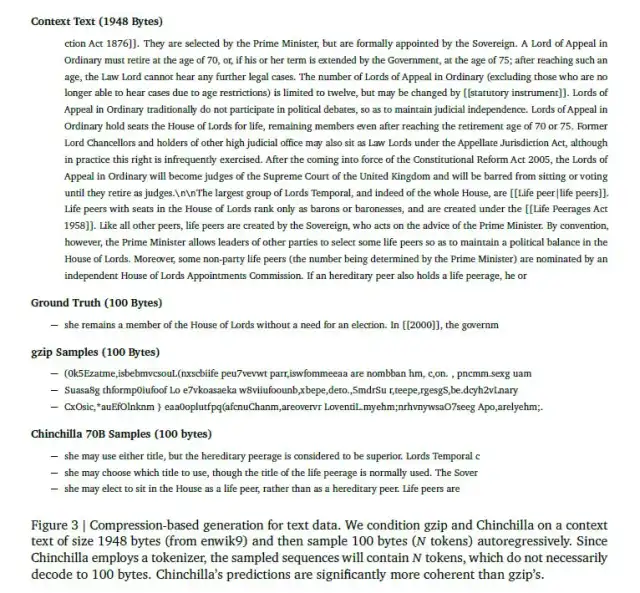
To illustrate this, let’s compare the generation results of gzip and Chinchilla for a sample text. The output from gzip is noticeably less readable.
In a groundbreaking development, researchers from Google DeepMind and Meta have unveiled a paper titled “Language Modeling Is Compression,” shedding light on the extraordinary capabilities of DeepMind’s colossal language model, Chinchilla 70B, in the realm of lossless compression. This cutting-edge research has revealed that Chinchilla 70B outperforms conventional compression methods such as PNG and FLAC, particularly in compressing both image and audio data.
The paper demonstrates that Chinchilla 70B can achieve a remarkable lossless compression rate of 43.4% for images from the ImageNet database, surpassing the performance of the PNG algorithm, which achieves only 58.5% compression. This means that Chinchilla significantly reduces the size of the images while preserving their original quality.
Moreover, when applied to audio data from the LibriSpeech dataset, Chinchilla exhibits exceptional capabilities by compressing samples to their original size with a compression rate of 16.4%. In contrast, the FLAC algorithm, widely recognized for its audio compression capabilities, achieves a rate of only 30.3%. This remarkable feat highlights Chinchilla’s prowess in the field of audio data compression.
One intriguing aspect of Chinchilla 70B is that it was primarily designed for text processing. However, it has proven to be highly effective in compressing various types of datasets, often outperforming specialized compression algorithms. This versatility marks a significant advancement in the field of data compression.
To provide a tangible comparison of Chinchilla’s capabilities, consider the example of comparing gzip and Chinchilla in generating compressed text. The output from gzip, a commonly used compression tool, demonstrates limited readability when compared to Chinchilla’s output.
This groundbreaking discovery opens up exciting possibilities for data compression across various domains. Chinchilla 70B’s unmatched performance in lossless compression for both image and audio data positions it as a game-changer in the field of data compression. Researchers and industry experts are eagerly awaiting further developments and applications of this remarkable technology.
Reference:
https://arxiv.org/abs/2309.10668