Choosing Between Debian and Ubuntu for Your Cloud Server
Choosing Between Debian and Ubuntu for Your Cloud Server
- Why Enterprise RAID Rebuilding Succeeds Where Consumer Arrays Fail?
- Linus Torvalds Rejects MMC Subsystem Updates for Linux 7.0: “Complete Garbage”
- The Man Who Maintained Sudo for 30 Years Now Struggles to Fund the Work That Powers Millions of Servers
- How Close Are Quantum Computers to Breaking RSA-2048?
- Why Windows 10 Users Are Flocking to Zorin OS 18 Instead of Linux Mint?
- How to Prevent Ransomware Infection Risks?
- What is the best alternative to Microsoft Office?
Choosing Between Debian and Ubuntu for Your Cloud Server
When deploying a cloud server, one of the first decisions you’ll face is selecting the right Linux distribution.
For many administrators, the choice often comes down to Debian and Ubuntu—two closely related distributions that dominate the server landscape.
While Ubuntu is actually based on Debian, they serve different needs and philosophies. Here’s what you need to consider when making this decision.
When and Why You Need Antivirus on Linux (and How to Install ClamAV)
Understanding the Relationship
Ubuntu derives from Debian, using it as its foundation while adding its own features, release schedule, and support model.
Think of Debian as the upstream source and Ubuntu as a curated, commercially-backed derivative. T
his relationship means they share many similarities, but their differences matter significantly in production environments.
Six Free Antivirus Solutions for Linux OS
Stability vs. Currency: The Core Trade-off
Debian has built its reputation on rock-solid stability. The distribution follows a “release when ready” philosophy, meaning new stable versions arrive every two to three years after extensive testing. Debian Stable contains thoroughly vetted packages that may be older but are proven reliable. For critical infrastructure where uptime and predictability are paramount, this conservative approach is invaluable.
Ubuntu takes a different path with its predictable six-month release cycle and Long Term Support versions every two years. Ubuntu LTS releases receive five years of free security updates, with Extended Security Maintenance available for up to ten years through Ubuntu Pro. This model provides more recent software while still offering production-grade stability through the LTS track.
How to securely harden Ubuntu Cloud Server?
Debian vs Ubuntu: What’s the Real Difference in 2025?
Debian and Ubuntu are often compared, sometimes even debated, but the truth is—they share the same foundation. Ubuntu is built on top of Debian, and both distributions use many of the same core components:
-
The same Linux kernel (often even the same version)
-
The same package format (.deb) and APT-based package management
-
The same systemd service framework
Because of this shared architecture, performance under identical workloads is essentially the same. Whether you’re running WordPress, Nginx, MySQL, PostgreSQL, or Node.js, the performance gap between Debian and Ubuntu is nearly zero. Claims that one “feels smoother” are usually subjective rather than measurable.
Ubuntu: Updated Software and Ease of Use
Best suited for:
-
Developers
-
Small to medium-sized deployments
-
DevOps environments
-
Teams that iterate fast or rely on newer stacks
Ubuntu releases software updates more frequently. Tools like Docker, Python, Go, Node.js, Rust, and modern GPU drivers generally arrive sooner than they do in Debian.
Other advantages:
-
Strong ecosystem and documentation
The majority of online tutorials, troubleshooting guides, and Stack Overflow solutions reference Ubuntu first. -
Long-Term Support (LTS) reliability
Ubuntu 22.04 LTS and newer LTS releases offer 5 years of security updates, making them suitable for production use. -
Beginner-friendly experience
Ubuntu comes with sensible defaults out of the box: firmware, networking, timezone settings, and hardware drivers require less manual configuration.
If your priority is productivity, compatibility with new tools, or fast deployment workflows, Ubuntu remains the more hassle-free choice.
Debian: Minimalism and Maximum Stability
Best suited for:
-
Long-term deployments
-
Critical infrastructure
-
Embedded systems and gateways
-
Environments where “install once and run for years” is the goal
Debian follows a slow and deliberate release cycle. For example, Debian 12 Bookworm underwent multiple years of testing before release—ensuring exceptional stability and predictability.
Key strengths:
-
Lean and clean installation
Debian ships mostly open-source components with fewer background services, meaning a smaller attack surface and reduced resource usage. -
Long lifecycle (5–7 years depending on support programs)
This makes Debian ideal for servers that shouldn’t require frequent OS upgrades. -
Trusted for mission-critical roles
Many companies use Debian for firewalls, routers, industrial systems, and backend services where reliability matters more than bleeding-edge software.
If your goal is maximum uptime, predictable behavior, and minimal maintenance, Debian is the better long-term investment.
Why Windows 10 Users Are Flocking to Zorin OS 18 Instead of Linux Mint?
Package Management and Software Availability
Both distributions use the same package management system (APT and .deb packages), but their repositories differ in scope and freshness. Debian’s stable repositories prioritize stability over newness, while Ubuntu’s repositories typically include more recent versions and additional packages out of the box.
Ubuntu benefits from Canonical’s partnerships with major software vendors, meaning proprietary and commercial software often provides Ubuntu packages first. If you’re running applications that require specific versions or depend on vendor support, Ubuntu’s broader commercial ecosystem can be advantageous.
Debian offers more granular control through its three branches: Stable, Testing, and Unstable. Advanced users can selectively pull newer packages when needed, though this requires expertise to maintain system stability.
Thunderbird Adds Native Microsoft Exchange Support
Support and Documentation
Ubuntu’s commercial backing through Canonical provides professional support options, which can be critical for enterprise deployments. The Ubuntu Pro subscription includes access to Canonical’s support team and compliance certifications important for regulated industries.
Both distributions have extensive community support, but Ubuntu’s larger user base means you’ll often find more tutorials, forum discussions, and Stack Overflow answers specifically for Ubuntu. Debian’s community is equally knowledgeable but smaller, and documentation sometimes assumes greater technical proficiency.
Kaspersky Launches First Consumer Antivirus for Linux as Malware Threats Surge
Security and Updates
Debian’s security team is highly regarded and provides timely security updates for stable releases. However, the longer release cycles mean you may need to perform major version upgrades less frequently but with more comprehensive changes each time.
Ubuntu’s predictable LTS cycle makes planning easier, and Canonical’s Livepatch service allows kernel security updates without reboots—a valuable feature for high-availability cloud servers. The Ubuntu Security Team also backports security fixes rapidly, particularly for LTS releases.
5 Essential Password Managers for Linux: Security Analysis and Installation Guide
Cloud-Specific Considerations
Both distributions offer official cloud images optimized for major providers like AWS, Google Cloud, and Azure. Ubuntu has invested heavily in cloud integration, with tools like cloud-init well-integrated and extensive documentation for cloud deployments. Many cloud providers default to Ubuntu in their documentation and examples.
Debian’s smaller footprint can mean lower costs in usage-based billing models, and its minimal default installation gives you greater control over what runs on your server. However, Ubuntu’s cloud images are also quite lean and optimized for cloud environments.
SSH “Port Knocking” Strengthens Linux Server Security Access Baseline
Making Your Decision
Choose Debian if you prioritize maximum stability, prefer minimal commercial involvement, need fine-grained control over your system, or have an experienced team comfortable with more DIY administration.
Choose Ubuntu LTS if you want predictable release cycles with newer software, need commercial support options, prefer extensive documentation and community resources, or want the easiest path for running commercial applications.
For most cloud server deployments, Ubuntu LTS strikes an excellent balance between stability and modernity, with the commercial backing that enterprises often require. However, Debian remains the superior choice for those who value its pure community-driven approach and legendary stability above all else.
Both are excellent choices that will serve you well—the right answer depends on your specific requirements, team expertise, and organizational preferences. Many successful infrastructure deployments use both, leveraging each distribution’s strengths for different workloads.
Ubuntu Server Officical Download Link
Debian Official Download Link
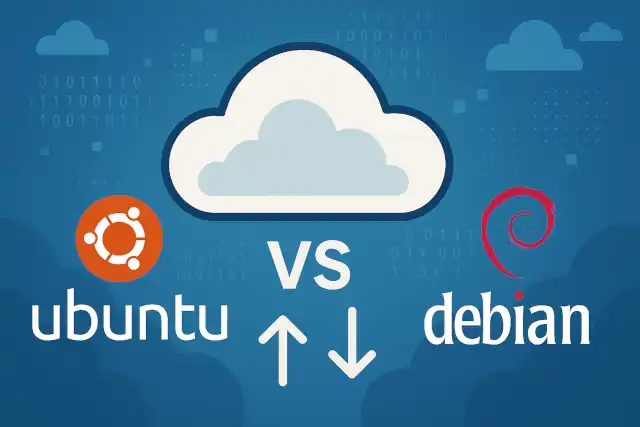
Debian vs Ubuntu: Cloud Server Comparison
| Feature | Debian | Ubuntu LTS |
|---|---|---|
| Release Cycle | ~2-3 years (when ready) | 2 years (predictable schedule) |
| Support Duration | 3 years standard, 5+ with LTS | 5 years free, up to 10 with Ubuntu Pro |
| Stability | Maximum stability, conservative updates | High stability with more recent packages |
| Package Freshness | Older, thoroughly tested packages | Newer packages, regularly updated |
| Default Installation | Minimal, bare-bones | Slightly larger, more user-friendly |
| Commercial Support | Community-only (third-party available) | Official Canonical support available |
| Target Audience | Advanced users, purists, stability-focused | Beginners to enterprises, broad appeal |
| Documentation | Excellent but assumes technical knowledge | Extensive, beginner-friendly |
| Community Size | Large, experienced community | Very large, diverse community |
| Philosophy | 100% free software focus, community-driven | Pragmatic, includes proprietary options |
| Update Frequency | Less frequent, larger upgrades | More frequent, incremental updates |
| Cloud Integration | Good, official images available | Excellent, heavily optimized for cloud |
| Vendor Support | Some vendor packages available | Extensive vendor support and packages |
| Security Updates | Fast and reliable | Fast with Livepatch (kernel updates without reboot) |
| System Resources | Lower footprint | Slightly higher footprint |
| Init System | systemd (default) | systemd |
| Package Manager | APT/dpkg | APT/dpkg (same as Debian) |
| Default Services | Minimal services enabled | Minimal services enabled |
| Enterprise Features | Basic | Advanced (RBAC, compliance tools, etc.) |
| Cost | Free | Free (Ubuntu Pro subscription optional) |
| Upgrade Process | Can be complex between major versions | Generally smoother, well-documented |
| Customization | Maximum flexibility | High flexibility with sensible defaults |
| Corporate Backing | None (pure community) | Canonical Ltd. |
| Certification | Limited | Extensive hardware/cloud certifications |
| Best For | Maximum stability, experienced admins, ideological preference | Balanced approach, commercial deployments, ease of use |
Quick Decision Guide
Choose Debian if:
- You need absolute maximum stability
- You prefer pure community-driven development
- Your team is highly experienced with Linux
- You want minimal default installation
- You don’t need commercial support
Choose Ubuntu LTS if:
- You want predictable release schedules
- You need commercial support options
- You prefer newer software packages
- You want extensive documentation and community resources
- You’re running commercial/vendor applications