Could US Power Shortages Put America Behind China in the AI Race?
Could US Power Shortages Put America Behind China in the AI Race?
- Why Enterprise RAID Rebuilding Succeeds Where Consumer Arrays Fail?
- Linus Torvalds Rejects MMC Subsystem Updates for Linux 7.0: “Complete Garbage”
- The Man Who Maintained Sudo for 30 Years Now Struggles to Fund the Work That Powers Millions of Servers
- How Close Are Quantum Computers to Breaking RSA-2048?
- Why Windows 10 Users Are Flocking to Zorin OS 18 Instead of Linux Mint?
- How to Prevent Ransomware Infection Risks?
- What is the best alternative to Microsoft Office?
Could US Power Shortages Put America Behind China in the AI Race?
The artificial intelligence revolution is consuming electricity at an unprecedented rate, and the United States may be running into a critical bottleneck: not enough power.
As tech giants race to build massive AI data centers, a growing chorus of industry leaders and analysts warn that America’s electrical grid constraints could hand China a strategic advantage in the defining technology competition of the 21st century.
Why the White House is Reconsidering NVIDIA H200 Exports to China
The Power-Hungry Reality of AI
Modern AI systems, particularly the large language models powering tools like ChatGPT and Claude, require enormous amounts of electricity to train and operate. A single advanced AI data center can consume as much power as a small city. Training a cutting-edge AI model can use more electricity than hundreds of American homes consume in an entire year.
The demand is accelerating faster than anyone anticipated. Tech companies are projecting their electricity needs will double or even triple over the next five years. Microsoft, Google, Amazon, and Meta are all scrambling to secure power for planned data centers, often finding themselves in bidding wars for limited capacity or facing years-long waits for new electrical infrastructure.
Why 80% of US AI Startups Are Using Chinese Open-Source Models?
America’s Grid Reaches Its Limits
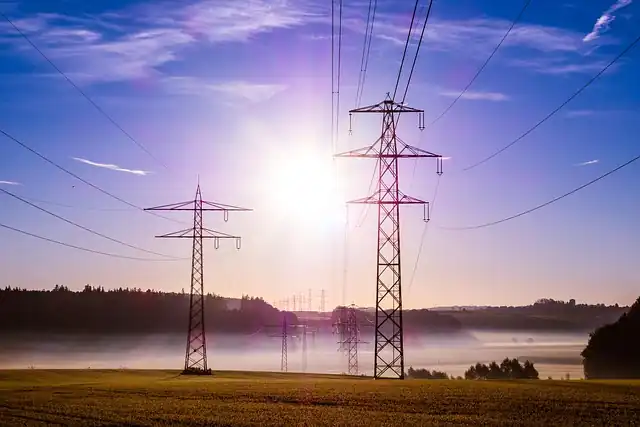
The US electrical grid, much of it built decades ago, wasn’t designed for this kind of sudden, massive demand spike. In many regions where tech companies want to build—places with favorable climates, tax incentives, or existing infrastructure—the local grid simply can’t provide the necessary power without major upgrades that take years to complete.
Utility companies across Virginia, Texas, Arizona, and other tech hubs report being overwhelmed with requests they cannot fulfill in reasonable timeframes. Some projects that break ground today won’t receive full power until 2030 or later. Permitting processes for new power plants and transmission lines remain slow and complex, creating bottlenecks that no amount of private investment can immediately overcome.
The situation has become urgent enough that tech executives are exploring unconventional solutions: investing directly in power generation, reviving shuttered nuclear plants, and even considering relocating facilities abroad where power is more readily available.
Why Chinese Companies Are Stockpiling DDR5 Memory?
China’s Different Energy Equation
Meanwhile, China faces a fundamentally different situation. The Chinese government has made AI dominance a national priority, coordinating infrastructure development in ways that democratic governments cannot easily replicate. When the state decides a region needs more power for strategic technology development, projects move forward with remarkable speed.
China has been building power generation capacity at a blistering pace—adding more new electrical capacity in recent years than the entire US grid grew in a decade. Much of this has been coal-fired power, raising environmental concerns, but the country is also rapidly expanding nuclear and renewable capacity. For AI companies, the crucial advantage is certainty: they can count on power being available when needed.
Chinese tech firms like Baidu, Alibaba, and Tencent aren’t waiting years for grid connections. The government has designated special economic zones for AI development with guaranteed power access, streamlined regulations, and coordinated infrastructure planning. While Chinese AI technology currently trails American capabilities in some areas, the resource advantage could help close that gap.
CUDA Without NVIDIA: Microsoft’s Translation Layer Brings AI Models to AMD GPUs
The Strategic Stakes
AI leadership carries implications far beyond commercial competition. The technology is reshaping military capabilities, economic productivity, scientific research, and international influence. The nation that leads in AI development will likely set global standards, shape international regulations, and reap enormous economic benefits.
American policymakers are increasingly aware that infrastructure limitations could undermine technological superiority. The issue transcends partisan politics—both sides recognize that losing the AI race carries unacceptable strategic risks. However, translating this recognition into rapid infrastructure development remains challenging in America’s regulatory and political environment.
Some experts argue the power shortage might actually spur positive changes: forcing more energy-efficient AI development, accelerating clean energy adoption, and prompting smarter grid modernization. Others worry these silver linings won’t materialize quickly enough to prevent China from pulling ahead.
NVIDIA Declares War on Huawei for 6G Dominance
Possible Paths Forward
Several potential solutions are being actively pursued. Tech companies are investing billions in nuclear power partnerships, including next-generation small modular reactors that could provide dedicated clean energy for data centers. Others are exploring massive solar and wind installations paired with battery storage, though these face their own infrastructure and permitting challenges.
Federal policy changes could accelerate grid development and streamline permitting for power projects deemed nationally strategic. Some propose an “AI Manhattan Project” with government coordination of resources similar to past national technology initiatives. However, such approaches require congressional action and would take time to implement.
In the near term, American AI companies may increasingly look abroad—not to China, but to allies like Canada, the United Arab Emirates, or Scandinavia where power is more abundant and regulations more accommodating. This geographic diversification might solve immediate corporate needs but would represent its own form of strategic vulnerability.
China’s “Nvidia Rival” Cambricon Sees 1300% Revenue Surge Benefiting from US and China’s bans
A Race Against Time
The window for maintaining American AI leadership may be narrower than commonly assumed. While the US currently holds advantages in research talent, venture capital, and foundational technology, these edges could erode if Chinese companies gain a sustained resource advantage. The power shortage represents a test of whether democratic systems can mobilize infrastructure development with sufficient speed when strategic interests demand it.
The outcome remains uncertain. America has overcome infrastructure challenges before through combinations of private innovation, public investment, and regulatory reform. But the clock is ticking, and China isn’t waiting. Whether the US can solve its power puzzle before the AI race is decided may determine technological leadership for decades to come.
The irony is stark: the nation that pioneered the internet and dominates software innovation could find itself constrained by something as fundamental as electrical outlets. In the high-stakes competition for AI supremacy, gigawatts may matter as much as algorithms.