Does 6G technology need much more antenna than 5g?
Does 6G technology need much more antenna than 5g?
- Why Enterprise RAID Rebuilding Succeeds Where Consumer Arrays Fail?
- Linus Torvalds Rejects MMC Subsystem Updates for Linux 7.0: “Complete Garbage”
- The Man Who Maintained Sudo for 30 Years Now Struggles to Fund the Work That Powers Millions of Servers
- How Close Are Quantum Computers to Breaking RSA-2048?
- Why Windows 10 Users Are Flocking to Zorin OS 18 Instead of Linux Mint?
- How to Prevent Ransomware Infection Risks?
- What is the best alternative to Microsoft Office?
What is the difference between 5G and 6G?
However, based on current trends and expectations for 6G, some potential differences between the two technologies could include:
-
Speed and bandwidth: 6G is expected to offer even faster data transfer rates and greater bandwidth than 5G, potentially reaching speeds of up to 1 terabit per second.
-
Latency: 6G is also expected to have significantly lower latency than 5G, which could enable new applications and use cases that require real-time responsiveness, such as remote surgery or autonomous vehicles.
-
Spectrum: 6G is expected to use higher frequency bands than 5G, potentially in the terahertz range, which could enable greater capacity and faster data transfer rates. However, this could also present challenges in terms of signal propagation and infrastructure requirements.
Overall, while 5G represents a significant leap forward in mobile networking technology, 6G is expected to build upon these advancements and take them even further, potentially enabling new and transformative applications that were not previously possible.
What are advantages if the smart phone is equipped with 6 G technology?
6G technology is still in the early stages of research and development, so it’s difficult to say with certainty what advantages it will bring to smartphones.
However, based on current expectations and trends, some potential advantages of 6G technology for smartphones could include:
-
Faster download and upload speeds: 6G technology is expected to offer significantly faster data transfer rates than 5G, potentially reaching speeds of up to 1 terabit per second. This would enable users to download and upload large files, stream high-quality videos, and engage in other data-intensive activities more quickly and seamlessly.
-
Lower latency: 6G technology is expected to have even lower latency than 5G, which could enable new applications and use cases that require real-time responsiveness, such as remote surgery, augmented reality, and autonomous vehicles.
-
Greater capacity: With higher frequency bands and more advanced antenna technologies, 6G technology could provide greater network capacity than 5G, which would allow more devices to connect to the network simultaneously without experiencing slowdowns or disruptions.
-
Enhanced security: 6G technology is expected to incorporate new security features, such as quantum encryption, that could make it more secure against hacking and cyberattacks.
Overall, 6G technology has the potential to bring significant improvements to the speed, responsiveness, capacity, and security of smartphone networks, which would enable new and transformative applications that were not previously possible.
However, it’s important to note that 6G technology is still in the early stages of development, and it will likely be several years before it becomes commercially available.
Does 6G technology need much more antenna than 5g?
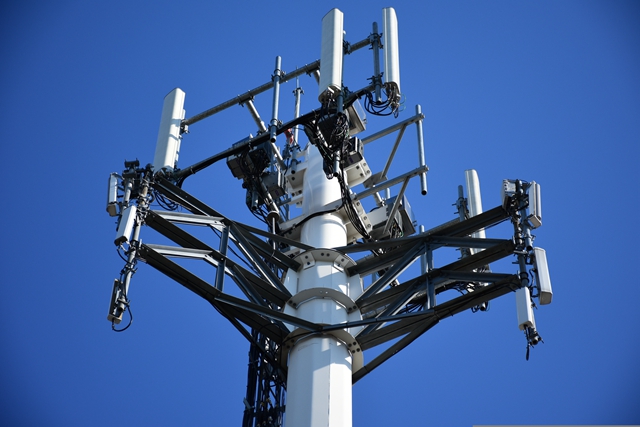
One of the challenges of 6G is that it is expected to use higher frequency bands than 5G, potentially in the terahertz range.
These higher frequencies have shorter wavelengths, which means that they are more easily absorbed and attenuated by obstacles such as buildings, trees, and even rain or fog.
To overcome this, 6G networks may require more antennas that are smaller and more densely packed than the antennas used for 5G.
These antennas could be deployed in a variety of ways, such as on small cells, drones, or even on clothing or other personal devices.
Another factor that could impact the antenna requirements for 6G is the use of advanced antenna technologies, such as massive MIMO (multiple-input, multiple-output) and beamforming.
These technologies can help to improve network capacity and performance by allowing multiple antennas to work together to transmit and receive signals more efficiently.
However, they may also require more antennas and more complex antenna arrays than the technologies used for 5G.
Overall, while the exact antenna requirements for 6G are still uncertain, it’s likely that 6G networks will require more antennas than 5G networks, due to the higher frequencies and more advanced technologies that are being considered.
Is it diffcult for smart phone to increase antena if using 6G technology?
One challenge is that higher frequency bands typically have shorter wavelengths, which can make it more difficult to maintain good signal strength and quality in the presence of obstacles such as buildings, trees, and even human bodies.
To overcome this, 6G networks may require more antennas that are smaller and more densely packed than the antennas used for 5G, which could be a challenge for smartphone manufacturers in terms of design and integration.
Another challenge is that advanced antenna technologies such as massive MIMO and beamforming require more complex antenna arrays than the technologies used for 5G.
These antenna arrays can help to improve network capacity and performance by allowing multiple antennas to work together to transmit and receive signals more efficiently.
However, they may also require more space and power than the antennas used for 5G, which could be a challenge for smartphone manufacturers in terms of size and battery life.
Overall, while it’s not yet clear what the exact antenna requirements will be for smartphones equipped with 6G, it’s likely that the increased frequencies and advanced technologies associated with 6G will present some challenges for smartphone antenna design and implementation.
However, with ongoing research and development, it’s possible that these challenges will be overcome in the future.