FreePBX vs. FusionPBX vs. dSIPRoute: A Comparative Analysis for IP-PBX
FreePBX vs. FusionPBX vs. dSIPRoute: A Comparative Analysis for IP-PBX
- Why Enterprise RAID Rebuilding Succeeds Where Consumer Arrays Fail?
- Linus Torvalds Rejects MMC Subsystem Updates for Linux 7.0: “Complete Garbage”
- The Man Who Maintained Sudo for 30 Years Now Struggles to Fund the Work That Powers Millions of Servers
- How Close Are Quantum Computers to Breaking RSA-2048?
- Why Windows 10 Users Are Flocking to Zorin OS 18 Instead of Linux Mint?
- How to Prevent Ransomware Infection Risks?
- What is the best alternative to Microsoft Office?
FreePBX vs. FusionPBX vs. dSIPRoute: A Comparative Analysis for IP-PBX
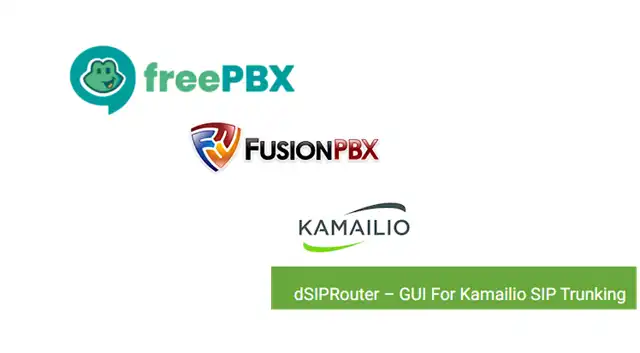
This article provides a comparative analysis of three prominent open-source IP-PBX solutions: FreePBX, FusionPBX, and dSIPRoute.
1. FreePBX
- Core: A powerful web-based GUI that provides an intuitive interface for configuring and managing Asterisk, a widely-used open-source telephony engine.
- Strengths:
- Mature and widely-used: Large community, extensive documentation, and a vast ecosystem of modules and third-party integrations.
- Highly customizable: Offers a wide range of features and modules for various telephony needs, including call routing, voicemail, conferencing, IVR, and more.
- Cost-effective: Primarily open-source, making it a budget-friendly option for businesses.
- Weaknesses:
- Can be complex: Requires some technical expertise to configure and troubleshoot effectively.
- Security: While generally secure, vulnerabilities can arise from poorly configured modules or outdated versions.
- Maintenance: Regular updates and security patches are crucial, which can require ongoing administrative effort.
2. FusionPBX
- Core: Built on top of FreeSWITCH, another powerful open-source telephony platform.
- Strengths:
- Modern and user-friendly: Emphasizes a more modern and intuitive user interface compared to FreePBX.
- Cloud-ready: Designed with cloud deployments in mind, offering features like multi-tenancy and scalability.
- Strong focus on development: Actively developed and maintained, with a focus on innovation and new features.
- Weaknesses:
- Relatively newer: Compared to FreePBX, it has a smaller community and potentially fewer third-party integrations.
- Learning curve: While user-friendly, it may still have a learning curve for administrators unfamiliar with FreeSWITCH.
- Community support: While growing, the community support may not be as extensive as FreePBX.
3. dSIPRoute
- Core: Leverages Kamailio, a high-performance open-source SIP server, as its foundation.
- Strengths:
- Scalability and performance: Designed for high call volumes and demanding environments.
- Flexibility: Highly configurable and adaptable to various telephony scenarios and deployments.
- Focus on SIP: Provides advanced SIP routing, signaling, and media handling capabilities.
- Weaknesses:
- Steeper learning curve: Requires a deeper understanding of SIP protocols and Kamailio configuration.
- Less user-friendly: The interface might not be as intuitive as FreePBX or FusionPBX for less technically inclined users.
- Limited GUI: May have a less comprehensive GUI compared to the other options, potentially requiring more command-line interaction.
Key Considerations:
- Technical expertise: Evaluate your team’s technical skills and comfort level with Linux, networking, and telephony technologies.
- Scalability and performance: Determine the expected call volume, number of users, and performance requirements for your system.
- Budget and cost: Consider the costs associated with hardware, software licenses, maintenance, and potential support contracts.
- Features and integrations: Identify the specific telephony features and integrations that are essential for your business needs.
- Community and support: Assess the availability of community support, documentation, and professional services for each option.
Conclusion
The choice between FreePBX, FusionPBX, and dSIPRoute depends heavily on your specific requirements and priorities.
- FreePBX is a mature and widely-used option with a large community and extensive features.
- FusionPBX offers a modern and user-friendly interface with a focus on cloud deployments.
- dSIPRoute excels in scalability and performance, but may require more technical expertise.
By carefully evaluating your needs and considering the strengths and weaknesses of each solution, you can select the most suitable IP-PBX platform for your organization.
Comprehensive comparison: FreePBX FusionPBX and dSIPRoute
| Feature | FreePBX | FusionPBX | dSIPRoute |
| Type | Open-Source PBX | Open-Source PBX | Open-Source SIP Proxy/Registrar |
| Foundation | Asterisk | FreeSWITCH | Kamailio |
| Primary Focus | User-friendly PBX with strong community support | Modern, feature-rich PBX with a focus on scalability | High-performance SIP routing and registration |
| Licensing | Free (GPLv2) | Free (AGPLv3) | Free (LGPL) |
| Ease of Use | Generally user-friendly with a well-developed GUI | User-friendly with a modern interface | More technical, requires deeper understanding of SIP protocols |
| Scalability | Highly scalable with proper hardware and configuration | Highly scalable, designed for large deployments | Extremely scalable, optimized for high call volumes |
| Features | Comprehensive: Voicemail, IVR, call queues, conferencing, call recording, mobile integration, CRM integrations, etc. | Extensive: Includes advanced features like WebRTC, video conferencing, presence, and more | Primarily focused on core SIP functions: routing, registration, location services |
| Community & Support | Large and active community, extensive documentation and forums | Growing community, good documentation and support resources | Strong developer community, good documentation and active mailing lists |
| Deployment | On-premise | On-premise, cloud, hybrid | Primarily on-premise, can be deployed in various environments |
| Typical Use Cases | Small to medium-sized businesses, enterprises, developers | Businesses of all sizes, service providers, contact centers | Telecommunications providers, service providers, large enterprises |
| Strengths | Mature and well-established, large community, extensive module ecosystem | Modern and feature-rich, user-friendly interface, strong focus on scalability | High performance, flexibility, ideal for complex routing scenarios |
| Weaknesses | Can be complex to configure for advanced scenarios | Can have a steeper learning curve compared to FreePBX | Primarily focused on core SIP functions, may require additional components for full PBX functionality |
Note: This table provides a general overview. The specific features and capabilities of each solution may vary depending on the version and configuration.