Germany’s Schleswig-Holstein Achieves 80% Open Source Migration: A Blueprint for Digital Sovereignty
Germany’s Schleswig-Holstein Achieves 80% Open Source Migration: A Blueprint for Digital Sovereignty
- Why Enterprise RAID Rebuilding Succeeds Where Consumer Arrays Fail?
- Linus Torvalds Rejects MMC Subsystem Updates for Linux 7.0: “Complete Garbage”
- The Man Who Maintained Sudo for 30 Years Now Struggles to Fund the Work That Powers Millions of Servers
- How Close Are Quantum Computers to Breaking RSA-2048?
- Why Windows 10 Users Are Flocking to Zorin OS 18 Instead of Linux Mint?
- How to Prevent Ransomware Infection Risks?
- What is the best alternative to Microsoft Office?
Germany’s Schleswig-Holstein Achieves 80% Open Source Migration: A Blueprint for Digital Sovereignty
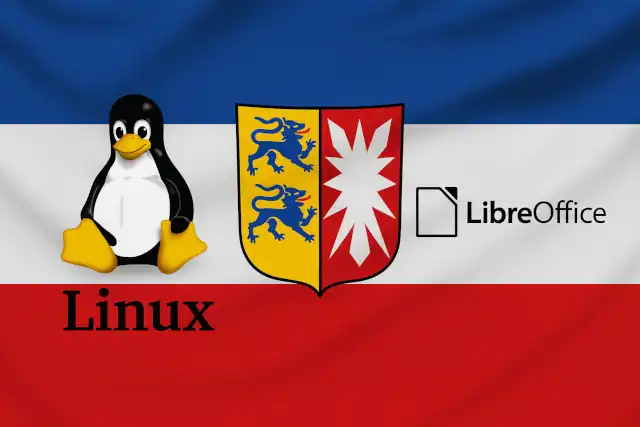
December 2025 – In a landmark achievement for digital independence, the northern German state of Schleswig-Holstein has successfully completed 80% of its transition from Microsoft software to open source alternatives, setting a precedent for government IT infrastructure worldwide.
The Most Windows-Friendly Linux Distributions for General Consumers: A Complete Guide
Major Milestone Reached
According to recent announcements from the State Chancellery, approximately 80% of workplaces in Schleswig-Holstein’s government administration have now been migrated to LibreOffice, marking significant progress in what has become one of Europe’s most ambitious digital sovereignty initiatives.
The remaining 20% of systems still rely on Microsoft Word or Excel, primarily in specialized applications with technical dependencies, though complete migration remains the ultimate goal.
Ufficio Zero: Italy’s Office-Oriented Linux Distribution for Productive Workspaces
Substantial Cost Savings
The financial benefits are substantial. Schleswig-Holstein expects to save over €15 million ($17.5 million) annually in licensing costs for Windows, Microsoft Office, and related tools starting in 2026. These savings represent funds that previously went to Microsoft each year. However, the state has allocated a one-time investment of €9 million in 2026 to complete the migration and further enhance its open source infrastructure.
“This is not just about technological independence but also about economic aspects,” stated Dirk Schrödter, the state’s Head of the State Chancellery and Digital Affairs Minister. “Instead of investing our IT funding in license fees, we use it to finance development and support contracts.”
Austria’s Military Ditches Microsoft Office: A Neutral Nation’s Quest for Digital Sovereignty
The Linux Question: “+1.Linux” Project
When it comes to the operating system migration, Schleswig-Holstein has taken a deliberate approach. The state is developing what it calls the “+1.Linux Arbeitsplatz” (“+1.Linux Workplace”) project, which represents the transition of standard workstations to a GNU/Linux-based operating system.
Linux Distribution Details
While the state has not committed to a single distribution, several options are under serious consideration:
-
KDE Plasma Desktop Environment: The state has chosen KDE Plasma as the standard desktop environment due to its modern, easily customizable interface that provides familiarity for users transitioning from Windows.
-
Distribution Options: The leading candidates include:
- Kubuntu: Ubuntu-based with KDE Plasma, offering stability and extensive community support
- openSUSE Leap: A stable distribution with long-term support and enterprise-grade reliability
- SUSE Linux Enterprise Desktop (SLED): A commercial option with professional support
The state emphasizes that the chosen distribution must be “suitable and professionally supported for use by authorities” with enterprise-grade stability and security.
What is the best alternative to Microsoft Office?
Comprehensive Technology Stack
The migration extends far beyond just office software and operating systems. Schleswig-Holstein has implemented or is implementing the following open source solutions:
Email and Collaboration
- Email Server: Open-Xchange (replacing Microsoft Exchange)
- Email Client: Mozilla Thunderbird (replacing Outlook)
- Cloud Services: Nextcloud (replacing SharePoint)
- Video Conferencing: Jitsi and OpenTalk (replacing Teams and Webex)
In October 2025, the state completed its email migration, moving over 40,000 mailboxes containing more than 100 million emails and calendar entries. This six-month process affected approximately 30,000 employees across the State Chancellery, ministries, judiciary, state police, and other authorities.
Other Components
- Directory Services: Univention Corporate Server (UCS) to replace Microsoft Active Directory
- Telephony: Open source telephony solution using components like Kamailio, RTPengine, and Asterisk
- Document Format: Open Document Format (ODF) became the official standard as of August 1, 2024
Replacing Microsoft Outlook on Linux: The Best Email Clients Compared
Challenges and Lessons Learned
The migration has not been without difficulties. Minister Schrödter publicly acknowledged problems in a letter to state employees, apologizing for stressful weeks and operational issues. Challenges included:
- Temporary email system outages during migration
- Integration difficulties with existing specialized software (Fachverfahren)
- Learning curve for employees adapting to new tools
- Compatibility issues with legacy systems, particularly SAP
Police unions and judicial bodies voiced concerns about disruptions during critical operations. However, state officials emphasize that these growing pains are part of the transition process and that a dedicated task force continues to monitor and resolve issues.
China Officially Replaces Microsoft Office with Domestic WPS Format in Government Documents
Historical Context: Learning from Munich
Schleswig-Holstein’s approach differs significantly from Munich’s controversial “LiMux” project. Munich began its Linux migration in 2004 but reversed course in 2017, returning to Windows – a decision many attributed to Microsoft’s relocation of its German headquarters to Munich.
However, key differences make Schleswig-Holstein’s effort more likely to succeed:
- Complete Migration: Unlike Munich, which ran both systems in parallel, Schleswig-Holstein is pursuing a comprehensive top-to-bottom transition
- Modern Motivation: The focus has shifted from cost savings alone to digital sovereignty, data protection, and security
- Mature Technology: Linux and LibreOffice have matured significantly since the LiMux era
- European Context: The 2024 European Data Protection Supervisor ruling that the European Commission’s use of Microsoft 365 violated GDPR has strengthened the case for open source
- Cross-Party Support: The initiative has survived electoral changes, demonstrating sustained political commitment
Why is it difficult for viruses to “infect” Linux OS?
Broader European Movement
Schleswig-Holstein is part of a growing European trend toward digital sovereignty:
- Denmark: The Ministry of Digital Affairs announced plans to switch from Microsoft to LibreOffice in 2024
- France: The national gendarmerie has successfully operated 97% of its 103,000+ computers on Ubuntu-based “GendBuntu” for over a decade
- Austria: The Bundesheer (Armed Forces) is completing its migration to LibreOffice
- Switzerland: Data protection authorities declared international cloud services unsuitable for handling personal data
- Italy: The Ministry of Defense saved approximately €3.6 billion by migrating to LibreOffice
Why servers with Linux OS are much more than Windows server?
Economic and Strategic Implications
The migration represents a form of modern industrial policy, as Schrödter explains: “Instead of investing our IT funding in license fees, we use it to finance development and support contracts.” This approach supports the regional digital economy by redirecting public funds to local developers and service providers.
A 2021 European Commission study found that a 10% increase in open source investment across the EU could help produce 600 new startups and generate 0.6% GDP growth.
Free Project Management Software Alternatives to MS Project for Linux
Looking Ahead
Schleswig-Holstein’s timeline calls for:
- Complete migration to LibreOffice by the end of 2025
- Full Windows-to-Linux migration by 2027
- Continued development of the “+1.Linux” workplace infrastructure
The state has committed to sharing its migration tools and experiences with other regions and public institutions. According to Schrödter, the initiative has attracted interest from Denmark, the UK, France, New Zealand, India, Switzerland, and Austria.
Collabora Office: A Powerful Open-Source Alternative to Microsoft Office
Conclusion
Schleswig-Holstein’s open source migration demonstrates that large-scale government transitions to open source software are not only possible but can deliver substantial financial savings and enhanced digital sovereignty. While challenges remain, the state’s comprehensive approach, political commitment, and willingness to learn from past failures position it as a potential model for public administrations worldwide.
As global debates about tech monopolies, data privacy, and digital sovereignty intensify, this northern German state’s experience offers valuable insights for any organization considering a similar transition. The key lessons: plan comprehensively, commit politically, engage with open source communities, and focus on long-term resilience rather than short-term cost savings alone.
Sources: Heise Online, The Register, It’s FOSS, Cybernews, The Document Foundation, LinuxSecurity, and official Schleswig-Holstein government announcements