Haiku OS: Non-Linux Open-Source Resurrection of BeOS
Haiku OS: Non-Linux Open-Source Resurrection of BeOS
- Why Enterprise RAID Rebuilding Succeeds Where Consumer Arrays Fail?
- Linus Torvalds Rejects MMC Subsystem Updates for Linux 7.0: “Complete Garbage”
- The Man Who Maintained Sudo for 30 Years Now Struggles to Fund the Work That Powers Millions of Servers
- How Close Are Quantum Computers to Breaking RSA-2048?
- Why Windows 10 Users Are Flocking to Zorin OS 18 Instead of Linux Mint?
- How to Prevent Ransomware Infection Risks?
- What is the best alternative to Microsoft Office?
Haiku OS: Non-Linux Open-Source Resurrection of BeOS
In the landscape of modern operating systems dominated by Windows, macOS, and Linux, there exists a unique project that refuses to follow conventional paths.
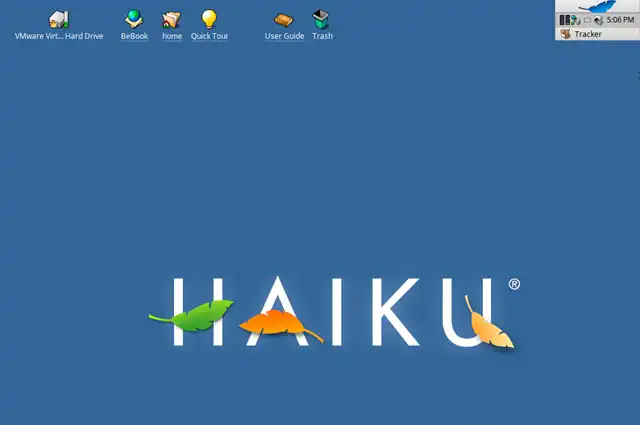
Haiku OS is a free, open-source operating system that specifically targets personal computing with a focus on speed, efficiency, and user-friendliness.
What makes Haiku particularly fascinating is its origin story: it’s a from-scratch reimplementation of BeOS, a revolutionary operating system from the 1990s that was ahead of its time but commercially unsuccessful.
The Most Windows-Friendly Linux Distributions for General Consumers: A Complete Guide
The BeOS Legacy
To understand Haiku, we must first look back at BeOS. Created by Be Inc., a company founded in 1990 by former Apple executive Jean-Louis Gassée, BeOS was designed from the ground up for multimedia applications. At a time when Windows 95 was struggling with basic multitasking and crashes were commonplace, BeOS offered pervasive multithreading, a 64-bit journaling file system, and impressive multimedia capabilities.
BeOS was remarkably responsive and could handle multiple audio and video streams simultaneously without breaking a sweat. Its clean, modular architecture and “database-like” file system with support for extended attributes made it a favorite among multimedia professionals and tech enthusiasts. The operating system featured a distinctive yellow tab interface and could boot in mere seconds on 1990s hardware.
Despite its technical excellence, BeOS faced insurmountable business challenges. Be Inc. attempted to position BeOS as an alternative to both Windows and Mac OS, even pursuing deals with major computer manufacturers. In one notable near-miss, Apple considered acquiring Be Inc. in 1996 as the basis for what would become Mac OS X, but ultimately chose NeXT instead. Be Inc. eventually sold its intellectual property to Palm in 2001 for just $11 million, and BeOS development ceased.
Why Windows 10 Users Are Flocking to Zorin OS 18 Instead of Linux Mint?
The Birth of Haiku
The death of BeOS in 2001 left a passionate community of users without their beloved operating system. Rather than simply mourning its loss, a group of developers decided to recreate it. The OpenBeOS project launched in 2001 with an ambitious goal: to reimplement BeOS from scratch as an open-source operating system that would be binary-compatible with BeOS R5, the final official release.
In 2004, following a request from Palm’s legal team, the project changed its name to Haiku, inspired by the error messages in BeOS that were written in haiku form. The project has continued steadily ever since, driven entirely by volunteers who believe in the BeOS vision.
What is the best alternative to Microsoft Office?
Historical Timeline
BeOS Era:
- 1990: Be Inc. founded by Jean-Louis Gassée
- 1995: BeOS Developer Release 5 (DR5) released
- 1996: Apple considers acquiring Be Inc. but chooses NeXT instead
- 1998: BeOS R3 released for PowerPC and x86
- 2000: BeOS R5 released (final official version)
- 2001: Be Inc. sells intellectual property to Palm; BeOS discontinued
Haiku Era:
- 2001: OpenBeOS project launched
- 2004: Project renamed to Haiku
- 2009: Haiku R1/Alpha 1 released
- 2018: Haiku R1/Beta 1 released (September)
- 2020: Haiku R1/Beta 2 released (June)
- 2021: Haiku R1/Beta 3 released (July)
- 2023: Haiku R1/Beta 4 released (January)
- 2025: Active development continues with regular nightly builds
Replacing Microsoft Outlook on Linux: The Best Email Clients Compared
What Makes Haiku Special
Haiku inherits BeOS’s core philosophy: an operating system should be fast, simple, elegant, and focused on the personal computing experience. Several features distinguish Haiku from other modern operating systems.
The entire system is built around a consistent and unified design. Unlike Linux distributions that often feel like collections of disparate components, Haiku presents a cohesive experience where every element, from the kernel to the desktop environment to the bundled applications, was designed to work together seamlessly.
Performance remains a hallmark of Haiku. The OS boots in seconds even on modest hardware and maintains exceptional responsiveness. This efficiency comes from its carefully designed multithreading model where almost everything runs in its own thread, preventing any single process from blocking the system.
The file system, BFS (Be File System), supports extended attributes that allow rich metadata to be attached to any file. This enables powerful querying and organization capabilities. You can search for files not just by name but by any attribute, and these queries can be saved as “live queries” that automatically update as files are added or modified.
Haiku maintains near-complete binary compatibility with BeOS applications from 25 years ago. Software written for BeOS R5 generally runs on modern Haiku without modification, a testament to the stability of the underlying APIs.
Essential Security Measures to Implement Immediately After Linux OS Installation
Current State and Highlights
After more than two decades of development, Haiku has evolved from an ambitious dream into a functional operating system. While still officially in beta, these releases are remarkably stable and usable for daily computing tasks.
Modern Haiku includes a package management system similar to those found in Linux distributions, making software installation straightforward. HaikuDepot, the graphical package manager, provides access to hundreds of ported applications including web browsers like WebPositive (Haiku’s native browser) and Falkon, the LibreOffice suite, development tools, and multimedia applications.
The operating system runs on modern x86 and x86_64 hardware, with experimental ARM support in development. It works well in virtual machines, making it easy for curious users to try without commitment. Hardware support has improved significantly, with drivers for modern Wi-Fi cards, graphics cards, and peripherals, though some cutting-edge hardware may still require patience.
The developer community remains active, with regular nightly builds and continuous improvements. The project maintains its commitment to open source while respecting BeOS’s original vision. Everything from the kernel to the desktop environment is freely available and modifiable.
Why servers with Linux OS are much more than Windows server?
Why Haiku Matters
In an era where operating systems have converged toward similar design philosophies and increasing complexity, Haiku represents an alternative approach. It demonstrates that a small team of dedicated volunteers can create a complete, functional operating system without corporate backing. It preserves the ideas and innovations of BeOS for future generations of developers and users.
For users frustrated with the bloat and complexity of modern systems, Haiku offers genuine simplicity without sacrificing functionality. For developers, it provides a clean, well-documented system where understanding the entire stack is actually achievable. For computing historians, it keeps alive an important chapter in operating system development.
Haiku OS may never achieve mainstream adoption, and perhaps that’s not its goal. Instead, it serves as a reminder that in computing, as in life, there are many valid paths forward. Sometimes looking backward, to the elegant simplicity of BeOS, can inspire fresh thinking about the future. In its own quiet way, Haiku continues the BeOS dream, proving that good ideas never truly die—they just get reimplemented.
Haiku OS Official Download Link