How Aircraft Communicate with Ground Control?
How Aircraft Communicate with Ground Control?
- Why Enterprise RAID Rebuilding Succeeds Where Consumer Arrays Fail?
- Linus Torvalds Rejects MMC Subsystem Updates for Linux 7.0: “Complete Garbage”
- The Man Who Maintained Sudo for 30 Years Now Struggles to Fund the Work That Powers Millions of Servers
- How Close Are Quantum Computers to Breaking RSA-2048?
- Why Windows 10 Users Are Flocking to Zorin OS 18 Instead of Linux Mint?
- How to Prevent Ransomware Infection Risks?
- What is the best alternative to Microsoft Office?
How Aircraft Communicate with Ground Control?
How do aircraft maintain contact with ground control while flying? How is flight data transmitted between aircraft and ground stations? Which aircraft components can transmit data? This comprehensive guide explores the sophisticated communication systems that keep aircraft connected to ground control and other aircraft during flight.
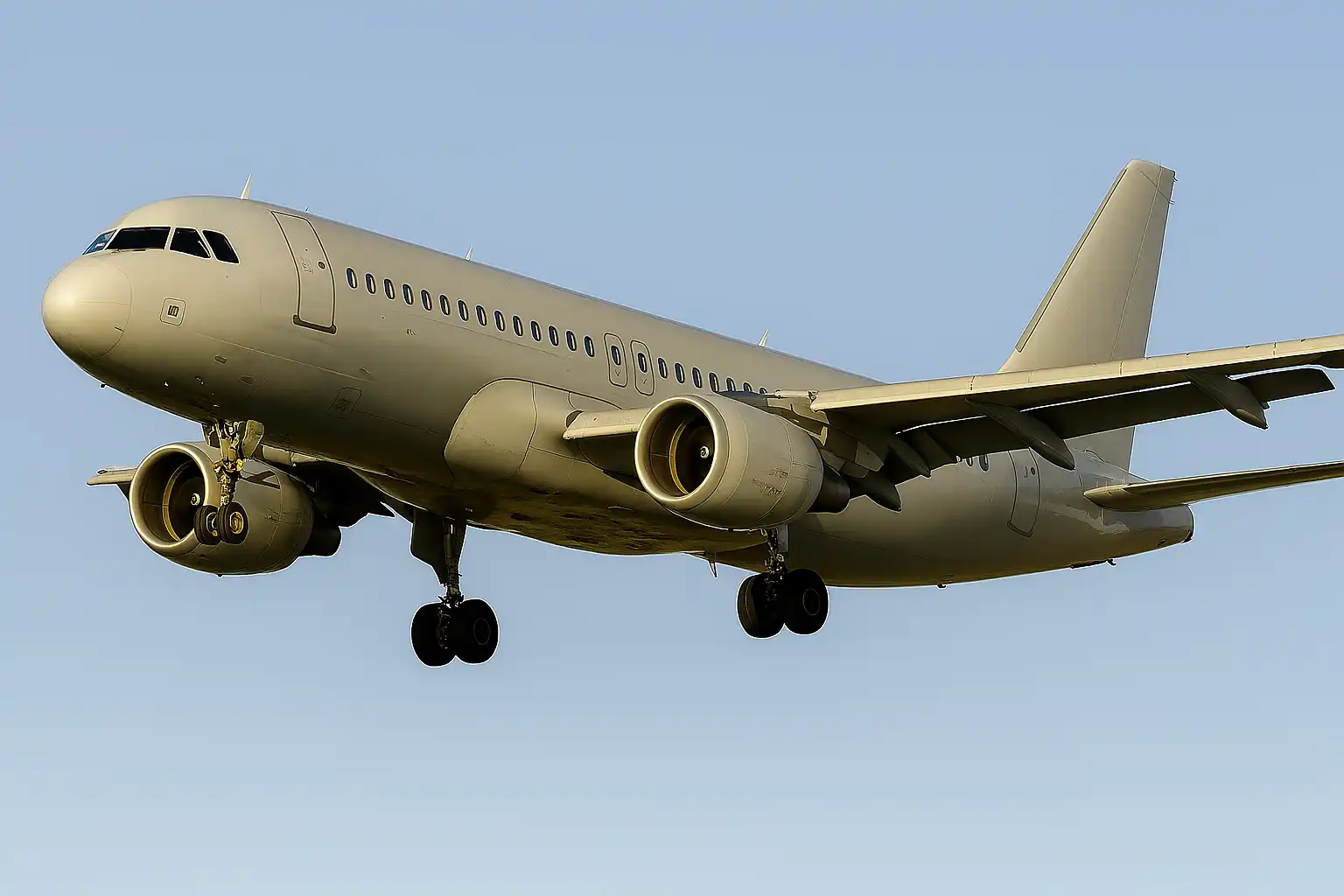
Overview of Communication, Navigation, and Identification Systems
Aircraft navigation, communication, and identification systems are essential for safe flight operations. These systems enable voice and data communication between air-to-air, air-to-ground, ground-to-air, and air-to-sea connections. They also support autonomous radio navigation, landing procedures, and aerial formation flying.
The aircraft-to-ground transmission system consists of two main components: radio communication and data transmission.
Radio Communication Systems
High Frequency (HF) Communication
High frequency communication provides extended communication range for both aircraft-to-aircraft and aircraft-to-ground communications. The system operates within a frequency range of 2 MHz to 29.999 MHz (based on Boeing 737 specifications) and utilizes signal reflection between the Earth’s surface and ionosphere. Communication distance varies depending on altitude, frequency, and time of day.
Very High Frequency (VHF) Communication
VHF communication provides line-of-sight communication capabilities. This system enables both voice and data communication between flight crews and ground control, as well as other aircraft. The radio frequency band operates between 118 MHz and 136.99 MHz (based on Boeing 737 specifications).
Selective Calling System (SELCAL)
The Selective Calling System operates on airline wireless networks and connects with both HF and VHF systems aboard aircraft to facilitate ground-to-aircraft communication. Each aircraft is assigned a unique four-character code, with each letter representing a specific audio tone. Ground stations use different tone combinations to call individual aircraft. When an aircraft receives its designated code, cockpit lights illuminate to alert the flight crew.
Data Transmission Systems
Satellite Communication (SATCOM)
The satellite communication system enables data and voice transmission between ground and satellite networks. Compared to HF and VHF communication systems, SATCOM can transmit higher quality data and voice recordings. It provides three communication channels: Aero-H Classic, SwiftBroadband (SBB), and ACARS.
Aircraft Communications Addressing and Reporting System (ACARS)
ACARS is a digital datalink communication system that manages flight data and maintenance information. It allows flight crews to transmit data and information to ground stations either on-demand or at scheduled intervals. Transmittable data includes crew identification, takeoff and landing information, engine performance data, flight status, and maintenance information.
Aircraft Data Monitoring and Transmission
Aircraft data collection and processing primarily relies on the Aircraft Condition Monitoring System (ACMS), which varies by aircraft type. Data is then transmitted to ground-based SITA stations through the ACARS system. The core component of ACMS is either the Digital Flight Data Acquisition Unit (DFDAU) or the Digital Flight Data Management Unit (DFDMU), also known as the Flight Data Acquisition and Management System (FDAMS).
ACMS data typically integrates with manufacturer-specific monitoring systems, such as Boeing’s Aircraft Performance Monitoring (APM), GE’s ADEPT, and Rolls-Royce’s COMPASS systems.
ACMS Reporting Types
ACMS can provide various customized reports based on airline requirements. Common routine reports include:
- Takeoff reports
- Engine reports
- Cruise reports
- Flight summary reports
- Trend reports
Aircraft equipped with FDAMS generate two additional routine reports: APU performance reports and end-of-flight reports.
Reports primarily contain engine performance parameters such as N1, N2, EGT (Exhaust Gas Temperature), FF (Fuel Flow), TLA (Throttle Lever Angle), OIP (Oil Inlet Pressure), VIB (Vibration), BLDV (Bleed Valve), and ISOV (Isolation Valve). They also include flight attitude parameters like PITCH, ROLL, FLAP, WS (Wind Speed), and WD (Wind Direction).
The system maintains at least one report from each category per flight segment until the report storage reaches capacity. Certain reports are generated under specific conditions, such as engine exceedance reports when performance values exceed predetermined limits. Weather reports and position reports can be generated on-demand from ground control or at timed intervals.
Emergency Locator Transmitter (ELT)
Emergency Locator Transmitters come in two types: portable and aircraft-mounted fixed units. Portable units are typically located behind the left rear flight attendant seat, though they may sometimes be found in forward overhead compartments. Aircraft-mounted units are generally positioned near the overhead panel at the rear flight attendant station.
Civil aviation ELTs operate on frequencies of 121.5 MHz, 243 MHz, and 406-406.1 MHz. The system consists of two transmitters: one transmits a sweeping tone through VHF and HF emergency frequencies (121.5 MHz, 243 MHz), while the other transmits a digital signal every 50 seconds through the 406-406.1 MHz channel.
Communication Systems Detail
1. Short Wave Radio
Onboard short wave radio systems enable beyond-line-of-sight and long-distance communication, typically exceeding 1,000 km range. These systems are primarily used for aircraft operating in remote areas with limited ground station support, operating in the 2-30 MHz frequency band.
2. Ultra High Frequency (UHF) Radio
UHF radio systems are standard equipment on all aircraft types, providing communication within line-of-sight range (approximately 350 km at 10,000m altitude). Operating in the 30-400 MHz frequency band, these systems handle communication, voice, and data transmission. When paired with encryption devices, they enable secure communications. Combined with survival receivers, they support aviation rescue and search operations, and when integrated with onboard direction finders, they provide automatic direction-finding capabilities.
3. Tactical Communication Equipment
These systems vary in operating frequency bands and modes depending on different operational requirements.
4. Encryption Devices
Onboard voice and digital encryption equipment works in conjunction with voice radio systems to ensure secure communications.
5. Audio Signal Controller
This system processes and controls various audio signals, voices, and alarms generated by different aircraft equipment.
Navigation Systems
Inertial Navigation System (INS)
INS is an all-weather, autonomous, high-precision navigation system that calculates aircraft position, velocity, and attitude. It operates independently without external interference, providing excellent concealment and high positioning accuracy.
Radio Navigation
Automatic Direction Finder (ADF)
The MW-ADF direction finder operates in the 150-1800 kHz frequency band and provides heading signals, though with limited precision. Despite its simple construction and low cost, it remains commonly used aircraft equipment.
Tactical Air Navigation (TACAN)
TACAN works with ground stations to form a tactical air navigation coordinate positioning system and serves as internationally standardized navigation equipment.
Radar Altimeter
Radar altimeters are available in low-altitude and high-altitude versions, with tactical aircraft typically equipped with low-altitude radar altimeters.
Marker Beacon Receiver
Working with ground marker beacon transmitters, this system provides visual and audio signals to pilots when flying over marker beacons, indicating runway approach points.
Air Traffic Control Transponder
Used for air traffic control operations, working in coordination with ground radar systems.
Landing Systems
Ground-Controlled Approach Systems
Including dual-beacon landing systems, instrument landing systems, and microwave landing systems.
Dual-Beacon Landing System
Comprises automatic direction finder, radar altimeter, marker beacon receiver, ground stations, and marker beacon stations.
Additional Ground Guidance Systems
Including microwave landing systems and identification systems.
Satellite Positioning Systems
Global Positioning Systems (GPS/GLONASS) utilize multiple satellite signals to provide aircraft with three-dimensional position and velocity data. These systems offer high navigation accuracy, global coverage, continuous operation, and all-weather capability, representing the most advanced navigation technology available to modern aviation.