How Bypass Charging Keeps Gaming Phones Cool and Fast?
How Bypass Charging Keeps Gaming Phones Cool and Fast?
- Why Enterprise RAID Rebuilding Succeeds Where Consumer Arrays Fail?
- Linus Torvalds Rejects MMC Subsystem Updates for Linux 7.0: “Complete Garbage”
- The Man Who Maintained Sudo for 30 Years Now Struggles to Fund the Work That Powers Millions of Servers
- How Close Are Quantum Computers to Breaking RSA-2048?
- Why Windows 10 Users Are Flocking to Zorin OS 18 Instead of Linux Mint?
- How to Prevent Ransomware Infection Risks?
- What is the best alternative to Microsoft Office?
How Bypass Charging Keeps Gaming Phones Cool and Fast?
Bypass Charging: The Game-Changing Technology Keeping Smartphones Cool Under Pressure
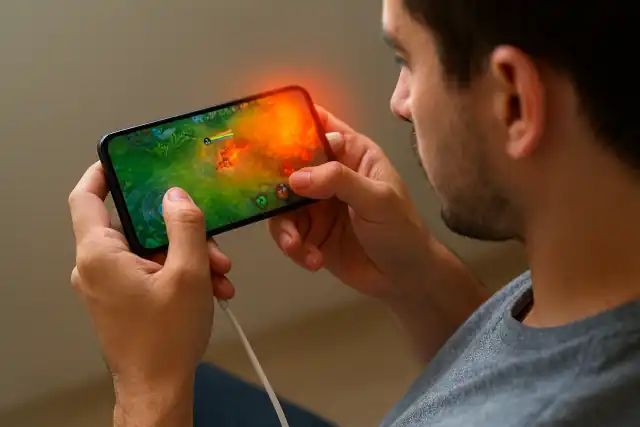
Have you ever noticed your smartphone becoming uncomfortably hot while gaming or watching videos with the charger plugged in?
That frustrating lag and performance drop isn’t just annoying—it’s a sign your device is struggling with heat buildup.
Enter bypass charging, a technology that’s quietly revolutionizing how power-hungry smartphones handle intensive tasks.
Samsung’s Exynos 2600: World’s First 2nm Phone Chip Undercuts Qualcomm on Price
What Is Bypass Charging?
Bypass charging, also known as direct power supply, is exactly what it sounds like: a technology that delivers power directly to your smartphone’s system, completely bypassing the battery.
In conventional charging, electricity flows through a straightforward path: AC adapter → battery → phone system. The battery acts as a middleman, storing power before distributing it to components like the CPU and display. This means when you’re charging while gaming or streaming, your battery is simultaneously charging and discharging—a process that generates significant heat.
Bypass charging takes a different route. Power from the AC adapter flows directly to the phone’s system, sidestepping the battery entirely. This seemingly simple change has profound implications for performance and device longevity.
Google Quick Share and AirDrop Integration: Breaking Down the Walls Between Android and iPhone
Why Bypass Charging Matters
The primary benefit is heat reduction. When batteries charge and discharge simultaneously, they generate excess heat that can push smartphone temperatures into uncomfortable—and performance-limiting—territory.
Smartphones employ a protective mechanism called thermal throttling: when internal temperatures rise too high, the device intentionally reduces CPU performance to prevent damage. While this protects your hardware, it also means laggy gameplay, stuttering video playback, and slower app performance.
By eliminating the battery from the power equation during intensive tasks, bypass charging significantly reduces heat generation. Less heat means less thermal throttling, which translates to sustained peak performance even during demanding activities like mobile gaming, 4K video recording, or live streaming.
For competitive mobile gaming and eSports, where every frame matters, bypass charging has become an essential feature.
Lost iPhone “Found” Notification Scam: How to Avoid Falling for Fake Apple Alerts
Which Phones Support Bypass Charging?
Unfortunately, bypass charging isn’t universal. Currently, the feature is primarily found in gaming-focused smartphones and select flagship models. Here are the main options available in the market:
AQUOS Series (Sharp) Sharp’s AQUOS smartphones include bypass charging under the name “Direct Power Supply” within their “Intelligent Charge” system. The implementation is particularly user-friendly—it automatically activates when battery level reaches 90%, protecting the battery without requiring manual intervention. Unlike some competitors, AQUOS’s direct power supply works beyond gaming scenarios, benefiting various intensive tasks.
Xperia Series (Sony) Sony’s approach comes through “HS Power Control,” found within the Game Enhancer feature. While originally designed for gaming performance, this bypass charging implementation proves valuable for any user who frequently uses their phone while plugged in during demanding activities.
What About iPhone? As of 2025, iPhones do not offer user-controllable bypass charging. While iOS includes “Optimized Battery Charging,” which slows charging above 80% to reduce battery degradation, this battery management feature operates differently from true bypass charging and doesn’t provide the same heat reduction benefits during intensive use.
Why Smartphones Can’t Install Operating Systems as Freely as PCs
The Future of Mobile Power Management
Smartphone evolution shows no signs of slowing. System-on-Chip (SoC) processors grow more powerful annually, while cameras now rival professional photography equipment in capability. This convergence is opening new opportunities for smartphones in professional video production and live streaming.
However, raw battery capacity alone won’t meet these emerging needs. Professional content creators conducting multi-hour shoots or livestreams require sustained high performance without the risk of thermal throttling or unexpected shutdowns. In these extreme-use scenarios, bypass charging transitions from a nice-to-have feature to mission-critical technology.
For professionals pushing smartphones to their limits, bypass charging capability may soon become a decisive factor in device selection—as important as camera specifications or processing power.
Has Your iPhone or Android Phone Been Hacked?
The Bottom Line
Bypass charging represents a thoughtful engineering solution to a problem created by smartphones’ own success. As these devices become more capable, they demand more power and generate more heat. By rethinking the basic path electricity takes through a device, manufacturers have found a way to unlock sustained peak performance.
While not yet universal, bypass charging is gradually expanding beyond gaming phones into mainstream flagships. As smartphones continue encroaching on traditional computing and content creation territory, expect this technology to become increasingly common—and increasingly essential for anyone who demands consistent, unthrottled performance from their mobile device.