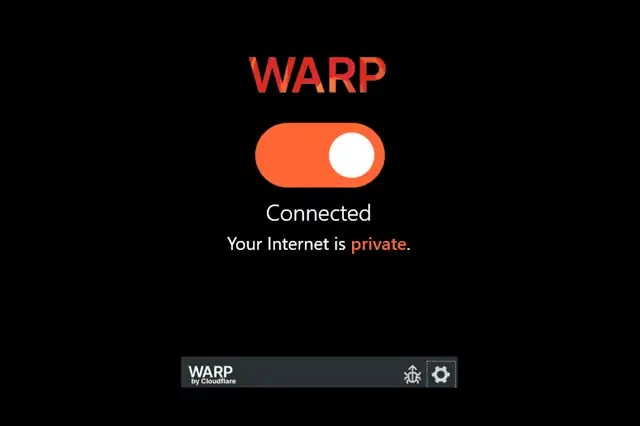
How Cloudflare’s Free WARP Service Protects Your Privacy?
How Cloudflare’s Free WARP Service Protects Your Privacy? A Comprehensive Analysis
- Why Enterprise RAID Rebuilding Succeeds Where Consumer Arrays Fail?
- Linus Torvalds Rejects MMC Subsystem Updates for Linux 7.0: “Complete Garbage”
- The Man Who Maintained Sudo for 30 Years Now Struggles to Fund the Work That Powers Millions of Servers
- How Close Are Quantum Computers to Breaking RSA-2048?
- Why Windows 10 Users Are Flocking to Zorin OS 18 Instead of Linux Mint?
- How to Prevent Ransomware Infection Risks?
- What is the best alternative to Microsoft Office?
How Cloudflare’s Free WARP Service Protects Your Privacy? A Comprehensive Analysis
Understanding DNS-over-WARP, VPN Differences, and Performance Impact
Introduction
In an era where online privacy concerns continue to grow, Cloudflare has positioned itself as a champion of user rights with its free WARP service.
Built upon the foundation of the company’s 1.1.1.1 DNS resolver, WARP represents a novel approach to internet security—one that prioritizes both privacy and performance without the traditional tradeoffs associated with VPN services.
Can Passwords Still Be Transmitted in Plain Text with HTTPS?
How WARP Protects Your Privacy
End-to-End Encryption
WARP encrypts content transmitted to and from your device even when accessing websites or applications that don’t use HTTPS, creating a secure tunnel through Cloudflare’s global network. This encryption layer protects against various threats, particularly on public Wi-Fi networks where malicious actors commonly intercept unencrypted data.
DNS Privacy Enhancement
One of WARP’s most significant privacy features lies in its DNS protection. Traditional DNS lookups for websites were not encrypted, allowing Internet Service Providers to potentially monitor and sell information about where users go online. WARP addresses this vulnerability by routing DNS queries through encrypted channels using DNS-over-HTTPS (DoH) or DNS-over-TLS protocols.
Cloudflare collects only limited DNS query and traffic data, excluding payload information, when the app is enabled on your device. The company has committed to not writing user-identifiable log data to disk and never selling browsing data for advertising purposes.
Minimal Data Collection
Unlike many consumer VPN services that have been criticized for questionable data practices, WARP maintains privacy protections including not requiring personal information like name, phone number, or email address to use the service. The company has also committed to regular independent audits to verify compliance with these privacy promises.
The data Cloudflare does collect serves operational purposes: app installation IDs for referral bonuses, data transfer amounts for WARP+ quota tracking, and average speeds to optimize service in specific regions. Importantly, none of this data is tied to specific websites visited or activities performed online.
Why DMARC Is Crucial for Preventing Email Spoofing and Phishing Attacks?
WARP vs. Traditional VPN: Key Differences
While WARP shares some characteristics with VPNs, fundamental differences exist in their design philosophy and functionality.
Architecture and Purpose
WARP builds proxy tunnels using WireGuard or MASQUE protocols and creates DNS proxies using DNS-over-HTTPS, but its primary goal differs from traditional VPNs. Rather than focusing on anonymity and location masking, WARP emphasizes speed optimization and baseline security enhancement.
IP Address Handling
A critical distinction: Unlike typical VPNs, WARP doesn’t let you choose a specific country or bypass streaming restrictions. Traditional VPNs mask your IP address and allow you to appear as though you’re browsing from another location—essential for accessing geo-restricted content. WARP, conversely, assigns you a Cloudflare IP address near your actual location, meaning websites can still identify your general geographic region.
Use Case Alignment
WARP is designed for users who prioritize faster browsing and encrypted traffic without needing anonymity or geo-unblocking. For tasks requiring true anonymity, such as peer-to-peer file sharing or accessing content restricted in your country, traditional VPNs remain the better choice. However, for everyday security on public networks, protection from ISP snooping, and maintaining good browsing speeds, WARP serves effectively.
Trust Model Considerations
Both WARP and VPNs require users to shift trust from their ISP to another entity—Cloudflare in WARP’s case, or the VPN provider in the latter. Cloudflare operates under US jurisdiction, headquartered in San Francisco, which may concern privacy-focused users in certain contexts. Traditional VPN providers often position themselves in privacy-friendly jurisdictions like the British Virgin Islands or Panama to minimize government data request compliance.
Why Passkeys Will Replace Passwords: The Future of Digital Authentication
Performance and Latency Considerations
Speed Optimization
One of WARP’s primary advantages over traditional VPNs is its performance profile. WARP drains less battery on mobile devices and ensures faster network response time compared to commercial VPN services. The service was specifically designed to address mobile internet performance issues without the typical VPN performance penalty.
WARP’s integration with Cloudflare’s global network of data centers allows traffic to route through the nearest data center, reducing latency and improving browsing speed. This architecture contrasts with many VPNs that introduce noticeable slowdowns, particularly when routing traffic through distant servers.
Variable Performance
However, latency impact isn’t uniform. User experiences vary based on geographic location and proximity to Cloudflare data centers. WARP+ subscribers access a larger network with more cities to connect to, potentially reducing latency by connecting to closer data centers. Some users report minimal impact, while others experience latency increases, particularly if their ISP’s routing doesn’t optimally connect to Cloudflare’s network.
Community reports indicate mixed results—some users experience excellent performance with WARP, while others note connection slowdowns or instability. These variations often depend on local network conditions, ISP peering arrangements, and the specific Cloudflare data center being accessed.
Free vs. Premium Performance
The basic WARP service is entirely free with no bandwidth limitations. WARP+ Unlimited is a paid monthly subscription that provides access to Cloudflare’s Argo Smart Routing network for improved performance, particularly for international connections. Argo analyzes real-time network congestion to route traffic through less congested paths, potentially offering better speeds for users who frequently access content far from their physical location.
What Are Decentralized End-to-End Encrypted Messaging Apps and Why Do They Matter?
Conclusion
Cloudflare WARP represents a modern approach to internet security that balances privacy protection with performance optimization. It effectively addresses DNS privacy concerns, encrypts traffic to prevent ISP monitoring, and maintains connection speeds that often exceed traditional VPN offerings.
However, users must understand WARP’s limitations. It doesn’t provide the anonymity features of full VPN services, cannot bypass geographic content restrictions, and operates under US legal jurisdiction. For users primarily concerned about everyday security—protecting against public Wi-Fi threats, preventing ISP snooping, and maintaining DNS privacy—WARP offers an excellent free solution. Those requiring complete anonymity, geo-spoofing capabilities, or operation outside major jurisdictions should consider traditional VPN services instead.
The choice between WARP and traditional VPNs ultimately depends on individual needs. Many users may even benefit from a hybrid approach, using WARP for general browsing and switching to a VPN when anonymity or location masking becomes necessary. As online privacy continues to evolve, services like WARP demonstrate that security enhancements need not always come with significant performance penalties or complex configurations.
Cloudflare WARP Official Download Link
For the latest information about Cloudflare WARP, visit the official Cloudflare documentation at developers.cloudflare.com