Intel Panther Lake: How Much Performance Improvement Do the Xe3 GPU and 5th Generation NPU Deliver?
Intel Panther Lake: How Much Performance Improvement Do the Xe3 GPU and 5th Generation NPU Deliver?
- Why Enterprise RAID Rebuilding Succeeds Where Consumer Arrays Fail?
- Linus Torvalds Rejects MMC Subsystem Updates for Linux 7.0: “Complete Garbage”
- The Man Who Maintained Sudo for 30 Years Now Struggles to Fund the Work That Powers Millions of Servers
- How Close Are Quantum Computers to Breaking RSA-2048?
- Why Windows 10 Users Are Flocking to Zorin OS 18 Instead of Linux Mint?
- How to Prevent Ransomware Infection Risks?
- What is the best alternative to Microsoft Office?
Intel Panther Lake: How Much Performance Improvement Do the Xe3 GPU and 5th Generation NPU Deliver?
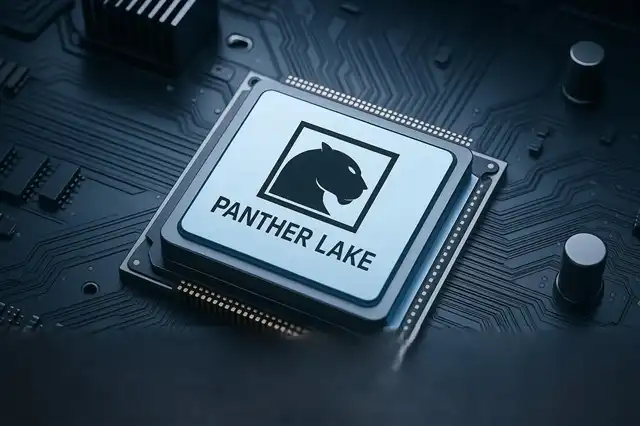
Intel has unveiled technical details about Panther Lake, its next-generation Core Ultra processor.
The announcement revealed comprehensive information about the integrated Xe3 GPU, 5th generation NPU, and IPU 7.5 image signal processor that will power these upcoming chips.
Xe3 GPU Becomes Intel Arc B-Series with Significant Architectural Improvements
The GPU in Panther Lake represents the third generation of Intel’s Xe architecture, officially branded as “Intel Arc B-Series.” This marks a substantial evolution from the Xe2 GPU found in Lunar Lake processors.
Evolution of Intel’s Xe Architecture
Intel introduced the Xe GPU architecture in 2020 with the 11th generation Core (Tiger Lake) processors. Unlike previous Intel GPUs that focused solely on integrated graphics, Xe was designed as a scalable architecture spanning from integrated to discrete GPUs. The first generation included Xe-LP in Tiger Lake and the discrete Iris Xe Max (DG1).
The architecture evolved through Alchemist (Xe-HPG), launched in 2022 as Intel Arc A-series discrete GPUs. The integrated version, Xe-LPG, appeared in the first Core Ultra (Meteor Lake) in 2023, with XMX AI acceleration capabilities added in Core Ultra 200H (Arrow Lake-H) in January 2025.
Xe2, the second generation, debuted in Core Ultra 200V (Lunar Lake) in September 2024, featuring enhanced vector engines with native SIMD16 support in a single Xe core, compared to requiring two cores in the original Xe generation. The discrete version, Battlemage, launched as Arc B-series at the end of 2024.
Xe3 Architecture Enhancements
Panther Lake’s Xe3 GPU brings several key improvements over Xe2:
Increased Core Count: Each render slice now contains up to 6 Xe cores, compared to 4 in Xe2. With 2 render slices, Panther Lake maxes out at 12 Xe cores versus Lunar Lake’s 8 cores.
Enhanced Cache Hierarchy: Shared L1 memory per Xe core increases from 192KB in Lunar Lake to 256KB (matching Battlemage). L2 cache doubles from 8MB to 16MB, significantly reducing memory latency and bandwidth pressure.
Optimized Execution: While maintaining the same basic compute unit structure as Xe2 (eight 512-bit vector engines with native SIMD16 support), Xe3 can process 25% more threads, supports multiple register allocations, and adds FP8 dequantization capabilities.
Strengthened Graphics Functions: Fixed-function improvements include new URB managers, doubled anisotropic filtering engines, and doubled stencil test buffers.
AI Performance Boost: With 96 XMX units (versus 64 in Lunar Lake’s Xe2), AI inference performance using INT8 reaches 120 TOPS. Supported precisions remain TF32, FP16/BF16, INT8, INT4, and INT2.
Intel claims that compared to Lunar Lake’s Xe2 GPU, Xe3 delivers up to 7.4x improvement in certain shader operations, up to 50% better gaming performance, and 40% lower power consumption at equivalent performance to Arrow Lake-H.
Manufacturing Configuration
Panther Lake’s GPU is manufactured as a separate graphics tile integrated via Foveros packaging. Two configurations are available: a 4-core version manufactured on Intel 3, and a 12-core version produced using TSMC N3E process technology.
5th Generation NPU: Same Performance, 40% Smaller Die Area
Intel’s NPU technology traces back to Movidius, a company Intel acquired in 2016. Movidius developed Visual Processing Units (VPUs) for low-power image recognition, with two generations (Myriad-X and Keem Bay) released before integration into Intel processors.
NPU Evolution Through Generations
The 3rd generation NPU debuted in the original Core Ultra (Meteor Lake) in 2023, featuring 2 Neural Compute Engines and delivering 11 TOPS (INT8) performance, which increased to 13 TOPS in Arrow Lake.
The 4th generation NPU in Core Ultra 200V (Lunar Lake) tripled the Neural Compute Engines to 6 units, achieving 48 TOPS performance—surpassing Microsoft’s Copilot+ PC requirement of 40 TOPS.
5th Generation NPU Architecture Redesign
Panther Lake’s 5th generation NPU achieves 50 TOPS performance—only marginally higher than Lunar Lake’s 48 TOPS—but represents a fundamental architectural overhaul focused on efficiency:
Restructured Compute Engines: Neural Compute Engines reduced from 6 to 3 units, but each contains double the MAC (multiply-accumulate) units. Total MAC count remains equivalent at 12,000 units—essentially a different partitioning strategy.
Reduced DSP Count: SHAVE DSPs decrease from 12 to 6 units (since each Neural Compute Engine contains 2 DSPs).
Optimized Memory: Scratchpad RAM reduced from 9MB to 4.5MB, indicating the 4th generation had excess capacity.
Dramatic Efficiency Gain: Performance per die area improves by 40%, meaning the 5th generation NPU achieves similar performance in a 40% smaller footprint.
Advanced Manufacturing: Unlike previous generations manufactured on TSMC N6 in the SoC die, the 5th generation NPU is integrated into the compute tile and manufactured on Intel’s latest 18A process node, contributing significantly to power efficiency improvements.
All Panther Lake configurations will meet Copilot+ PC requirements.
IPU 7.5: Enhanced Image Processing
Panther Lake includes IPU 7.5, a minor upgrade to the IPU 7 introduced in Lunar Lake. Intel’s Image Processing Unit (ISP) is used in Microsoft Surface and select Lenovo ThinkPad models, connecting to camera CMOS sensors via high-speed MIPI-CSI2 serial bus.
SoC-integrated ISPs offer substantial advantages over standalone camera ISPs, including access to faster local memory and significantly higher processing power, enabling superior post-processing of RAW data for both video and still images.
IPU 7.5 maintains the same hardware foundation (three 10-bit depth IPU units) but adds:
- Enhanced HDR blender engine
- NPU and GPU acceleration capabilities
- AI-based noise reduction and tone mapping
- Expanded HDR dynamic range
These improvements enable higher image quality through more sophisticated processing algorithms leveraging the entire SoC’s computational resources.
Conclusion
Intel’s Panther Lake represents a thoughtful evolution of its GPU and AI acceleration technologies.
The Xe3 GPU delivers meaningful performance improvements through increased core counts and enhanced cache hierarchies, while the 5th generation NPU demonstrates that architectural refinement can achieve similar performance targets with dramatically improved efficiency.
Combined with enhanced image processing capabilities, these improvements position Panther Lake as a competitive offering in the AI PC era.