Memory Prices Soar as Samsung Rewrites the Rules of Supply
Memory Prices Soar as Samsung Rewrites the Rules of Supply
- Why Enterprise RAID Rebuilding Succeeds Where Consumer Arrays Fail?
- Linus Torvalds Rejects MMC Subsystem Updates for Linux 7.0: “Complete Garbage”
- The Man Who Maintained Sudo for 30 Years Now Struggles to Fund the Work That Powers Millions of Servers
- How Close Are Quantum Computers to Breaking RSA-2048?
- Why Windows 10 Users Are Flocking to Zorin OS 18 Instead of Linux Mint?
- How to Prevent Ransomware Infection Risks?
- What is the best alternative to Microsoft Office?
Memory Prices Soar as Samsung
Rewrites the Rules of Supply
AI infrastructure is consuming chips at unprecedented rates, pushing DRAM and NAND prices to multi-year highs — and today, Samsung’s co-CEO disclosed the company is weighing multi-year contracts that would lock customers in for up to five years.
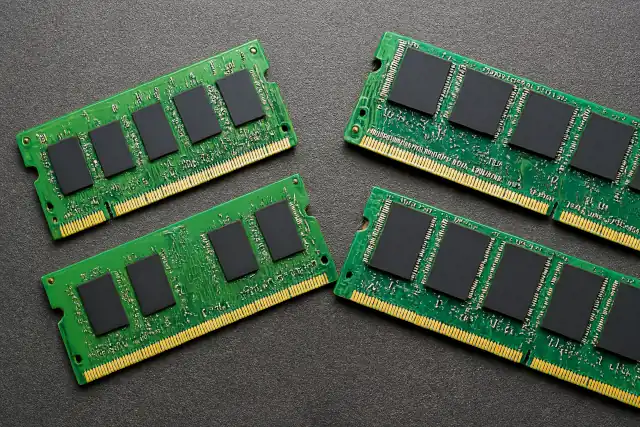
The global memory chip market entered crisis territory on Tuesday as Samsung Electronics’ co-CEO disclosed at an annual general meeting that the company is evaluating multi-year supply contracts lasting as long as three to five years — a sweeping departure from the quarterly and annual deals that have long defined the industry. The announcement landed as DRAM and NAND prices continued their steepest climb in years, driven by insatiable demand from artificial intelligence data centers stripping supply from every other sector of the economy.
Co-CEO Jun Young-hyun, who directly oversees Samsung’s memory business, told shareholders the potential contract shift comes as AI chip demand is expected to continue surging through 2026 and beyond. The disclosure follows months of escalating pressure in the memory supply chain that has already pushed server DRAM prices up more than 100% in contract markets.
“In 2026, there’s going to be issues around semiconductor supplies, and it’s going to affect everyone, not just Samsung.”
— Wonjin Lee, President & Head of Global Marketing, Samsung Electronics (Bloomberg, Jan. 2026)The NCNR Weapon: Locking In Supply — and Profit
Even before today’s multi-year contract disclosure, Samsung had already begun tightening its grip on downstream customers through a different mechanism: Non-Cancellable, Non-Returnable (NCNR) agreements. Reports confirmed in late 2024 that at least one major enterprise server customer signed an NCNR contract with Samsung to secure DDR4 memory — binding the buyer to accept fixed quantities at a fixed price regardless of market conditions.
Under NCNR terms, there is no exit ramp. If prices fall, buyers still pay the contracted rate. If they no longer need the volume, they cannot return it. The structure guarantees Samsung revenue while insulating it from any future price softening. Crucially, the DDR4 supply secured through these contracts is directed primarily at enterprise server applications — not consumer markets. PC builders and everyday end-users should expect no relief from the current shortage.
AI’s Insatiable Appetite: The Root of the Crisis
The culprit is not a manufacturing failure or a geopolitical shock — it is artificial intelligence. Hyperscalers racing to build data centers capable of training and running large AI models are consuming memory at rates the industry was not designed to accommodate. Samsung, SK Hynix, and Micron have all pivoted their highest-value capacity toward high-bandwidth memory (HBM) and enterprise DDR5, leaving conventional DRAM and NAND flash markets undersupplied.
SK Hynix reported during its October 2025 earnings call that its HBM, DRAM, and NAND capacity is essentially sold out for all of 2026. Micron has exited the consumer memory market entirely to focus on enterprise and AI customers. The practical consequence is a two-tier market: cloud giants with the scale to commit to long-term supply arrangements can secure inventory, while mid-market buyers compete for whatever remains.
The ripple effects are now unavoidable for ordinary buyers. With most PCs, laptops, game consoles, tablets, and smartphones requiring at least 16 GB of memory, estimates suggest memory costs alone could add roughly US$96 to even basic office PCs in 2026 and beyond. Brands including Asus and MSI are reportedly stockpiling memory modules aggressively in anticipation of continued supply constraints.
Even Nvidia’s planned RTX 50 series gaming GPU launch may be disrupted. Industry observers suggest the Blackwell consumer cards — originally targeting an early 2026 debut — could see delays partly attributable to the sharply higher memory requirements of next-generation graphics hardware.
Enterprise buyers reliant on commodity DRAM and NAND should expect continued price volatility through at least mid-2026. Multi-quarter supply agreements signed during the 2023–2024 price trough are expiring, leaving buyers exposed to spot-linked pricing. Procurement teams dependent on DDR4 face particular risk as Samsung, SK Hynix, and Micron migrate capacity to DDR5 and HBM lines.
Correcting the Record: What the Viral Reports Got Wrong
A widely circulated report today made several claims about the severity and duration of the shortage that go beyond what is currently supported by credible sourcing. The factual picture is serious enough without embellishment — here is what can and cannot be confirmed:
What Comes Next
Samsung’s potential shift to multi-year contracts would fundamentally reshape how the memory industry operates. Historically, quarterly contracts allowed buyers flexibility and suppliers steady revenue. Locking terms for three to five years — during a price peak — transfers virtually all market risk downstream. Buyers who sign now would pay today’s elevated rates even if new capacity comes online and prices soften.
Samsung has announced plans to build a new memory production line in South Korea, but that capacity will not come online for some time. In the interim, the market remains structurally undersupplied for non-AI applications, and incremental supply growth is expected to lag demand from AI infrastructure and high-performance computing well into 2026.
For enterprises, cloud providers, automotive manufacturers, and consumer electronics brands, the calculus is stark: sign long-term contracts at peak prices to guarantee supply, or risk being locked out of allocations entirely as the biggest cloud providers continue to claim priority access.
“The AI build-out is absolutely eating up a lot of the available chip supply, and 2026 looks to be far bigger than this year in terms of overall demand.”
— Dan Nystedt, VP of Research, TriOrient (via CNBC)The shortage, analysts now broadly agree, is not a short-term imbalance but a structural inflection point — one that will define semiconductor procurement strategy for years to come, regardless of whether Samsung’s most aggressive contract terms ultimately materialize.