Micron Begins Shipping 1γ DRAM: 16Gb DDR5 Achieves Data Transfer Rates of Up to 9200MT/s
Micron Begins Shipping 1γ DRAM: 16Gb DDR5 Achieves Data Transfer Rates of Up to 9200MT/s
- Why Enterprise RAID Rebuilding Succeeds Where Consumer Arrays Fail?
- Linus Torvalds Rejects MMC Subsystem Updates for Linux 7.0: “Complete Garbage”
- The Man Who Maintained Sudo for 30 Years Now Struggles to Fund the Work That Powers Millions of Servers
- How Close Are Quantum Computers to Breaking RSA-2048?
- Why Windows 10 Users Are Flocking to Zorin OS 18 Instead of Linux Mint?
- How to Prevent Ransomware Infection Risks?
- What is the best alternative to Microsoft Office?
Micron Begins Shipping 1γ DRAM: 16Gb DDR5 Achieves Data Transfer Rates of Up to 9200MT/s
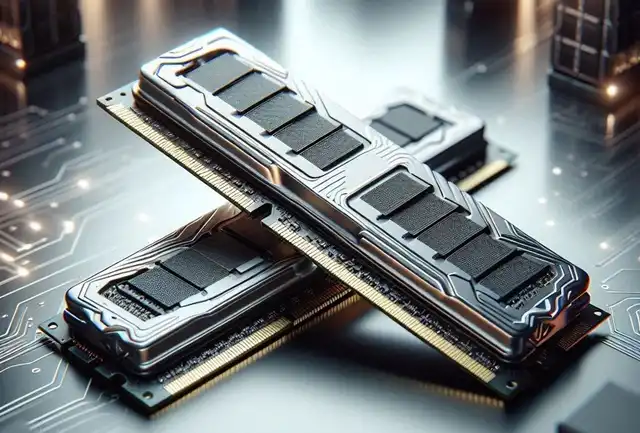
Micron Technology, Inc. has announced the launch of its 16Gb DDR5 DRAM, manufactured using the company’s latest 1γ (1-gamma) sixth-generation (10nm-class) DRAM process node.
This marks Micron’s first application of extreme ultraviolet (EUV) lithography.
The new 16Gb DDR5 DRAM boasts data transfer speeds of up to 9200MT/s, representing a 15% increase over the previous generation while reducing power consumption by more than 20%.
Micron plans to integrate the 1γ DRAM node across its memory product portfolio to meet the growing demand for high-performance and energy-efficient memory solutions in the AI industry.
Advancing AI-Driven Memory Needs
As AI continues to expand across data centers and edge devices, the demand for high-capacity, high-performance memory has reached unprecedented levels. Micron’s transition to the 1γ DRAM node addresses several critical challenges:
- Scalability Across AI Workloads: 1γ-based DRAM enables computational scalability across a range of memory products, supporting both data center and edge AI applications.
- Enhanced Power Efficiency & Thermal Management: Leveraging next-generation high-K metal gate (HKMG) CMOS technology alongside design optimizations, the 1γ node reduces power consumption by over 20% while improving thermal performance.
- Higher Production Efficiency & Density: The introduction of EUV lithography, coupled with process innovations, increases per-wafer bit density by more than 30% compared to the previous generation, enhancing Micron’s memory supply capabilities.
Pioneering Technology for Next-Generation Memory
The innovation behind Micron’s 1γ DRAM node stems from advancements in CMOS technology, including the implementation of next-generation HKMG transistors. This results in improved transistor performance, higher operating speeds, optimized designs, and reduced feature sizes—delivering both power savings and performance enhancements.
Additionally, the use of EUV lithography enables finer patterning on silicon wafers, achieving industry-leading bit density. By deploying the 1γ node across its global manufacturing facilities, Micron strengthens its technological leadership while ensuring a robust and resilient memory supply chain.
The Foundation for Future Memory Solutions
The 1γ node will serve as a cornerstone for Micron’s future memory portfolio:
- Data Center DDR5 Solutions: 1γ-based DDR5 memory offers up to 15% performance improvements, enhanced energy efficiency, and continuous scalability for server performance, optimizing power and thermal management at the rack level.
- Low-Power DRAM for Edge AI: 1γ LPDRAM solutions provide higher energy efficiency and bandwidth, enhancing user experiences in AI-powered PCs, mobile devices, automotive applications, and other edge AI solutions.
By fully integrating the 1γ DRAM node into its product lineup, Micron is poised to deliver next-generation memory solutions that meet the evolving demands of AI and data-driven workloads.