Microsoft Unveils 132-Core Cobalt 200: A Game-Changer for Azure Cloud Infrastructure
Microsoft Unveils 132-Core Cobalt 200: A Game-Changer for Azure Cloud Infrastructure
- Why Enterprise RAID Rebuilding Succeeds Where Consumer Arrays Fail?
- Linus Torvalds Rejects MMC Subsystem Updates for Linux 7.0: “Complete Garbage”
- The Man Who Maintained Sudo for 30 Years Now Struggles to Fund the Work That Powers Millions of Servers
- How Close Are Quantum Computers to Breaking RSA-2048?
- Why Windows 10 Users Are Flocking to Zorin OS 18 Instead of Linux Mint?
- How to Prevent Ransomware Infection Risks?
- What is the best alternative to Microsoft Office?
Microsoft Unveils 132-Core Cobalt 200: A Game-Changer for Azure Cloud Infrastructure
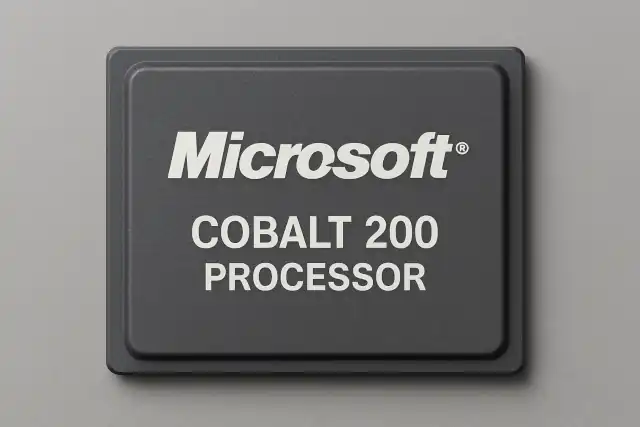
Microsoft has taken a significant step forward in cloud computing hardware with the launch of its Cobalt 200 processor, a custom-designed Arm-based chip built specifically for Azure cloud infrastructure.
This second-generation server processor represents a substantial leap in performance and efficiency, positioning Microsoft as a serious player in the competitive landscape of cloud computing hardware.
NVIDIA to Launch ARM-Based N1 Notebook CPUs in Mid-2026
Impressive Performance Gains
The Cobalt 200 delivers approximately 50% better performance compared to its predecessor, the Cobalt 100, while simultaneously improving energy efficiency—a critical factor for large-scale data center operations. Early deployment results have been promising, with one collaboration service reporting a 45% performance improvement and a 35% reduction in computing requirements compared to previous platforms.
These gains are particularly significant in an era where cloud providers face mounting pressure to deliver more computing power while managing escalating energy costs and environmental concerns.
AMD Claims Arm Architecture No Longer Holds Significant Advantage Over x86 AMD Claims Arm Architecture No Longer Holds Significant Advantage.
RISC-V CPU Development in 2025: Is Progress Hindered by Ecosystem or Performance Issues?
Technical Innovation at Its Core
Built on Arm Neoverse V3 technology, the Cobalt 200 features a sophisticated dual-chiplet design housing 132 cores in total. The processor is manufactured by TSMC using an advanced 3-nanometer process, placing it among the most technologically advanced chips in the industry.
What sets the Cobalt 200 apart is its granular power management capabilities. Each core can operate at independent voltage and frequency levels, allowing the processor to dynamically adjust performance based on workload demands. This fine-grained control enables optimal efficiency across diverse cloud computing tasks.
The chip comes equipped with up to 192 MB of L3 cache and 12 memory channels, providing substantial bandwidth for data-intensive operations. Microsoft has also integrated dedicated accelerators for compression and encryption tasks, which the company estimates account for approximately 33% of typical cloud operations. By offloading these functions to specialized hardware, the processor frees up general-purpose cores for other workloads.
Apple Unveils M5 Chip: 15% CPU Boost and 30% Graphics Performance Leap
AI-Driven Design Process
Microsoft employed an innovative approach to optimize the Cobalt 200’s architecture.
The company modeled over 140 real-world Azure scenarios and used AI-driven simulations to evaluate more than 350,000 configuration options before finalizing the design.
This data-driven methodology reflects the growing role of artificial intelligence in hardware development and Microsoft’s commitment to creating processors tailored specifically for cloud workloads rather than general-purpose computing.
China’s Major Banks Move to Domestic CPUs: Mirroring US Security Approach
Security and Enterprise Features
Security remains paramount in cloud computing, and the Cobalt 200 addresses this with hardware-level memory encryption enabled by default.
The processor also supports Arm’s Confidential Compute features, which enhance workload isolation for enterprise customers—a crucial capability for organizations handling sensitive data in multi-tenant cloud environments.
Snapdragon 8 Elite Gen 5: CPU Performance and AI Capabilities Surge Over 50%
Deployment and Availability
Some Cobalt 200 systems are already operational in Microsoft’s data centers, with broader customer availability expected in 2026.
This positions the Cobalt 200 as a critical hardware component for numerous Azure services, potentially affecting millions of cloud workloads worldwide.
MediaTek Dimensity 9500: Can the Smartphone CPU Beat Intel PC CPU N150?
The Bigger Picture
Microsoft’s investment in custom silicon reflects a broader industry trend among major cloud providers. Companies like Amazon Web Services with its Graviton processors and Google Cloud with its Axion chips are similarly developing Arm-based alternatives to traditional x86 processors from Intel and AMD.
This shift toward custom, Arm-based processors offers several advantages: better price-performance ratios, improved energy efficiency, and the ability to optimize hardware for specific cloud workloads. For customers, this translates to potentially lower costs and better performance for applications running on these platforms.
As cloud computing continues to evolve, custom silicon like the Cobalt 200 represents the next frontier in infrastructure optimization. Microsoft’s substantial performance improvements and innovative design approach suggest that the company is well-positioned to compete in the increasingly important realm of cloud infrastructure hardware.
The success of Cobalt 200 could influence the future direction of Azure services and may prompt further innovation across the cloud computing industry as providers seek to differentiate their offerings through custom hardware solutions.