NVIDIA to Challenge Intel with Arm-Based PC Chips
NVIDIA to Challenge Intel with Arm-Based PC Chips
- Why Enterprise RAID Rebuilding Succeeds Where Consumer Arrays Fail?
- Linus Torvalds Rejects MMC Subsystem Updates for Linux 7.0: “Complete Garbage”
- The Man Who Maintained Sudo for 30 Years Now Struggles to Fund the Work That Powers Millions of Servers
- How Close Are Quantum Computers to Breaking RSA-2048?
- Why Windows 10 Users Are Flocking to Zorin OS 18 Instead of Linux Mint?
- How to Prevent Ransomware Infection Risks?
- What is the best alternative to Microsoft Office?
NVIDIA to Challenge Intel with Arm-Based PC Chips
NVIDIA has long dominated the artificial intelligence computing chip market.
Now, it is quietly launching an assault on Intel’s long-standing stronghold in the personal computer arena.
Two insiders have informed Reuters that NVIDIA has begun designing central processing units (CPUs) that will support Microsoft’s Windows operating system and utilize technology from Arm Holdings.
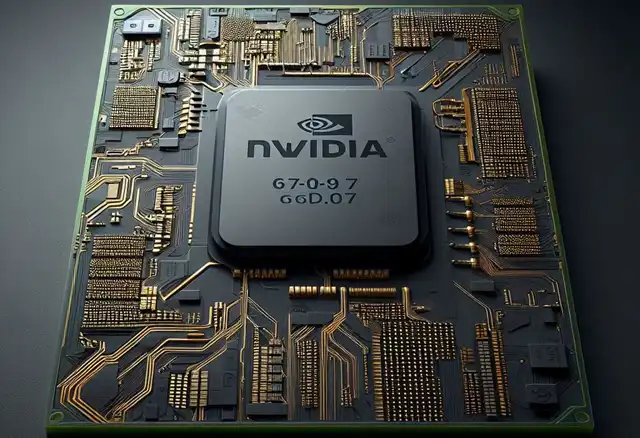
This AI chip giant’s new endeavor is part of an effort to create Arm-based processors for Windows PCs, with the help of Microsoft. Microsoft’s plan is aimed at Apple, whose market share has nearly doubled within three years since introducing its Arm-based chips for Mac computers, according to preliminary data from research firm IDC.
According to the insiders, AMD is also planning to produce PC chips using Arm technology.
One of the knowledgeable sources stated that both NVIDIA and AMD are expected to begin selling PC chips by 2025 at the earliest. NVIDIA and AMD’s move puts them in line with Qualcomm, which has been producing Arm-based laptop chips since 2016. According to an insider, Qualcomm is planning to reveal more details about a flagship chip designed by a former Apple engineering team at an event scheduled for Tuesday, which Microsoft executives, including Windows and Devices Vice President Pavan Davuluri, will attend.
Spokespersons from NVIDIA, AMD, Arm, and Microsoft, represented by Ken Brown, Brandi Marina, Kristen Ray, and Pete Wootton respectively, all declined to comment.
NVIDIA, AMD, and Qualcomm’s efforts could potentially disrupt Intel’s long-standing dominance in the PC industry. However, the industry is already facing growing pressure from Apple. Apple’s custom chips have brought better battery life and higher performance to Mac computers, something that energy-intensive x86 chips cannot match. One source mentioned that Microsoft’s executives have noted the efficiency of Apple’s Arm-based chips, particularly in artificial intelligence processing, and they hope to achieve similar performance.
In 2016, Microsoft partnered with Qualcomm to migrate the Windows operating system to the underlying processor architecture of Arm, which had long been designed for smartphones and their low-capacity batteries. According to the two sources familiar with the matter, Microsoft granted Qualcomm an exclusive arrangement to develop Windows-compatible chips by 2024.
These sources informed Reuters that once the exclusivity agreement expires, Microsoft will encourage other companies to enter this market.
Jay Goldberg, CEO of financial and strategic consulting firm D2D Advisory, stated, “Microsoft learned from the 1990s that they don’t want to rely on Intel anymore or depend on a single supplier. If Arm really takes off in the PC (chip) space, they won’t let Qualcomm be the sole supplier.”
Microsoft has been encouraging chip manufacturers to incorporate advanced artificial intelligence features into their CPU designs. The company expects that AI-enhanced software, such as its Copilot, will become an increasingly integral part of using Windows. To achieve this goal, the chips soon to be introduced by NVIDIA, AMD, and other companies will need to allocate chip resources for this purpose.
However, the success of Microsoft’s and the chip companies’ implementation of this plan is not guaranteed. Software developers have spent decades and billions of dollars writing code for Windows that runs on the x86 computing architecture, owned by Intel but also licensed to AMD. Code written for x86 chips does not automatically run on Arm-based designs, making this transition potentially challenging.
Intel has also incorporated AI capabilities into its chips and recently demonstrated a laptop running functionality similar to ChatGPT.
Intel spokesperson Will Moss did not immediately respond to a request for comment. The chip-focused publication SemiAccurate earlier reported on AMD’s foray into the Arm-based PC market.