NVIDIA’s RTX 3060 Reportedly Set to Return This Month — But Treat It as a Rumor
NVIDIA’s RTX 3060 Reportedly Set to Return This Month — But Treat It as a Rumor
- Why Enterprise RAID Rebuilding Succeeds Where Consumer Arrays Fail?
- Linus Torvalds Rejects MMC Subsystem Updates for Linux 7.0: “Complete Garbage”
- The Man Who Maintained Sudo for 30 Years Now Struggles to Fund the Work That Powers Millions of Servers
- How Close Are Quantum Computers to Breaking RSA-2048?
- Why Windows 10 Users Are Flocking to Zorin OS 18 Instead of Linux Mint?
- How to Prevent Ransomware Infection Risks?
- What is the best alternative to Microsoft Office?
NVIDIA’s RTX 3060 Reportedly Set to Return This Month — But Treat It as a Rumor
Supply chain sources point to a mid-March shipment window for the five-year-old Ampere card, revived to fill a gap that newer silicon, choked by AI’s memory hunger, cannot.
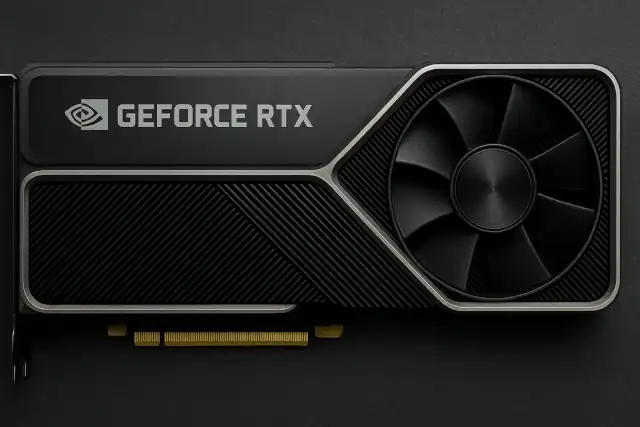
Something unprecedented may be about to happen in the PC hardware market. According to credible supply chain sources, NVIDIA is preparing to restart production of the GeForce RTX 3060 — a card originally launched in early 2021 — and ship units to board partners between March 10th and March 20th, 2026. If accurate, it would mark the first time NVIDIA has revived a two-generation-old GPU for a fresh commercial run.
The rumor originates from two distinct but reinforcing sources: a January 5th post by leaker hongxing2020 on X (formerly Twitter), who has a credible track record, and a more recent March report from the Chinese supply chain forum Board Channels, which provided the specific mid-March shipment window. Neither NVIDIA nor any of its add-in card partners have issued a public statement.
The driving force behind this unusual move is not nostalgia — it’s economics. The global shortage of DRAM, particularly the high-end GDDR7 memory required for NVIDIA’s current RTX 50-series cards, has created a painful supply squeeze. AI hyperscalers and datacenter builders are consuming memory production at a rate that has left consumers fighting over scraps. RTX 5090 units have been spotted at retail for over $3,000, while Micron has suggested the shortage could persist well into 2026 and beyond.
The RTX 3060’s advantage in this environment is its reliance on GDDR6 — an older memory standard that is far less contested by the AI industry. By contrast, GDDR7 is being prioritized for the most profitable, highest-margin silicon. Building RTX 3060s again lets NVIDIA tap a supply chain that hasn’t been fully raided. Additionally, the card uses Samsung’s older 8nm manufacturing node, freeing up TSMC’s constrained 5nm capacity for the RTX 50 series.
The Board Channels report suggests that NVIDIA’s partners will begin receiving GPU and memory bundles between March 10th and March 20th, 2026. How quickly cards reach retail shelves will vary by brand and by how fast each partner can build and QC inventory. Some regions may see listings within days of shipments; others could wait weeks longer.
The single biggest unknown is which version of the RTX 3060 will return. The card was originally released in a 12GB configuration using a 192-bit memory bus, then followed by a later 8GB variant on a narrower 128-bit bus — widely considered the less desirable of the two. Neither the Board Channels source nor hongxing2020’s earlier post specified which variant, or whether both might launch. Given that GDDR6 availability is the whole point, an 8GB model would use less memory per unit — making it easier to produce at scale, but less attractive to buyers.
If the RTX 3060 does return, pricing will determine whether it is a genuine bargain or a cynical stopgap. Used 12GB RTX 3060 units currently sell on eBay for roughly $200, while new-old-stock can be found around $339. NVIDIA’s newly launched RTX 5050 carries an MSRP of approximately $289.
For the revived 3060 to make sense for builders, analysts suggest it would need to land below $250, and preferably closer to $200. At that price, the 12GB variant in particular remains surprisingly competitive — VRAM-heavy titles can still be handled gracefully at 1080p and moderate 1440p settings, and DLSS transformer upscaling (though slower on Ampere’s older Tensor cores than on Ada or Blackwell) is still supported. What buyers would be missing is DLSS Frame Generation, which is exclusive to RTX 40 and 50 series hardware.
The return of the RTX 3060 is plausible, strategically coherent, and supported by credible sources with a solid track record. But it remains unconfirmed. Buyers should not cancel orders or delay builds on the strength of supply chain rumors alone. If and when NVIDIA or its partners make a formal announcement — or when retail listings appear — the picture will become clear. Until then, watch for official partner product pages and distributor stock updates as the most reliable early signal that the old Ampere warrior is truly back.