PCIe 3.0 | PCIe 4.0 | PCIe 5.0: What’s the difference?
PCIe 3.0 | PCIe 4.0 | PCIe 5.0: What’s the difference?
- Why Enterprise RAID Rebuilding Succeeds Where Consumer Arrays Fail?
- Linus Torvalds Rejects MMC Subsystem Updates for Linux 7.0: “Complete Garbage”
- The Man Who Maintained Sudo for 30 Years Now Struggles to Fund the Work That Powers Millions of Servers
- How Close Are Quantum Computers to Breaking RSA-2048?
- Why Windows 10 Users Are Flocking to Zorin OS 18 Instead of Linux Mint?
- How to Prevent Ransomware Infection Risks?
- What is the best alternative to Microsoft Office?
PCIe 3.0 | PCIe 4.0 | PCIe 5.0: What’s the difference?
Sometimes, it’s hard to believe how quickly technology advances.
When AMD introduced its Ryzen 3000 series CPUs in 2019, one of their biggest features was PCIe 4.0 support. Soon after, Intel adopted PCIe 4.0 with its 11th-generation and later mainstream desktop CPUs. But the industry didn’t stop — PCIe 5.0 is now widely supported on newer CPUs and motherboards, pushing performance capabilities even further.
If you recently bought a PC with PCIe 4.0, you might wonder: What exactly does PCIe 5.0 offer, and should you care?
PCIe 3.0 vs. PCIe 4.0 vs. PCIe 5.0: What Changes?
The biggest difference between PCIe generations is bandwidth — how much data can pass through each PCIe lane at once. Each new version roughly doubles the bandwidth of the previous one.
Approximate per-lane performance:
-
PCIe 3.0:
8 GT/s → ~985 MB/s per lane -
PCIe 4.0:
16 GT/s → ~2 GB/s per lane -
PCIe 5.0:
32 GT/s → ~4 GB/s per lane
Since PCIe slots use multiple lanes (x4, x8, x16), total bandwidth scales proportionally. For example, a PCIe 5.0 x16 slot can reach up to 128 GB/s (bidirectional).
Backward compatibility remains intact — PCIe 5.0 devices can run in older slots, and older devices still work in PCIe 5.0 slots.
However, supporting 32 GT/s per lane brings engineering challenges. Motherboards must use higher-quality PCB materials, improved trace routing, and often more layers to maintain signal integrity and reduce noise at these speeds.
Why PCIe 5.0 Matters
1. Massively Faster Storage
PCIe 4.0 NVMe SSDs already deliver excellent performance. PCIe 5.0 SSDs can roughly double that speed, offering:
-
Faster game asset streaming
-
Better performance for large file transfers
-
Improved video editing workflows
-
Faster loading in applications that use advanced storage APIs
This is particularly valuable as modern games and productivity apps push more data than ever.
2. High-Speed Networking & Data Center Benefits
PCIe 5.0 is especially important for enterprise and workstation environments. It enables hardware such as:
-
Ultra-fast 200 GbE / 400 GbE network cards
-
Multi-drive NVMe storage arrays
-
High-end accelerators and AI cards
With significantly higher bandwidth, PCIe 5.0 allows multiple high-speed devices to coexist without saturating the PCIe root complex.
3. Future-Proofing
Even if you don’t need PCIe 5.0 today, the ecosystem is moving toward higher bandwidth devices. Having PCIe 5.0 support ensures your system remains relevant for years.
Do GPUs Benefit from PCIe 5.0?
For now, not much.
Most current graphics cards (gaming or professional) do not saturate a PCIe 4.0 x16 connection. So upgrading purely for GPU performance generally offers little benefit today.
But as GPUs evolve — especially for AI, compute, and multi-device setups — PCIe 5.0 will become more important.
Who Supports PCIe 5.0 Today? (2025 Status)
Intel
-
12th-gen “Alder Lake”
-
13th-gen “Raptor Lake”
-
14th-gen and 15th-gen Core Ultra / Arrow Lake
Many of these offer PCIe 5.0 for both GPU lanes and at least one NVMe slot, depending on the motherboard.
AMD
-
Ryzen 7000 series (Zen 4) on AM5
-
Ryzen 9000 series (Zen 5) on AM5
Both CPU generations support PCIe 5.0, but motherboard support varies by model and chipset.
When PCIe 5.0 Isn’t Necessary
PCIe 5.0 may not be essential if:
-
You mainly play games with a single GPU
-
You don’t use ultra-fast NVMe SSDs
-
You run basic productivity tasks
-
Your system only has one or two PCIe devices
In these cases, PCIe 4.0 is still more than sufficient.
Summary: Is PCIe 5.0 Worth It?
Yes — if you need high-speed storage, heavy multitasking with PCIe devices, workstation workloads, or long-term future-proofing.
Not necessarily — if you only game, browse, or use general productivity apps.
PCIe 5.0 represents a major step forward in bandwidth, and although the benefits are most noticeable in storage and professional workloads today, future GPUs and peripherals will increasingly take advantage of the additional speed.
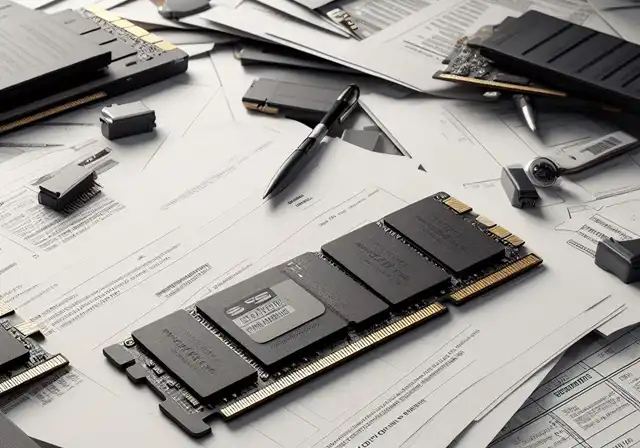
PCIe 3.0 vs PCIe 4.0 vs PCIe 5.0 — Comparison Table
| Feature | PCIe 3.0 | PCIe 4.0 | PCIe 5.0 |
|---|---|---|---|
| Release Year | 2010 | 2017 | 2019 |
| Per-lane Transfer Rate | 8 GT/s | 16 GT/s | 32 GT/s |
| Per-lane Bandwidth (x1) | ~0.985 GB/s | ~1.97 GB/s | ~3.94 GB/s |
| Total Bandwidth (x16) | ~15.75 GB/s | ~31.5 GB/s | ~63 GB/s (up to 128 GB/s bidirectional) |
| Backward Compatibility | Yes | Yes | Yes |
| Typical CPU Support | Older Intel/AMD platforms | AMD Ryzen 3000/5000, Intel 11th-gen/12th-gen | Intel 12th–15th gen, AMD Ryzen 7000/9000 |
| Motherboard Requirements | Standard PCB | Higher-quality routing | Very high signal integrity, thicker PCB, more layers |
| Current GPU Benefit | Moderate | Good | Minimal (for now) |
| Current SSD Benefit | Low | Very high | Extremely high (next-gen NVMe) |
| Best Use Cases | Basic PCs | Gaming, modern desktops | High-speed storage, data centers, future GPUs |
| Future-Proof Level | Low | Medium | High |