Raspberry Pi 5 vs. Mini PC with Intel N100 Processor
Raspberry Pi 5 vs. Mini PC with Intel N100 Processor: A Performance Comparison
- Why Enterprise RAID Rebuilding Succeeds Where Consumer Arrays Fail?
- Linus Torvalds Rejects MMC Subsystem Updates for Linux 7.0: “Complete Garbage”
- The Man Who Maintained Sudo for 30 Years Now Struggles to Fund the Work That Powers Millions of Servers
- How Close Are Quantum Computers to Breaking RSA-2048?
- Why Windows 10 Users Are Flocking to Zorin OS 18 Instead of Linux Mint?
- How to Prevent Ransomware Infection Risks?
- What is the best alternative to Microsoft Office?
Raspberry Pi 5 vs. Mini PC with Intel N100 Processor: A Performance Comparison
Raspberry Pi 5 and the mini PC equipped with an Intel N100 processor are two entirely different devices that differ significantly in terms of performance and functionality.
This article will elaborate on how Raspberry Pi 5 cannot compete with the mini PC equipped with an Intel N100 processor in terms of performance from the following aspects.
PBX on Raspberry Pi
I. Size and Costs:
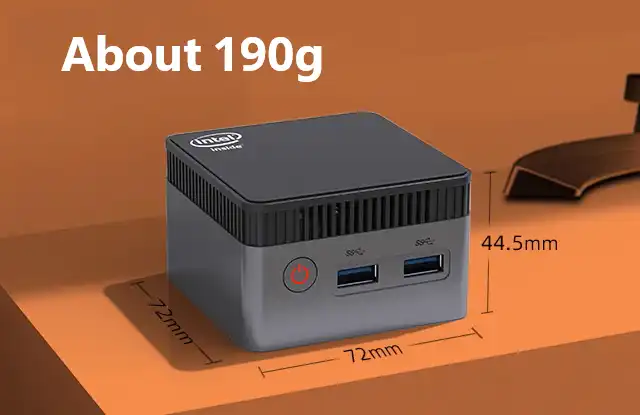
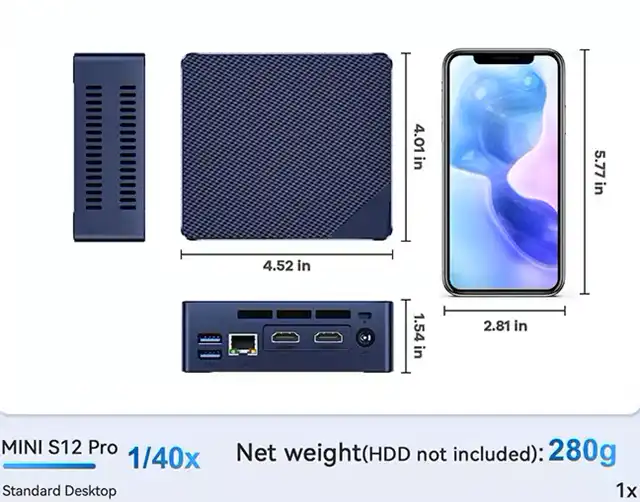
If you are looking for compact device, Raspberry Pi 5 has no significant advantage on size.
The size of Raspberry Pi 4/5 including the case:
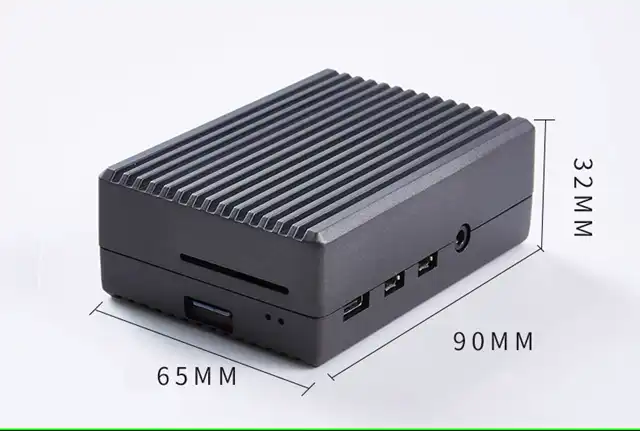
The sizes of two Mini PCs:
Cost comparison:
A. Costs to build a Raspberry Pi 5 including everthing necessary?
Let’s estimate the costs of 8GB version Raspberry Pi 5 in US dollar:
- 8GB Raspberr Pi 5 SOC: $80
- Plastic Case: $5 (assumed)
- Power Supply 27W: $15 (assumed)
- Heatsink: $10 (assumed)
- 128GB MicroSD card Endurance: $15
- Shipping: $22
Total: US$145 excluding your labor and time (Not so cheap)
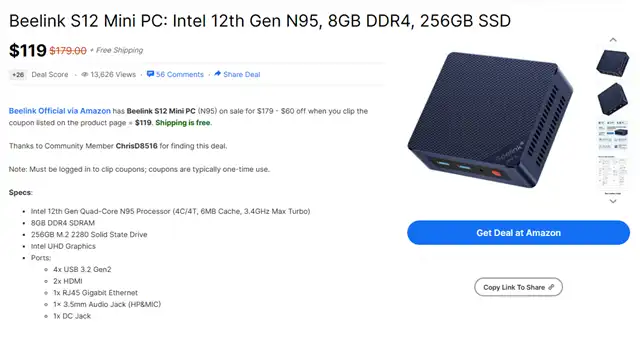
B. Costs to buy a mini PC:
- Intel 12th Gen Quad-Core N95 Processor (4C/4T, 6MB Cache, 3.4GHz Max Turbo)
- 8GB DDR4 SDRAM
- 256GB M.2 2280 Solid State Drive
- Intel UHD Graphics
- Ports:
- 4x USB 3.2 Gen2
- 2x HDMI
- 1x RJ45 Gigabit Ethernet
- 1x 3.5mm Audio Jack (HP&MIC)
- 1x DC Jack
II. Processor Performance
Raspberry Pi 5 is equipped with an ARM processor, while the mini PC equipped with an Intel N100 processor uses an x86 processor.
Although ARM processors excel in low power consumption and mobile devices, x86 processors have a significant advantage in performance.
The Intel N100 processor is a quad-core processor based on Intel’s Gemini Lake architecture, with a clock speed of up to 1.1GHz, providing powerful computing capabilities and efficient power control.
In contrast, Raspberry Pi 5’s ARM processor is far inferior to the Intel N100 processor in terms of performance.
How to install phone system (FusionPBX) on Le Potato (Raspberry Pi replacement)?
III. Memory and Storage
Raspberry Pi 5 has relatively small memory and storage capacities, with a maximum support of 4GB of memory and 1TB of storage space, and it uses a microSD card as the storage device.
In contrast, the mini PC equipped with an Intel N100 processor has larger memory and storage capacities, with a maximum support of 32GB of memory and 2TB of hard disk space, using solid-state drives or mechanical hard drives as storage devices, but most mini PCs on market are equiped with M.2 PCIe SSD.
This means that the mini PC equipped with an Intel N100 processor is more capable of handling large amounts of data and running large software.
Reading and Writing Speed:
-
Reading Speed:
- MicroSD U3: MicroSD U3 cards typically offer read speeds of up to 100 MB/s or more for sequential data. Some high-end microSD cards may exceed this speed slightly, but they are generally not as fast as SSDs.
- M.2 PCIe SSD: M.2 PCIe SSDs are considerably faster when it comes to reading speed. They can offer read speeds ranging from 1000 MB/s to well over 7000 MB/s, depending on the specific model. These SSDs are designed for high-speed data access and can significantly outperform microSD cards in this aspect.
-
Writing Speed:
- MicroSD U3: MicroSD U3 cards generally provide write speeds of around 30 MB/s or more for sequential data, which is suitable for tasks like HD video recording. Some high-end microSD cards may offer slightly faster write speeds, but they are still slower than SSDs.
- M.2 PCIe SSD: M.2 PCIe SSDs also excel in writing speed. They can provide write speeds similar to their read speeds, ranging from 1000 MB/s to over 7000 MB/s for high-end models. These SSDs are designed for both fast read and write operations, making them significantly faster than microSD cards in this regard.
IV. Graphic Processing Capability
Raspberry Pi 5’s graphic processing capability is relatively weak, using a VideoCore VII GPU. Although it can meet some basic graphic processing needs, it may struggle when running large games and high-definition videos.
In contrast, the mini PC equipped with an Intel N100 processor is equipped with an Intel UHD Graphics 600 graphics card, supporting 4K high-definition videos and smoothly running some large games, with more powerful graphic processing capabilities.
How to DIY a PBX on Raspberry Pi Zero?
V. Interface and Expandability
Raspberry Pi 5 has a rich variety of interfaces that can connect to various peripherals such as keyboards, mice, displays, cameras, sensors, etc.
However, due to its small size and low-cost limitations, Raspberry Pi 5 has relatively limited interface quantities and types, and its expandability is also somewhat restricted.
In contrast, the mini PC equipped with an Intel N100 processor has more interfaces and stronger expandability, connecting more peripherals and devices to meet the needs of more application scenarios.\
OpenBSD 7.8 Released: Raspberry Pi 5 Support and Snapdragon X Elite Compatibility with AMD SEV Virtualization
VI. Operating System and Software Support
Raspberry Pi 5’s operating system and software are open-source, making it easy for users to customize and modify.
However, due to its hardware performance and interface limitations, Raspberry Pi 5 may encounter difficulties when running some large software and complex applications.
In addition, many Linux, soft-routing and IP PBX don’t provide images for ARM-architecture device like Raspberry Pi.
In contrast, the mini PC equipped with an Intel N100 processor can support more operating systems and software, including Windows and Linux, meeting the needs of more application scenarios.
How to DIY a Soft Router (Soft-Routing)?
How to DIY a Commecial Class PBX with Low Budget?
In conclusion
Raspberry Pi 5 cannot compete with the mini PC equipped with an Intel N100 processor in terms of performance.
Although Raspberry Pi 5 has advantages such as low cost, rich resources, and easy learning and usage, it has significant limitations in processor performance, memory and storage, graphic processing capability, interface and expandability, and operating system and software support.
Therefore, when selecting a device, it is necessary to consider specific application scenarios and needs comprehensively.