Samsung Begins Mass Production of HBM4 Memory, Marking Major Milestone in AI Computing Race
Samsung Begins Mass Production of HBM4 Memory, Marking Major Milestone in AI Computing Race
- Why Enterprise RAID Rebuilding Succeeds Where Consumer Arrays Fail?
- Linus Torvalds Rejects MMC Subsystem Updates for Linux 7.0: “Complete Garbage”
- The Man Who Maintained Sudo for 30 Years Now Struggles to Fund the Work That Powers Millions of Servers
- How Close Are Quantum Computers to Breaking RSA-2048?
- Why Windows 10 Users Are Flocking to Zorin OS 18 Instead of Linux Mint?
- How to Prevent Ransomware Infection Risks?
- What is the best alternative to Microsoft Office?
Samsung Begins Mass Production of HBM4 Memory, Marking Major Milestone in AI Computing Race
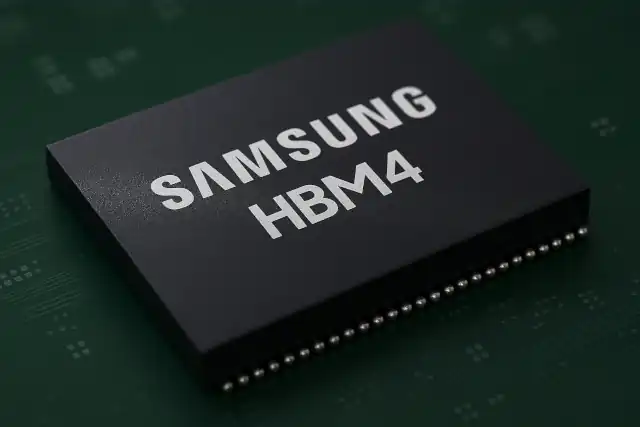
February 12, 2026 — Samsung Electronics has officially commenced mass production and commercial shipments of its next-generation HBM4 (High Bandwidth Memory 4), marking a significant advancement in the global competition to supply critical memory components for artificial intelligence applications.
Industry-First Achievement
Samsung has begun mass production of its industry-leading HBM4 and has shipped commercial products to customers, securing an early leadership position in the HBM4 market. The announcement represents a crucial milestone for Samsung as it seeks to regain ground against rival SK hynix in the lucrative high-bandwidth memory sector.
The South Korean tech giant achieved this breakthrough by leveraging its most advanced 6th-generation 10 nanometer-class DRAM process (1c) combined with a 4nm logic base die, achieving stable yields and industry-leading performance from the outset of mass production without requiring additional redesigns.
Performance Specifications
Samsung’s HBM4 delivers impressive performance metrics that set new industry benchmarks:
Speed and Bandwidth:
- Data transfer rate of 11.7 gigabits-per-second (Gbps), approximately 46% higher than the industry standard of 8Gbps
- Peak speeds of up to 13Gbps, effectively mitigating data bottlenecks as AI models continue to scale up
- Total memory bandwidth per stack reaching 3.3 terabytes-per-second (TB/s), representing a 2.7x increase over HBM3E
Capacity Options:
- 24GB to 36GB capacity combinations through 12-layer stacking technology
- Future plans to introduce 16-layer stacking to expand single-stack capacity to 48GB
Power Efficiency and Thermal Management: To address the challenges posed by doubling the data interface width from 1,024 to 2,048 pins, Samsung implemented advanced solutions. The company achieved a 40% improvement in power efficiency through low-voltage through-silicon via (TSV) technology and power distribution network optimization, while enhancing thermal resistance by 10% and heat dissipation by 30% compared to HBM3E.
Market Context and Competition
Samsung’s HBM4 launch comes at a critical time in the AI infrastructure market. According to industry analysts, SK hynix led the HBM market in the second quarter of 2025 with 62% share, followed by Micron with 21%, and Samsung with 17%. However, Samsung’s position is expected to strengthen as its HBM3E parts are qualified by major customers and HBM4 enters full-scale supply in 2026.
The competitive landscape intensified in early 2026, with SK hynix reportedly securing approximately 70% of NVIDIA’s HBM4 demand for the Vera Rubin platform. Despite this, Samsung is positioned to begin official HBM4 shipments to major AI chip customers including NVIDIA and AMD, following successful completion of final qualification tests.
Strategic Implications
Samsung Executive Vice President Sang Joon Hwang emphasized the company’s innovative approach, stating that rather than following conventional paths using existing proven designs, Samsung adopted the most advanced nodes for HBM4. The company’s strategy focuses on leveraging process competitiveness and design optimization to secure substantial performance headroom for meeting escalating customer demands.
Production Capacity: The memory industry is experiencing unprecedented demand. Samsung is looking to expand its production capacity by around 50 percent in 2026, while SK Hynix has announced plans to increase infrastructure investment by more than four times the previously announced figure.
Financial Outlook: Samsung projects HBM sales to more than triple in 2026 on the HBM4 ramp, reflecting the explosive growth in AI computing infrastructure demand.
Applications and Customer Base
Samsung’s HBM4 is designed to power next-generation AI accelerators and data center infrastructure. The HBM4 chips shipped in February are expected to be delivered to NVIDIA and immediately used in performance demonstrations of the Rubin AI accelerator, set to debut at GTC 2026 in March.
The memory is targeted at several key applications:
- Large language model training and inference
- High-performance computing workloads
- AI data center operations
- Next-generation GPU platforms from NVIDIA, AMD, and custom silicon from hyperscalers
Future Roadmap
Samsung is not resting on its HBM4 achievement. Sampling for HBM4E is expected to begin in the second half of 2026, while custom HBM samples will start reaching customers in 2027.
The company is committed to advancing its HBM roadmap through comprehensive manufacturing resources, including one of the largest DRAM production capacities in the industry and dedicated infrastructures to ensure a resilient supply chain.
Industry Impact
The launch of Samsung’s HBM4 occurs amid a broader memory supply crunch affecting the entire technology sector. Micron’s high-bandwidth memory capacity is sold out through calendar year 2026, capturing a structural transformation reshaping the semiconductor industry.
This supply constraint has had cascading effects across the industry, with memory manufacturers reporting record margins exceeding 50% and pricing power unprecedented in semiconductor history.
The HBM4 generation represents more than just incremental improvements. According to industry experts, the integration of advanced logic dies directly into memory stacks signifies a major step toward “Processing-in-Memory” architecture, fundamentally changing how memory functions within computing systems.
Conclusion
Samsung’s successful launch of HBM4 mass production marks a pivotal moment in the AI memory race. With cutting-edge specifications, expanded capacity, and improved power efficiency, the company has positioned itself as a major player in supplying the critical infrastructure needed to power the next generation of AI computing.
As AI models continue to grow in size and complexity, high-bandwidth memory has emerged as a crucial bottleneck. Samsung’s HBM4, along with competing solutions from SK hynix and Micron, will play a central role in determining how quickly AI capabilities can advance in the coming years.
The full impact of this development will become clearer as major customers integrate HBM4 into their upcoming AI accelerator platforms, with NVIDIA’s GTC 2026 conference in March expected to showcase the first public demonstrations of this next-generation memory in action.
This article is based on Samsung’s official announcement and industry reports as of February 12, 2026.