Samsung’s Exynos 2600: World’s First 2nm Phone Chip Undercuts Qualcomm on Price
Samsung’s Exynos 2600: World’s First 2nm Phone Chip Undercuts Qualcomm on Price
- Why Enterprise RAID Rebuilding Succeeds Where Consumer Arrays Fail?
- Linus Torvalds Rejects MMC Subsystem Updates for Linux 7.0: “Complete Garbage”
- The Man Who Maintained Sudo for 30 Years Now Struggles to Fund the Work That Powers Millions of Servers
- How Close Are Quantum Computers to Breaking RSA-2048?
- Why Windows 10 Users Are Flocking to Zorin OS 18 Instead of Linux Mint?
- How to Prevent Ransomware Infection Risks?
- What is the best alternative to Microsoft Office?
Samsung’s Exynos 2600: World’s First 2nm Phone Chip Undercuts Qualcomm on Price
World’s First 2nm Smartphone Chip: Samsung’s Exynos 2600 Priced Lower Than Qualcomm’s Snapdragon 8 Elite 5
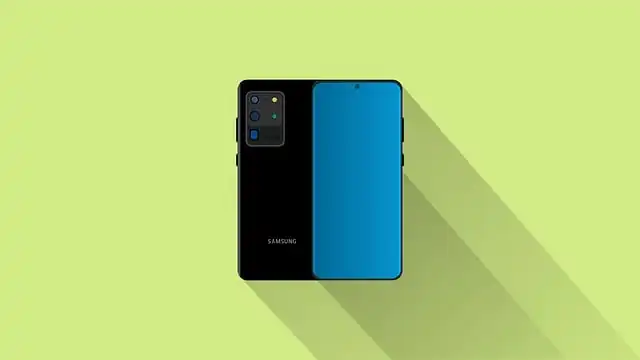
Samsung aims to balance cutting-edge technology with cost control in its upcoming Galaxy S26 lineup
Samsung is preparing to launch its flagship Galaxy S26 series in the first half of 2025, and the company is making strategic moves to manage costs while introducing groundbreaking chip technology.
According to recent reports, the tech giant’s mobile division is negotiating with its semiconductor arm to price the revolutionary Exynos 2600 processor significantly below Qualcomm’s competing Snapdragon 8 Elite 5 (8E5) chip.
Can NVIDIA Dominate 6G Infrastructure Through Its Partnership with Nokia?
Dual-Chip Strategy for Global Markets
The Galaxy S26 lineup is expected to include three models: the Galaxy S26, S26+, and S26 Ultra. In a continuation of Samsung’s regional chip strategy, the standard S26 and S26+ will feature the Exynos 2600 in most global markets, while select regions will receive the Snapdragon 8E5 variant. The premium S26 Ultra, however, will exclusively use Qualcomm’s Snapdragon 8E5 across all markets.
This dual-chip approach isn’t new for Samsung, but the pricing dynamics this time around are particularly noteworthy. Samsung’s mobile division has reportedly requested that its System LSI semiconductor division price the Exynos 2600 approximately $20-30 lower than the Snapdragon 8E5. If successful, this cost differential could help Samsung maintain competitive pricing for the S26 series despite rising component costs elsewhere.
Why 6G Networks Will Use the 7GHz Frequency Band: Advantages and Challenges
A Historic Technological Leap
What makes this pricing strategy especially interesting is that the Exynos 2600 represents a genuine technological milestone: it’s the world’s first 2nm smartphone processor. While Qualcomm’s Snapdragon 8E5 uses TSMC’s 3nm manufacturing process, Samsung has pushed ahead with its more advanced 2nm node for its in-house chip.
The Exynos 2600 features an innovative 10-core CPU architecture, consisting of:
- 1 ultra-large core running at 3.80GHz
- 3 large cores at 3.26GHz
- 6 efficiency cores at 2.76GHz
Early Geekbench scores show the chip achieving over 3,400 points in single-core tests and exceeding 11,000 points in multi-core performance.
While its single-core performance trails the Snapdragon 8E5, the multi-core scores are reportedly comparable to Qualcomm’s flagship, making this Samsung’s most powerful mobile processor to date.
NVIDIA Declares War on Huawei for 6G Dominance
Cost Pressures Limit Innovation
The push for lower chip pricing stems from broader economic pressures facing smartphone manufacturers. Rising component costs across the board have put Samsung in a challenging position. Rather than passing these increases to consumers through higher prices, the company appears determined to maintain the Galaxy S26 series at price points similar to the previous generation.
This cost-conscious approach comes with trade-offs. Reports suggest that the Galaxy S26 series won’t feature dramatic upgrades compared to its predecessors, as Samsung balances innovation with financial constraints. The savings from the Exynos 2600’s lower pricing would help offset increased costs for other components, allowing the company to keep retail prices stable.
Implications for the Smartphone Market
Samsung’s strategy raises intriguing questions about the semiconductor industry’s direction. The lower pricing of the Exynos 2600 doesn’t necessarily indicate inferior performance—after all, it’s manufactured on a more advanced process node than its Qualcomm rival. Instead, it may reflect Samsung’s vertical integration advantages, allowing its mobile division to negotiate favorable terms with its chip-making arm in ways that external customers cannot.
For consumers, the practical impact remains to be seen. If the Exynos 2600 delivers performance close to the Snapdragon 8E5 at a lower cost, buyers in markets receiving the Exynos variant may actually benefit from better value. However, Samsung’s track record with Exynos chips has been mixed, with past generations sometimes struggling with thermal management and efficiency compared to Snapdragon counterparts.
As the smartphone market matures and component costs rise, Samsung’s approach with the Galaxy S26 series may signal a broader industry shift toward incremental rather than revolutionary upgrades, where manufacturers focus on maintaining value rather than pushing boundaries at any cost.
The Galaxy S26 series is expected to be unveiled in the first half of 2025, when consumers will finally be able to judge whether Samsung’s 2nm gambit pays off in real-world performance and value.