Seagate Ships 44TB HAMR Drives And the Road to 100TB Is Now Official
Seagate Ships 44TB HAMR Drives And the Road to 100TB Is Now Official
- Why Enterprise RAID Rebuilding Succeeds Where Consumer Arrays Fail?
- Linus Torvalds Rejects MMC Subsystem Updates for Linux 7.0: “Complete Garbage”
- The Man Who Maintained Sudo for 30 Years Now Struggles to Fund the Work That Powers Millions of Servers
- How Close Are Quantum Computers to Breaking RSA-2048?
- Why Windows 10 Users Are Flocking to Zorin OS 18 Instead of Linux Mint?
- How to Prevent Ransomware Infection Risks?
- What is the best alternative to Microsoft Office?
Seagate Ships 44TB HAMR Drives And the Road to 100TB Is Now Official
The Mozaic 4+ platform marks the industry’s first at-scale deployment of HAMR technology, clearing a path toward 100TB by around 2030. Here’s what’s real, what’s on the roadmap, and what the viral summaries got wrong.
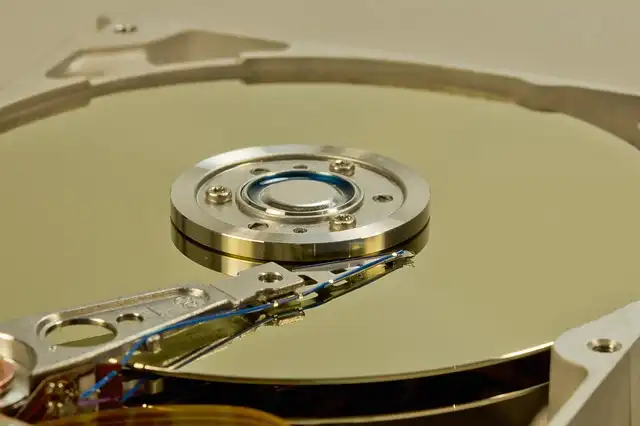
Illustration: Seagate’s Mozaic 4+ uses 10 platters at 4.4TB each, enabled by vertically integrated nanophotonic laser technology.
On March 3, 2026, from Singapore, Seagate made an announcement that storage engineers have been anticipating for years: its Mozaic 4+ platform — built around Heat-Assisted Magnetic Recording (HAMR) — is now qualified and shipping in production volumes to two leading hyperscale cloud providers. The top-line capacity: 44 terabytes in a single standard 3.5-inch hard drive.
This is not a preview. It is not a prototype. It is the first HAMR-based platform to reach production scale in the industry, and it arrives just as artificial intelligence is creating unprecedented demand for dense, affordable mass storage.
What HAMR Actually Means
Traditional magnetic recording has been approaching its physical density ceiling for years. HAMR sidesteps this by using a tiny, custom-designed laser — integrated directly into the recording head — to briefly heat a tiny spot on the disk’s surface during writes. This momentarily lowers the coercivity of the magnetic medium, allowing data to be written at densities that would otherwise be thermally unstable. Once the heat dissipates, the bit is locked in place with far greater stability than conventional recording methods allow.
Seagate’s edge here is vertical integration. Rather than sourcing laser components externally, the company has developed its own nanophotonic engineering capability, manufacturing the critical laser components in-house. This gives it tighter control over yield, quality, and supply resilience — not a trivial advantage in an era of persistent component shortages.
“As AI models have evolved and GenAI-powered applications expanded their capabilities, the need for massive amounts of data — both real and synthetically generated — is essential to keep AI advancements moving ahead.”
— Bob O’Donnell, President, TECHnalysis Research
The Mozaic 4+ platform also incorporates a next-generation suspension architecture and an enhanced system-on-a-chip, which together enable precise recording at higher densities while maintaining the enterprise-class reliability that cloud deployments demand. Importantly, these drives use conventional magnetic recording (CMR) — not SMR (Shingled Magnetic Recording) — meaning they deliver predictable read/write performance under mixed workloads, a critical requirement in live data center environments.
The Efficiency Case for Hyperscalers
At 44TB per drive, the logistical advantages compound rapidly. Seagate calculates that in a one-exabyte deployment, switching from the previous generation of 30TB drives to Mozaic 4+ improves infrastructure efficiency by approximately 47 percent. In practical terms, this translates to roughly 100 square feet of reduced data center footprint and approximately 0.8 million kilowatt-hours less in annual energy consumption — meaningful numbers at the scale hyperscalers operate.
CEO Dave Mosley framed it directly: “Seagate’s HAMR-based Mozaic products deliver the scale, performance, and efficiency customers need to unlock the full potential of their data.” With the majority of the world’s largest cloud storage providers already qualified on Seagate’s Mozaic platform, the deployment is no longer experimental — it is infrastructure.
Where Western Digital Stands
Contrary to some circulating reports, Western Digital has not shipped 44TB drives. As of this writing, WD’s flagship near-line HDD for 2026 is a 40TB drive based on ePMR (energy-assisted PMR) combined with UltraSMR, currently undergoing qualification. WD’s own HAMR-based 44TB drive is not expected to reach customers until 2027 at the earliest. Both companies are racing toward the same destination — but Seagate has a clear head start in HAMR production.
The Roadmap to 100TB
Seagate has publicly confirmed the direction of its future development: scaling from the current 4+TB per disk toward 10TB per disk — which, with a 10-platter configuration, would yield a 100TB drive. The company’s roadmap targets reaching this milestone around 2030, though specific intermediate platform names and precise commercial dates beyond that remain unconfirmed by Seagate itself.
The 100TB figure is striking. But for context: the same trajectory of doubts that surrounded HAMR’s commercial viability — dismissed as “always five years away” — proved wrong in 2026. Seagate’s vertically integrated photonics give it a structural manufacturing advantage that compounds over time. The 100TB goal looks less like science fiction and more like an engineering milestone with a defined path.
The Price Question
If there is a cloud on the horizon, it is cost. Hard drive prices have risen an average of 46% since September 2025, driven in large part by AI data center demand consuming nearline capacity faster than it can be built. The iconic 24TB Seagate BarraCuda, once a consumer staple, now retails for around $500. WD is reportedly already sold out of drives through the end of 2026, and Seagate itself has confirmed that nearline exabyte capacity is on allocation through calendar 2026, with long-term agreements in place with major cloud customers through 2027.
The 100TB drives of 2030 will likely debut at enterprise pricing far out of consumer reach. Whether costs normalize enough for enthusiast NAS adoption — the “1,600TB in a 16-bay system” scenario that makes the rounds online — depends heavily on how aggressively production scales and whether competitive pressure from SSDs moderates HDD pricing power. Seagate’s own CTO has noted HDDs hold a five-to-ten times cost-per-byte advantage over SSDs that is unlikely to close in the next decade. The economics favor HDDs for mass storage — but affordability is a question that market forces, not engineering, will ultimately answer.
Fact-Check: What the Viral Summary Got Wrong
Bottom Line
Seagate’s Mozaic 4+ is a genuine milestone — the first time HAMR has shipped at production scale, and the first 44TB hard drive to reach the market. The technology underpinning it is real, the deployments are real, and the roadmap to 100TB is officially confirmed. The key caveats are that Western Digital has not yet reached this capacity point, the drives use CMR (not SMR), and the specific intermediate roadmap names and 2033 consumer availability date circulating online are not from Seagate. The 100TB target year, based on available reporting, is closer to 2030.
For enterprises and hyperscalers, the implications are immediate. For the rest of us, the question is whether the cost curve bends fast enough to make these drives a consumer reality before the end of the decade.