South Korea’s Telecom Giants Face Trust Crisis as Hacking Scandals Cloud AI Ambitions
South Korea’s Telecom Giants Face Trust Crisis as Hacking Scandals Cloud AI Ambitions
- Why Enterprise RAID Rebuilding Succeeds Where Consumer Arrays Fail?
- Linus Torvalds Rejects MMC Subsystem Updates for Linux 7.0: “Complete Garbage”
- The Man Who Maintained Sudo for 30 Years Now Struggles to Fund the Work That Powers Millions of Servers
- How Close Are Quantum Computers to Breaking RSA-2048?
- Why Windows 10 Users Are Flocking to Zorin OS 18 Instead of Linux Mint?
- How to Prevent Ransomware Infection Risks?
- What is the best alternative to Microsoft Office?
South Korea’s Telecom Giants Face Trust Crisis as Hacking Scandals Cloud AI Ambitions
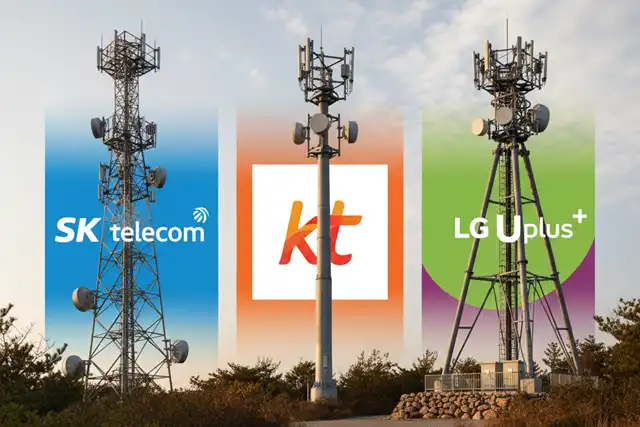
South Korea’s three major telecommunications companies—SK Telecom, KT, and LG Uplus—are facing a crisis of confidence as a series of devastating cyberattacks threatens to derail their ambitious transformation into AI-driven enterprises.
The security breaches, which have exposed tens of millions of customers’ personal information and resulted in unauthorized transactions, are raising fundamental questions about whether these firms can be trusted to handle the vast amounts of sensitive data required for their AI strategies.
Massive Data Breaches Shake Customer Confidence
The most severe incident occurred in April 2024 when SK Telecom, South Korea’s largest mobile carrier, suffered a catastrophic data breach affecting approximately 23 million people—nearly half the nation’s population. The breach caused SK Telecom’s brand trust ratings to plummet and triggered an unprecedented response from regulators. The Personal Information Protection Commission is expected to impose a fine of approximately 130 billion won (roughly $97 million) on the company, representing one of the largest penalties ever levied for a data protection violation in South Korea.
In response to the breach, SK Telecom implemented a comprehensive compensation package including free USIM (SIM card) replacements, waived cancellation fees, and discounted service charges for affected customers. However, these measures have done little to restore faith in the company’s ability to protect sensitive information.
KT, the country’s second-largest telecom operator, faced its own scandal in August when an unauthorized micropayment scheme was discovered. The incident exposed critical vulnerabilities in the company’s base station management and server operations. An investigation by external security experts confirmed evidence of intrusions into KT’s internal servers, and the company now faces potential administrative sanctions and additional compensation obligations.
LG Uplus, while not officially confirming a breach, has been embroiled in controversy after U.S. cybersecurity publication FRAK Magazine reported that internal management account credentials and source code from the company had been leaked. Although LG Uplus has categorically denied these allegations, calling them “groundless,” the reports have nonetheless contributed to growing customer anxiety about data security across the industry.
The AI Paradox: Data as Both Asset and Liability
The timing of these security failures could not be worse for South Korea’s telecom sector. All three companies have positioned AI as the cornerstone of their future business strategies, with massive investments in AI infrastructure, services, and applications. AI systems require enormous volumes of data to function effectively, and telecommunications companies possess some of the most comprehensive datasets on consumer behavior, location patterns, and communication habits.
This data represents a potential goldmine for AI applications ranging from personalized services to predictive analytics. However, the recent breaches have starkly illustrated the flip side of this equation: the same data that powers AI innovation also represents an existential risk if not adequately protected. In an era where data security directly correlates with corporate survival, these companies find themselves in a precarious position.
Industry Response: Scrambling to Rebuild Security Infrastructure
Recognizing the severity of the situation, all three carriers have announced significant initiatives to strengthen their cybersecurity postures:
SK Telecom has pledged to double its information security workforce and dramatically increase investment in security systems and infrastructure. The company is undertaking a comprehensive review of its data protection protocols and implementing more stringent access controls.
KT is advancing its AI-powered monitoring systems and forming partnerships with international cybersecurity firms to leverage global expertise. The company aims to create a more sophisticated, multi-layered defense system capable of detecting and responding to threats in real-time.
LG Uplus has announced plans to implement “zero trust” security architecture across all company applications by 2027. This approach, which assumes no user or system should be trusted by default, represents a fundamental shift in how the company approaches cybersecurity.
Expert Warning: Security Must Precede AI Expansion
Kim Myeong-ju, director of the AI Safety Research Institute, has issued a stark warning to the industry: “AI is a technology that deeply penetrates people’s daily lives, and the risks of privacy violations are substantial. Before companies aggressively pursue AI initiatives, establishing sophisticated security systems must be their top priority.”
This sentiment reflects a growing consensus among experts that South Korea’s telecom carriers may have put the cart before the horse—racing to develop AI capabilities without first ensuring they have the security infrastructure to support such ambitions safely. The consequences of this approach are now becoming painfully apparent.
Implications for South Korea’s Digital Economy
The crisis facing South Korea’s telecom giants has implications that extend far beyond the companies themselves. As critical infrastructure providers and potential AI leaders, these firms play a central role in the country’s broader digital transformation agenda. Their struggles highlight a challenge facing many companies and countries eager to capitalize on AI’s promise: the technology’s potential cannot be fully realized without robust, trustworthy data protection.
For South Korean consumers, the breaches serve as a sobering reminder of how much personal information is held by telecommunications providers and how devastating the consequences can be when that information is compromised. As these companies seek to expand into AI services that will require even more intimate access to users’ lives, rebuilding trust will be essential—and it will require more than promises and press releases.
The path forward for SK Telecom, KT, and LG Uplus will require demonstrating through concrete actions that they can secure the data they already hold before asking customers to trust them with the even more sensitive information that advanced AI services will demand. Whether they can achieve this transformation while simultaneously pursuing their AI ambitions remains an open question—one that will likely shape the future of South Korea’s telecommunications industry for years to come.
Hackers Steal $570 Million in Crypto Tokens From Binance’s BNB Chain