Space-Based Data Centers: The Next Frontier in Computing Infrastructure
Space-Based Data Centers: The Next Frontier in Computing Infrastructure
- Why Enterprise RAID Rebuilding Succeeds Where Consumer Arrays Fail?
- Linus Torvalds Rejects MMC Subsystem Updates for Linux 7.0: “Complete Garbage”
- The Man Who Maintained Sudo for 30 Years Now Struggles to Fund the Work That Powers Millions of Servers
- How Close Are Quantum Computers to Breaking RSA-2048?
- Why Windows 10 Users Are Flocking to Zorin OS 18 Instead of Linux Mint?
- How to Prevent Ransomware Infection Risks?
- What is the best alternative to Microsoft Office?
Space-Based Data Centers: The Next Frontier in Computing Infrastructure
A Bold Vision Takes Shape as Beijing Unveils Ambitious Orbital Computing Plans
The concept of building data centers in space has moved from science fiction to serious engineering planning.
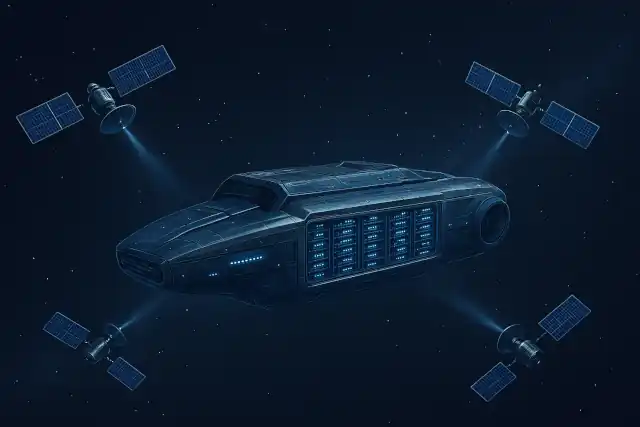
On November 27, 2024, China Beijing’s Science and Technology Commission and Zhongguancun Science City Management Committee unveiled a comprehensive blueprint for constructing space-based data centers in orbit 700-800 kilometers above Earth.
This ambitious project envisions gigawatt-scale computing facilities capable of hosting million-server clusters, marking a potential paradigm shift in how humanity approaches large-scale data processing.
Will 5G Signals Interfere with Satellite TV and Starlink?
The Natural Advantages of Space
Space-based data centers offer several compelling advantages over their terrestrial counterparts, primarily stemming from the unique environmental conditions of orbit.
Abundant Solar Energy: Perhaps the most significant advantage is access to continuous, unfiltered solar radiation. In the proposed dawn-dusk orbit, solar panels can capture energy nearly 24/7 without atmospheric interference, weather disruptions, or nighttime blackouts. This consistent power supply could theoretically support facilities with over one gigawatt of power capacity—enough to run massive server clusters that would be prohibitively expensive to power on Earth.
Natural Cooling Solutions: The vacuum of space provides an ideal environment for heat dissipation, one of the most pressing challenges facing modern data centers. Terrestrial facilities consume enormous amounts of energy for cooling systems, sometimes matching the power used by the computing hardware itself. In space, radiative cooling panels can efficiently shed waste heat directly into the void, potentially reducing or eliminating the need for energy-intensive cooling infrastructure.
Reduced Land Constraints: As data demands grow exponentially, finding suitable land for massive data center complexes becomes increasingly difficult, particularly near population centers where latency matters. Space eliminates geographic limitations entirely, allowing for expansion without competing for valuable real estate or facing zoning restrictions.
Lower Latency for Satellite Services: For applications involving satellite communications, Earth observation data processing, or space-based services, having computing power already in orbit could dramatically reduce data transmission delays and bandwidth costs compared to shuttling information up and down from ground stations.
Why Satellite Companies Haven’t Encrypted Most Communications?
The Formidable Challenges
Despite these advantages, the path to operational space-based data centers is fraught with significant technical, economic, and practical obstacles.
Launch Costs and Economics: The most immediate barrier is the staggering expense of launching equipment into orbit. Even with reusable rocket technology driving costs down, delivering the components for a gigawatt-scale facility remains extraordinarily expensive. Each kilogram launched costs thousands of dollars, and a data center requires not just servers but power systems, cooling infrastructure, communications equipment, and shielding. The economic viability depends heavily on achieving dramatic reductions in launch costs and developing lighter, more efficient hardware.
Radiation and Hardware Reliability: Space is a hostile environment. Cosmic rays and solar radiation can corrupt data and damage electronic components through single-event upsets and cumulative degradation. Space-grade electronics must be hardened against radiation, which typically means they’re heavier, more expensive, and less powerful than consumer-grade equivalents. Maintaining reliability over years of operation without the possibility of hands-on repairs presents a major engineering challenge.
Maintenance and Repairs: Unlike ground facilities where technicians can quickly address hardware failures, space-based systems must be designed for extreme reliability or autonomous repair capabilities. The Beijing plan mentions in-orbit assembly and construction capabilities, but robotic maintenance in the vacuum of space remains technically challenging and expensive. Failed components may need to be designed for remote replacement or the facility must accept higher rates of hardware redundancy and graceful degradation.
Data Transmission Bandwidth: While having computing power in orbit benefits some applications, many data center workloads require massive data transfers to and from end users on Earth. The proposed relay transmission systems must handle enormous bandwidth requirements, potentially requiring networks of communication satellites and ground stations. Latency, while lower than intercontinental fiber connections for some routes, still exists and may not suit all applications.
Thermal Management Complexity: While space offers natural cooling advantages, the engineering is far from simple. Radiative cooling requires large surface areas, and the system must carefully balance heat generation with heat rejection. During eclipse periods or operational variations, thermal control becomes more complex. The extreme temperature swings between sunlit and shadowed portions of orbit also stress materials and components.
Orbital Debris and Safety: Adding large structures to orbit increases collision risks in an already crowded space environment. A catastrophic collision could create debris fields that endanger other satellites and make certain orbital paths unusable. Designing for end-of-life deorbiting and collision avoidance is essential but adds complexity and cost.
Regulatory and Legal Framework: Space activities are governed by international treaties that may not adequately address commercial data center operations. Questions about data sovereignty, jurisdiction, orbital slot allocation, and environmental impact require new regulatory frameworks that don’t yet exist.
Ham Radio Community Challenges Satellite Company’s “Emergency Use” Claims
The Phased Development Path
Beijing’s three-phase approach reflects an understanding of these challenges. The initial phase (2025-2027) focuses on proving key technologies with smaller-scale demonstrations. The second phase (2028-2030) aims to reduce costs and scale up capabilities. The final phase (2031-2035) envisions mass production and full deployment.
This graduated timeline allows for iterative learning and technology maturation, though each phase depends on successfully solving the previous stage’s technical challenges while economic conditions remain favorable.
G.729 vs Satellite VoIP Codecs
The Broader Context
Space-based data centers represent one vision for meeting humanity’s growing computing demands, but they’re not the only path forward. Terrestrial alternatives like improved cooling technologies, renewable energy integration, edge computing distribution, and more efficient processors continue advancing. The ultimate question isn’t whether space data centers are possible—the Beijing announcement suggests serious commitment to making them real—but whether they can become cost-competitive with ground-based alternatives for enough applications to justify the investment.
As climate concerns drive interest in sustainable computing and AI demands push power requirements ever higher, the unique advantages of space may eventually overcome the formidable barriers. Whether orbital data centers become a practical reality or remain an ambitious experiment will depend on technological breakthroughs, economic forces, and whether the advantages truly outweigh the challenges once systems are operational.
The coming decade will reveal whether space-based computing represents a genuine revolution in digital infrastructure or an expensive detour in the ongoing quest for more powerful, efficient, and sustainable computing capabilities.