Tale of Two Trucks: Stellantis Retreats While BYD Advances in Electric Pickup Markets
Tale of Two Trucks: Stellantis Retreats While BYD Advances in Electric Pickup Markets
- Why Enterprise RAID Rebuilding Succeeds Where Consumer Arrays Fail?
- Linus Torvalds Rejects MMC Subsystem Updates for Linux 7.0: “Complete Garbage”
- The Man Who Maintained Sudo for 30 Years Now Struggles to Fund the Work That Powers Millions of Servers
- How Close Are Quantum Computers to Breaking RSA-2048?
- Why Windows 10 Users Are Flocking to Zorin OS 18 Instead of Linux Mint?
- How to Prevent Ransomware Infection Risks?
- What is the best alternative to Microsoft Office?
Tale of Two Trucks: Stellantis Retreats While BYD Advances in Electric Pickup Markets
Introduction
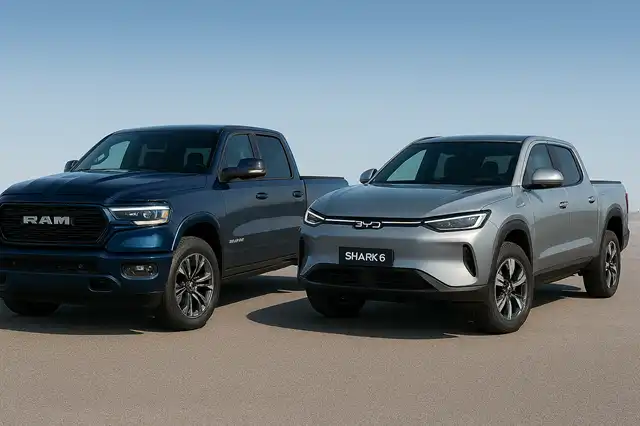
September 2025 marked a striking contrast in the global electric pickup truck landscape. While Stellantis, the parent company of Ram, announced it was discontinuing development of its full-size all-electric Ram 1500 REV, Chinese automaker BYD was celebrating impressive sales figures for its Shark 6 plug-in hybrid pickup in Australia.
This divergence reveals fundamental differences in market strategy, consumer understanding, and regional dynamics that offer valuable lessons for the automotive industry’s electric transition.
The Stellantis Retreat: A Strategic Withdrawal
On September 14, 2025, Stellantis made the difficult decision to cancel development of the Ram 1500 REV, its fully battery-electric full-size pickup truck. The company’s rationale was straightforward: demand for full-size battery-electric trucks was slowing in North America, prompting a reassessment of product strategy.
This announcement came after multiple delays for a vehicle that had been unveiled with considerable fanfare during a Super Bowl advertisement in 2023. The project had already faced setbacks, with launch dates repeatedly pushed back. Instead of the pure electric model, Stellantis announced it would prioritize the Ram 1500 Ramcharger, a range-extended electric vehicle (REEV) that combines battery power with a gasoline generator.
The cancellation reflects broader challenges facing full-size electric trucks in the North American market. Despite initial enthusiasm, vehicles like the Ford F-150 Lightning and Chevrolet Silverado EV have struggled to meet ambitious sales projections. Range anxiety remains a significant concern for truck buyers who regularly tow heavy loads or travel long distances, particularly in rural areas where charging infrastructure is limited.
The BYD Success Story: Understanding the Australian Market
While Stellantis was retreating, BYD was advancing with remarkable success. The BYD Shark 6, launched in Australia in late 2024 and early 2025, became an instant phenomenon in the traditionally conservative pickup truck market.
The numbers tell a compelling story. Within approximately one month of taking orders, BYD secured nearly 4,000 pre-orders for the Shark 6. By February 2025, the vehicle had climbed to become the third most popular pickup truck in the Australian market, with over 2,000 units reported sold that month alone. This achievement is particularly impressive given Australia’s strong brand loyalty to established pickup manufacturers like Toyota, Ford, and Nissan.
The Shark 6’s success stems from several strategic decisions. First, BYD chose a plug-in hybrid (PHEV) configuration rather than pure battery-electric. The vehicle combines a 1.5-liter turbocharged four-cylinder gasoline engine with BYD’s Blade battery technology, offering electric-only driving for daily use while maintaining gasoline backup for longer journeys and heavy towing. With a 2.5-tonne brake towing capacity, it addresses the practical needs of Australian “tradies” (tradespeople) and recreational users.
Second, BYD’s aggressive pricing strategy proved decisive. Starting at approximately $57,900 AUD (plus on-road costs), the Shark 6 undercut many traditional diesel-powered competitors while offering advanced technology and lower running costs. This value proposition resonated strongly in a market where pickup trucks are both work vehicles and lifestyle choices.
Comparative Analysis: Different Markets, Different Strategies
The contrasting fortunes of these two vehicles illuminate several key factors shaping the electric pickup market:
Market Segmentation and Consumer Expectations
North American pickup buyers, particularly those purchasing full-size trucks like the Ram 1500, often have demanding use cases. They may regularly tow heavy trailers, travel hundreds of miles between destinations, or work in remote areas. For these consumers, the limitations of current battery technology—particularly in cold weather or when towing—represent genuine barriers to adoption. The premium prices of electric trucks further complicate the value proposition when compared to well-established and highly capable gasoline and diesel alternatives.
Australian pickup buyers, while sharing some concerns with their North American counterparts, operate in a different context. Australia’s population is concentrated in coastal cities, and many pickup owners use their vehicles primarily for urban and suburban driving, with occasional recreational or work-related towing. This usage pattern aligns better with PHEV technology, where electric power handles daily driving while gasoline provides range security.
Technology Approach: Pure Electric vs. Plug-in Hybrid
Stellantis’s decision to pursue a pure battery-electric full-size truck represented an ambitious technological leap but one that asked consumers to make significant compromises. The Ram 1500 REV would have required a massive battery pack to achieve acceptable range, especially when towing, resulting in high costs and weight penalties.
BYD’s PHEV approach offers a pragmatic middle ground. The Shark 6 provides electric driving for typical daily use (reducing fuel costs and emissions) while maintaining the flexibility and range of a conventional vehicle. This technology choice acknowledges current infrastructure limitations and consumer concerns while still advancing electrification goals.
Timing and Market Readiness
Stellantis’s retreat suggests that the North American market may not yet be ready for mainstream adoption of full-size electric pickups. The charging infrastructure, particularly along rural routes and in work sites, remains inadequate. Consumer education about electric vehicle capabilities and limitations is incomplete. Moreover, the success of hybrid options (like Ford’s PowerBoost and Toyota’s hybrid pickups) suggests that North American buyers prefer transitional technologies.
BYD’s timing in Australia proved more opportune. As the country’s first PHEV pickup, the Shark 6 filled a clear market gap. Australian charging infrastructure, while not perfect, is more concentrated along major population corridors. Additionally, government incentives and growing environmental consciousness created favorable conditions for alternative powertrains.
Brand Positioning and Value Proposition
Ram faces the challenge of being an established premium brand in a conservative market segment. Asking loyal customers to embrace an entirely new powertrain at a premium price point is a difficult sell, particularly when the traditional product already performs excellently.
BYD entered Australia as a challenger brand, able to disrupt market expectations with aggressive pricing and novel technology. The company leveraged its vertically integrated battery production and lower manufacturing costs to offer compelling value. For Australian buyers willing to consider a new brand, the Shark 6 represented an innovative and economical choice.
Broader Implications for the Automotive Industry
These contrasting outcomes offer several lessons for automakers navigating the electric transition:
One Size Doesn’t Fit All: Global automotive companies must recognize that electrification strategies cannot be uniform across all markets. Regional differences in infrastructure, consumer preferences, use patterns, and competitive dynamics require tailored approaches.
The Hybrid Bridge: Plug-in hybrids may be more viable than pure electric vehicles in certain segments and markets, particularly for vehicles like pickups where range and capability are paramount. While PHEVs add complexity, they address consumer concerns while advancing electrification.
Pricing Matters: BYD’s success demonstrates that competitive pricing can overcome brand unfamiliarity and technology concerns. Established manufacturers’ premium pricing strategies for electric vehicles may limit adoption, particularly in price-sensitive segments.
Infrastructure Reality: The electric vehicle transition is constrained by charging infrastructure development. Markets with concentrated populations and shorter travel distances will adopt electric powertrains faster than those requiring long-range capability.
Capability Concerns: For utility vehicles like pickups, maintaining work capability is non-negotiable. Technologies that compromise towing range, payload capacity, or durability face an uphill battle regardless of environmental benefits.
Looking Forward
Stellantis’s decision to cancel the Ram 1500 REV doesn’t represent a complete retreat from electrification. The company is proceeding with the Ramcharger REEV and continues development of electric vehicles in other segments. The move reflects a recalibration based on market realities rather than abandonment of electric ambitions.
BYD’s Australian success, meanwhile, positions the company for continued growth. The Shark 6 has established BYD as a legitimate contender in the pickup segment, and the company plans to introduce additional variants at lower price points to capture more market share.
The divergent paths of these two vehicles underscore that the transition to electric vehicles will be neither uniform nor linear. It will be shaped by regional factors, technological pragmatism, and companies’ ability to understand and respond to genuine consumer needs rather than pursuing technology for its own sake.
Conclusion
The simultaneous retreat of Stellantis and advance of BYD in electric pickup trucks illustrates the complex dynamics shaping automotive electrification. Success requires more than technological capability—it demands market insight, appropriate technology choices, competitive pricing, and alignment with consumer needs and infrastructure realities.
Stellantis’s decision, while disappointing to electric vehicle advocates, reflects a pragmatic assessment of North American market conditions. BYD’s success in Australia demonstrates that with the right product, pricing, and market conditions, electric pickups can compete effectively even in traditionally conservative segments.
As the automotive industry continues its electric transition, these contrasting experiences offer valuable lessons: understand your market deeply, choose technologies that address real consumer needs, price competitively, and recognize that the path to electrification may wind through hybrid technologies before reaching pure electric destinations. The race to electrify pickups is far from over, but these September 2024 developments remind us that different markets may take very different routes to the same ultimate destination.
Why Plug-in Hybrid Vehicles Are the Future of Automobiles?