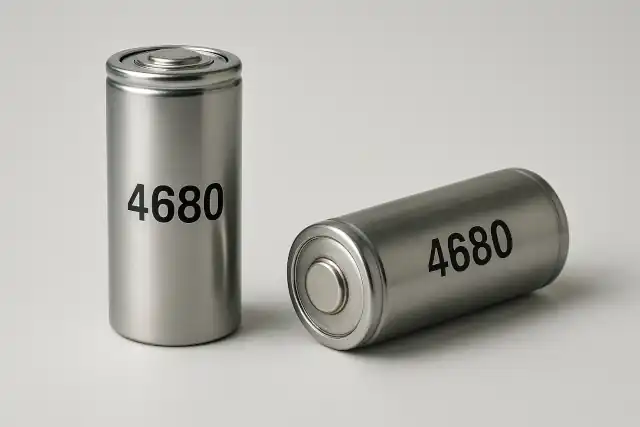
Tesla’s 4680 Battery Dream Crumbles? $2.9 Billion Contract Reduced by 99.99%
Tesla’s 4680 Battery Dream Crumbles? $2.9 Billion Contract Reduced by 99.99%
- Why Enterprise RAID Rebuilding Succeeds Where Consumer Arrays Fail?
- Linus Torvalds Rejects MMC Subsystem Updates for Linux 7.0: “Complete Garbage”
- The Man Who Maintained Sudo for 30 Years Now Struggles to Fund the Work That Powers Millions of Servers
- How Close Are Quantum Computers to Breaking RSA-2048?
- Why Windows 10 Users Are Flocking to Zorin OS 18 Instead of Linux Mint?
- How to Prevent Ransomware Infection Risks?
- What is the best alternative to Microsoft Office?
Tesla’s 4680 Battery Dream Crumbles? $2.9 Billion Contract Reduced by 99.99%
The bold prediction made by CATL Chairman Robin Zeng to Elon Musk—that the 4680 battery “will fail and will never succeed”—appears to be materializing before our eyes.
In a stunning revelation, South Korean battery material supplier L&F has announced a dramatic collapse of its supply agreement with Tesla.
The contract, originally valued at approximately $2.9 billion and signed in 2023, has been slashed by 99.99% in value—effectively reducing a multi-billion dollar deal to almost nothing.
Toyota’s EV Success in China Proves Incompetence Isn’t an Excuse
The Unraveling of a Major Supply Deal
According to L&F’s recent disclosure, the company had agreed to supply high-nickel cathode materials to Tesla from January 2024 through December 2025. These materials are critical components for Tesla’s much-hyped 4680 battery cells, which the company has positioned as a revolutionary breakthrough in electric vehicle technology.
L&F’s terse announcement merely stated that “supply volumes have changed,” but the numbers tell a far more dramatic story. A 99.99% reduction transforms what was meant to be a cornerstone supply relationship into little more than a token agreement.
Will South Korea’s LFP Battery Industry Benefit from US-China Trade Tensions?
The Cybertruck Connection
The high-nickel cathode materials in question are specifically designed for Tesla’s 4680 battery cells, which currently power only one vehicle in Tesla’s lineup: the Cybertruck. This limited application has proven problematic, as Cybertruck sales have fallen dramatically short of expectations.
Industry estimates suggest Tesla sold only 35,000 to 50,000 Cybertrucks in 2024—a modest figure for a vehicle that generated massive pre-launch buzz. More concerning for Tesla and its suppliers, sales in the second and third quarters plummeted by over 50% year-over-year. The company has already discontinued the entry-level version of the Cybertruck, a clear signal that demand has failed to meet projections.
Will Japanese EVs Flood the US Market soon?
Technical Troubles Plague 4680 Production
Tesla first unveiled its ambitious 4680 battery cell program in 2020 at its Battery Day event, promising revolutionary improvements in energy density, range, and cost. However, the road to mass production has been far rockier than anticipated.
The 4680 cells face persistent technical challenges that have prevented Tesla from achieving acceptable yield rates:
Tab-less Laser Welding Issues: The innovative tab-less design, which eliminates traditional connection tabs to reduce resistance and improve thermal performance, requires extremely precise laser welding. Achieving consistent, reliable welds at scale has proven difficult.
Dry Electrode Technology Hurdles: Tesla’s dry electrode coating process, intended to eliminate solvent use and reduce production costs, has struggled with two critical problems—maintaining uniform coating thickness across the electrode surface and ensuring adequate adhesion of the active material to the current collector.
These manufacturing bottlenecks have kept yield rates below commercial viability thresholds, preventing Tesla from ramping up production or supplying cells to external customers as originally planned.
Tale of Two Trucks: Stellantis Retreats While BYD Advances in Electric Pickup Markets
When the CATL Chairman Said “I Told You So”
Robin Zeng’s blunt assessment to Musk now seems prescient rather than provocative. As chairman of CATL—the world’s largest EV battery manufacturer—Zeng has deep expertise in battery technology and manufacturing at scale. His direct warning that the 4680 would “fail and never succeed” reflected not just competitive posturing but genuine technical skepticism.
CATL has taken a different approach, focusing on refining and scaling proven battery technologies rather than pursuing the kind of revolutionary leap Tesla attempted with the 4680. That conservative strategy appears to be paying dividends as Tesla struggles to bring its ambitious design to market.
Why Don’t Tesla Vehicles Made in US and Europe Use Safer LFP Batteries?
Implications for Tesla’s Energy Strategy
The near-total collapse of the L&F supply contract raises serious questions about Tesla’s battery roadmap. The 4680 was supposed to be central to the company’s plans for cost reduction and domestic battery production, reducing reliance on external suppliers like CATL, LG, and Panasonic.
With the 4680 program apparently stalled, Tesla faces difficult choices: continue investing in troubleshooting the technical issues, scale back ambitions for the technology, or acknowledge that conventional battery designs from established suppliers may be the more practical path forward.
For the broader EV industry, Tesla’s 4680 struggles serve as a reminder that battery innovation—while critical to the sector’s future—remains extraordinarily challenging. Even a company with Tesla’s resources and technical talent can stumble when pushing the boundaries of electrochemistry and manufacturing at scale.
As 2025 begins, the question is no longer whether the 4680 will revolutionize EV batteries, but whether it will ever achieve meaningful commercial production at all. The $2.9 billion contract that has evaporated into thin air suggests the answer may be no.