Toyota’s Ultra-Efficient FT-Bh Concept: The Revolutionary Compact Car That Achieved 50 km/L
Toyota’s Ultra-Efficient FT-Bh Concept: The Revolutionary Compact Car That Achieved 50 km/L
- Why Enterprise RAID Rebuilding Succeeds Where Consumer Arrays Fail?
- Linus Torvalds Rejects MMC Subsystem Updates for Linux 7.0: “Complete Garbage”
- The Man Who Maintained Sudo for 30 Years Now Struggles to Fund the Work That Powers Millions of Servers
- How Close Are Quantum Computers to Breaking RSA-2048?
- Why Windows 10 Users Are Flocking to Zorin OS 18 Instead of Linux Mint?
- How to Prevent Ransomware Infection Risks?
- What is the best alternative to Microsoft Office?
Toyota’s Ultra-Efficient FT-Bh Concept: The Revolutionary Compact Car That Achieved 50 km/L
In 2012, Toyota unveiled a groundbreaking concept car that captured the automotive world’s attention at the Geneva International Motor Show.
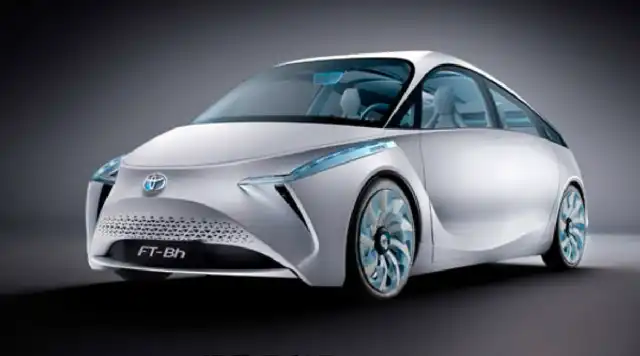
The FT-Bh concept represented Toyota’s vision for the future of fuel efficiency, achieving an extraordinary 47.6 km/L (approximately 112 mpg) under European NEDC testing standards—a figure that remains impressive even by today’s standards.
A Vision for the Hybrid Future
The FT-Bh (Future Toyota – B-segment hybrid) was developed as Toyota anticipated the widespread adoption of hybrid vehicles in the latter half of the 2010s. The concept car was designed to showcase what could become the future standard for compact, fuel-efficient transportation, pushing the boundaries of what hybrid technology could achieve.
Five Pillars of Extreme Efficiency
Toyota’s remarkable fuel economy achievement stemmed from a comprehensive approach based on five key principles:
Lightweight Construction: The vehicle’s body utilized high-tensile steel and newly developed high-foam materials, resulting in an remarkably low curb weight of just 786 kg (1,733 lbs). This innovative foam material also provided excellent insulation properties, reducing the energy required for climate control.
Reduced Running Resistance: The concept featured large-diameter, narrow-width tires that minimized both road friction and aerodynamic drag—an unconventional choice that proved highly effective.
Powertrain Efficiency: Toyota equipped the FT-Bh with a newly developed 1-liter, 2-cylinder long-stroke engine paired with their proven hybrid system, delivering both responsive acceleration and exceptional efficiency.
Thermal Management: The advanced insulation materials contributed to superior temperature regulation, minimizing energy waste from heating and cooling systems.
Power Conservation: Every electrical system was optimized to reduce energy consumption throughout the vehicle.
Striking Design with Purpose
Despite its compact dimensions—3,985 mm long, 1,695 mm wide, and 1,400 mm tall (under 4 meters in length)—the FT-Bh featured a distinctive rounded form that wasn’t just aesthetically pleasing but aerodynamically optimized. The futuristic exterior included unique elements like vertical lamps integrated into the fenders and a large lower grille, creating a design that still looks forward-thinking more than a decade later.
Legacy Lives On
Although the FT-Bh never reached production—disappointing those who hoped to see this innovative concept on public roads—its technological DNA continues to influence Toyota’s current lineup. The advanced technologies developed for this concept have been incorporated into subsequent Toyota vehicles.
Today, Toyota dominates the fuel efficiency rankings among Japanese domestic market vehicles. The Yaris Hybrid leads with 36.0 km/L, followed by the Aqua at 34.6 km/L and the Prius at 32.6 km/L (all measured under WLTC standards). While these figures fall short of the FT-Bh’s ambitious target, they demonstrate how Toyota has successfully translated concept car innovation into real-world efficiency gains.
Relevance in 2025
As the automotive industry continues its transition toward electrification, the FT-Bh concept remains relevant as a testament to what’s possible when engineers pursue efficiency without compromise. In an era where range anxiety and charging infrastructure still present challenges for fully electric vehicles, the lessons learned from ultra-efficient hybrids like the FT-Bh continue to inform the development of practical, sustainable transportation solutions.
The FT-Bh stands as a reminder that sometimes the most revolutionary ideas emerge not from radical departures, but from the relentless refinement of existing technologies—a philosophy that continues to guide Toyota’s approach to automotive innovation today.