Trump Administration Ended California’s 100% EV Dream
Trump Administration Ended California’s 100% EV Dream
- Why Enterprise RAID Rebuilding Succeeds Where Consumer Arrays Fail?
- Linus Torvalds Rejects MMC Subsystem Updates for Linux 7.0: “Complete Garbage”
- The Man Who Maintained Sudo for 30 Years Now Struggles to Fund the Work That Powers Millions of Servers
- How Close Are Quantum Computers to Breaking RSA-2048?
- Why Windows 10 Users Are Flocking to Zorin OS 18 Instead of Linux Mint?
- How to Prevent Ransomware Infection Risks?
- What is the best alternative to Microsoft Office?
Trump Administration Ended California’s 100% EV Dream
Federal action strips the Golden State of its power to set national automotive standards, threatening America’s EV transition
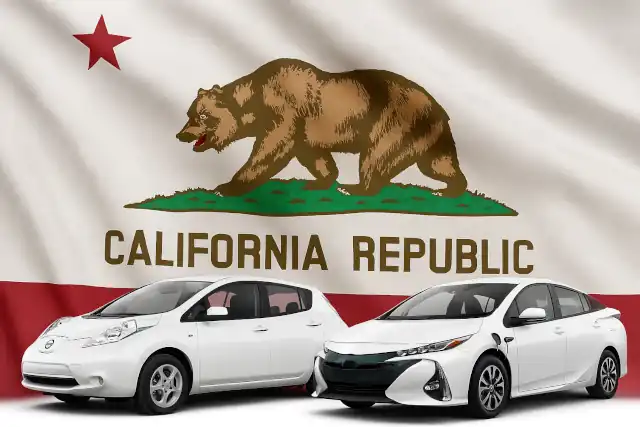
California has long served as America’s electric vehicle leader, accounting for over one-third of the nation’s 6 million EVs sold between 2011 and early 2025.
But the Trump administration has launched a coordinated assault on the state’s environmental authority, effectively ending California’s ability to mandate the nation’s transition to electric vehicles.
The End of California’s Special StatusCalifornia’s environmental authority rests on a unique Clean Air Act provision from 1967 that allows the state to set stricter emissions standards than federal rules—provided the EPA grants a waiver.
This provision was originally meant to address Los Angeles’ severe air pollution crisis but evolved into something far more expansive.
Under the Biden administration, the EPA approved California’s Advanced Clean Cars II (ACC II) regulation in 2024.
ACC II mandated that zero-emission vehicles constitute 35% of new car sales beginning in 2026, escalating to effectively prohibit fully gas-powered vehicle sales by 2035.
The waiver allowed other states to adopt California’s standards, which 17 states did, representing 30% of the U.S. vehicle market.
How Did Tesla and Major Companies Fall Victim to Cryptojacking?
Trump’s Decisive Action
On June 12, 2025, President Trump signed three congressional resolutions blocking California from mandating electric vehicle sales and setting tailpipe emissions standards designed to transition away from combustion engines. The resolutions used the Congressional Review Act (CRA) to revoke EPA waivers for California’s passenger car, heavy-duty truck, and nitrogen oxide regulations.
“We officially rescued the U.S. auto industry from destruction by terminating the California electric vehicle mandate once and for all,” Trump declared at the White House. With Trump’s move, the 17 states will no longer be able to enforce California’s standards mandating electric vehicle sales by 2035.
The Congressional Review Act includes a powerful provision: it prohibits the EPA from approving future waivers for California that are “substantially the same” as those disapproved, potentially ending California’s regulatory dominance permanently.
How to Prevent Ransomware Infection Risks
Controversial Legal Maneuver
The use of the Congressional Review Act to revoke California’s waivers represents unprecedented legal territory. Both the Government Accountability Office and the nonpartisan Senate parliamentarian issued nonbinding determinations that this use of the CRA was not appropriate, arguing that EPA waiver approvals are not “rules” subject to CRA review.
Republicans in Congress ignored these warnings. The Senate voted 51-44 to overturn the waiver, with Senator Elissa Slotkin joining Republicans in supporting the measure.
California and ten other states immediately filed suit in federal court challenging all three resolutions, arguing that principles of federalism prohibit Congress from negating state rules through the CRA. Governor Newsom signed an executive order directing the California Air Resources Board to develop new zero-emission regulations in response.
How Do Hackers Gain Administrator Access in Under an Hour?
The 100% EV Dream Dies
Given these converging forces—legal dismantling of California’s authority, market saturation, and fiscal collapse—the 100% EV mandate by 2035 appears dead on arrival. The data suggests a more sobering reality.
California’s Air Resources Board (CARB) argues that EV mandates could prevent 1,300 deaths from cardiopulmonary diseases between 2026 and 2040. But this health justification increasingly rings hollow against the backdrop of state fiscal crisis, federal policy reversal, and judicial skepticism toward sweeping regulatory transformations lacking explicit congressional authorization.
The pattern emerging from California’s data—rapid early adoption followed by plateau around 20-30% market share—likely represents the natural ceiling for EV penetration absent massive, sustained subsidies that no government can afford indefinitely. Beyond the committed early adopter segment, mainstream consumers face insurmountable barriers: upfront cost premiums (despite declining prices), charging anxiety (despite infrastructure growth), apartment-dwelling limitations, and simple preference for familiar gasoline vehicles.
XChat Security Analysis: Safe as “Bitcoin-style” peer-to-peer encryption?
Industry Celebrates, Environmentalists Despair
Auto industry leaders welcomed Trump’s action, with John Bozzella, president of the Alliance for Automotive Innovation, stating: “Everyone agreed these EV sales mandates were never achievable and wildly unrealistic”.
EPA Administrator Lee Zeldin said California’s waivers had limited “consumer choice for Americans in every state” and praised the move as ending the EV mandate.
Environmental advocates responded with alarm. Katherine Garcia of the Sierra Club’s Clean Transportation program said the administration “is dead set on pushing us backwards and ceding EV innovation and leadership to China”.
How to Defend Against Large-Scale DDoS Attacks: A Comprehensive Strategy
The Constitutional Debate
Trump’s statement emphasized that California’s programs violate “fundamental constitutional principles of federalism” and that the Clean Air Act waiver provision can never be used to regulate greenhouse gases, which “inherently do not have localized effects”.
Critics counter that Trump’s action represents federal overreach into state authority. Senator Adam Schiff condemned the move: “From the party that once claimed the mantle of champion of state’s rights, the GOP is now only the party of polluter rights”.
The legal battle will ultimately determine whether one state can set environmental standards that effectively become national policy, or whether such decisions must come through federal legislation. For now, Trump has succeeded in his promise to dismantle what he calls California’s “electric vehicle mandate,” leaving the future of America’s EV transition deeply uncertain.