UK: Millions Smart Meters to Stop Working After 2G/3G Network Shutdown
UK: Millions Smart Meters to Stop Working After 2G/3G Network Shutdown
- Why Enterprise RAID Rebuilding Succeeds Where Consumer Arrays Fail?
- Linus Torvalds Rejects MMC Subsystem Updates for Linux 7.0: “Complete Garbage”
- The Man Who Maintained Sudo for 30 Years Now Struggles to Fund the Work That Powers Millions of Servers
- How Close Are Quantum Computers to Breaking RSA-2048?
- Why Windows 10 Users Are Flocking to Zorin OS 18 Instead of Linux Mint?
- How to Prevent Ransomware Infection Risks?
- What is the best alternative to Microsoft Office?
UK: Millions Smart Meters to Stop Working After 2G/3G Network Shutdown
The goal of London authorities is to deploy smart meters in most households and small businesses across the UK, providing a convenient means to measure actual energy consumption for individuals and companies.
However, this endeavor is still a long way from completion, and a substantial number of already deployed smart meters will cease to function in the coming years.
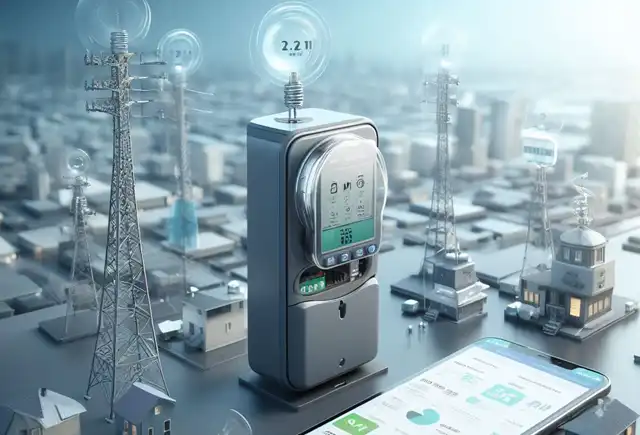
Millions of smart meters installed in the UK rely on 2G and 3G networks, both of which are aging mobile infrastructures slated for gradual phasing out by the end of 2033. While the latest 4G and 5G networks offer faster and more reliable services, they also pose compatibility issues for smart meters designed for the older networks.
A recent report from the Public Accounts Committee (PAC) has underscored how the Department for Energy Security and Net Zero (DESNZ) has missed several targets in the smart meter rollout program. The original target was to complete the rollout by 2019, but as of March 2023, only 57% of the meters (32.4 million out of 57.1 million installations) are considered “smart” meters.
Furthermore, the report by the UK Parliament points out that around 3 million units (9%) of these devices are non-functional, and approximately 7 million units (one-fifth of the total) will “lose functionality” after the phase-out of 2G and 3G mobile networks. These newly installed smart meters will require replacement or costly hardware upgrades, creating a financial burden for taxpayers.
The report also highlights the government’s repeated delays in achieving the smart meter deployment targets and schedule. The current government objective is for 74.5% of households and approximately 69% of small businesses to have digital meters installed by the end of 2025. A new regulatory framework aimed at encouraging further investment in the rollout was introduced in 2022, but only one major supplier is on track to meet the installation goals for both gas and electricity supply.
Members of the government advisory committee are interested in learning what actions the regulatory agencies, such as the New Zealand Ministry of Energy and the regulator, are taking to increase the adoption of smart meters and how they plan to address the upcoming issues related to devices dependent on 2G and 3G mobile communication. The UK Parliament is inquiring about the measures these agencies will take to compel suppliers to replace non-functional smart meters and establish a new “schedule” for upgrading the communication hubs on these 2G and 3G smart meters.
It is estimated that the smart meter deployment program, spanning from 2013 to 2034, will cost £13.5 billion (approximately $16.4 billion). The new devices have the potential to save significant costs for households and offices, amounting to £19.5 billion (or $23.6 billion).