United States Attempts to Control RISC-V Against China’s IT Development?
United States Attempts to Control RISC-V Against China’s IT Development?
- Why Enterprise RAID Rebuilding Succeeds Where Consumer Arrays Fail?
- Linus Torvalds Rejects MMC Subsystem Updates for Linux 7.0: “Complete Garbage”
- The Man Who Maintained Sudo for 30 Years Now Struggles to Fund the Work That Powers Millions of Servers
- How Close Are Quantum Computers to Breaking RSA-2048?
- Why Windows 10 Users Are Flocking to Zorin OS 18 Instead of Linux Mint?
- How to Prevent Ransomware Infection Risks?
- What is the best alternative to Microsoft Office?
United States Attempts to Control RISC-V Against China’s IT Development.
The Open-Source CPU Architecture Sparks Fierce Competition Amidst Global Technological Rivalry.
News on Oct 07, Two Republican House committee chairs, Senator Marco Rubio, and Democratic Senator Mark Warner are urging the Biden administration to take action on RISC-V, citing national security concerns.
Lawmakers are worried that the Chinese government is leveraging the open collaboration culture among American companies to advance its own semiconductor industry. This could potentially erode America’s current leadership position in the chip sector and aid China’s military modernization efforts.
The legislators are calling on the Biden administration to impose restrictions on the export of RISC-V-related technology, “requiring any U.S. individual or company to obtain an export license before engaging in trade with Chinese entities.” This marks the latest development in the ongoing tech rivalry between the United States and China.
However, back in 2020, the nonprofit organization responsible for RISC-V technology, the RISC-V Foundation, had already relocated its headquarters to Switzerland. They had recognized the potential stress from United States at that time.
In the ongoing tech war between the United States and China, a new battleground has emerged, and it’s not just about trade disputes and cybersecurity concerns.
It’s about the heart of the digital world: microprocessors. Specifically, it’s about RISC-V technology, an open-source CPU architecture that is gaining increasing prominence on the global stage.
The Rise of RISC-V:
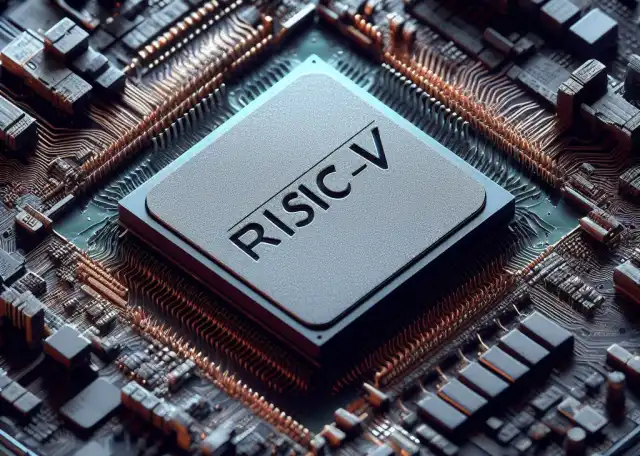
RISC-V, pronounced “risk-five,” is an open-source instruction set architecture (ISA) for designing microprocessors. It provides a foundation for building customized CPUs and has garnered significant attention in recent years for its flexibility, cost-effectiveness, and potential to break the stranglehold of established chip giants like Intel and ARM.
China’s Ambitious Push:
China, with its aspirations to become a technological superpower, has been investing heavily in the development and adoption of RISC-V technology. The Chinese government sees it as a strategic move to reduce reliance on foreign technologies, particularly American-made semiconductors, which have faced supply chain disruptions due to trade tensions.
Chinese companies, both state-owned and private, have been actively engaged in RISC-V development. Initiatives like the “China RISC-V” project aim to accelerate the country’s progress in designing and manufacturing RISC-V-based chips, promoting indigenous innovation, and reducing reliance on foreign chipsets.
US Response and Concerns:
The United States, recognizing the significance of RISC-V in the global technology landscape, has responded with its own investments and initiatives to maintain technological leadership. American companies and organizations are actively participating in RISC-V development, ensuring their place in this pivotal technology race.
However, concerns have arisen about the potential for RISC-V technology to be weaponized or exploited for surveillance or malicious purposes. As a result, the U.S. government has also tightened export controls on certain RISC-V-related technologies, further intensifying the tech rivalry.
Global Impact:
The rivalry over RISC-V has far-reaching implications for the global technology ecosystem. As nations vie for control over the architecture, it could reshape the semiconductor industry, influence the development of new computing devices, and impact global supply chains.
The Way Forward:
The battle over RISC-V technology underscores the broader theme of technological nationalism and competition in the 21st century. It highlights the importance of open-source technologies in challenging the dominance of established players and ensuring technological independence.
As the rivalry intensifies, it remains to be seen how RISC-V will shape the future of computing and whether collaborative efforts or competitive pursuits will define its evolution.
In a world where digital sovereignty is increasingly sought after, RISC-V has become a symbol of technological self-determination, and its future promises to be a key chapter in the ongoing US-China tech war.