What Are Decentralized End-to-End Encrypted Messaging Apps and Why Do They Matter?
What Are Decentralized End-to-End Encrypted Messaging Apps and Why Do They Matter?
- Why Enterprise RAID Rebuilding Succeeds Where Consumer Arrays Fail?
- Linus Torvalds Rejects MMC Subsystem Updates for Linux 7.0: “Complete Garbage”
- The Man Who Maintained Sudo for 30 Years Now Struggles to Fund the Work That Powers Millions of Servers
- How Close Are Quantum Computers to Breaking RSA-2048?
- Why Windows 10 Users Are Flocking to Zorin OS 18 Instead of Linux Mint?
- How to Prevent Ransomware Infection Risks?
- What is the best alternative to Microsoft Office?
What Are Decentralized End-to-End Encrypted Messaging Apps and Why Do They Matter?
In an era of increasing digital surveillance and data breaches, many people are seeking alternatives to traditional messaging apps that offer both privacy and independence from centralized control.
Decentralized, end-to-end encrypted messaging applications represent a new frontier in secure communication technology.
Telegram Founder Launches Cocoon: A Decentralized Network Challenging Big Tech’s AI Monopoly
What is End-to-End Encryption and How Does It Protect Your Messages?
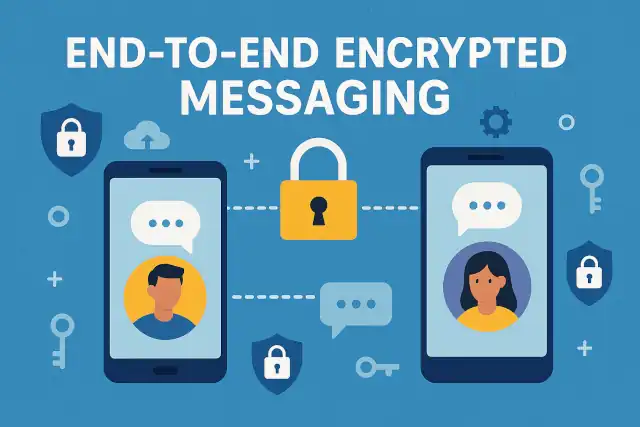
End-to-end encryption (E2E) means that only you and the person you’re communicating with can read the messages. Not even the service provider can access the content.
The messages are encrypted on your device and only decrypted on the recipient’s device, making interception virtually useless to potential eavesdroppers.
XChat Security Analysis: Safe as “Bitcoin-style” peer-to-peer encryption?
What Makes an App “Decentralized” and Why Should You Care?
Decentralization means there’s no single central server or company controlling all communications. Instead, the network is distributed across many nodes or peers. This architecture offers several advantages:
- No single point of failure or control
- Increased resistance to censorship
- Greater privacy through reduced metadata collection
- Less vulnerability to government surveillance or data requests
How to Prevent Ransomware Infection Risks
Which Decentralized Messaging Apps Are Available Today?
Session
Session is built on a decentralized network that doesn’t require a phone number or email to sign up. It uses onion routing (similar to Tor) to hide metadata like who you’re talking to and when. Messages are routed through multiple nodes, making it extremely difficult to trace communications back to users.
Best for: Users who want complete anonymity and don’t want to link their identity to any personal information.
Briar
Briar takes decentralization to the extreme by enabling truly peer-to-peer communication. Messages can be sent via Bluetooth, Wi-Fi, or over the Tor network without any servers at all. If the internet goes down, Briar can still work through local connections.
Best for: Activists, journalists, or anyone operating in environments where internet access may be restricted or monitored.
Element (Matrix Protocol)
Element operates on the Matrix protocol, which is federated rather than fully peer-to-peer. This means anyone can run their own server, and these servers communicate with each other. You can choose to use public servers or host your own for complete control.
Best for: Organizations or communities that want to control their own infrastructure while still being able to communicate with others on the Matrix network.
SimpleX Chat
SimpleX takes a unique approach by not assigning any identifiers to users at all – not even random ones. Each connection has its own separate queues, making it impossible to link different conversations to the same person.
Best for: Users seeking maximum privacy with minimal metadata exposure.
Status
Status is built on the Ethereum blockchain, Status combines encrypted messaging with a cryptocurrency wallet and Web3 browser. It’s part of a broader vision for decentralized applications.
Best for: Cryptocurrency enthusiasts and those interested in the Web3 ecosystem.
Beware of Poisoned Pirated Movies: DCRat Backdoor Hidden Using Go Compiler
How Do Centralized and Decentralized Apps Compare?
Traditional apps like WhatsApp, Telegram, and even Signal rely on central servers. While apps like Signal offer excellent end-to-end encryption, they still:
- Know when you’re online
- Store metadata about who contacts whom
- Can be compelled to hand over data to governments
- Require trust in a single organization
Decentralized apps minimize or eliminate these concerns by distributing control across the network.
Proton Launches Encrypted Spreadsheet Tool to Challenge Tech Giants on Privacy
What Are the Trade-offs When Using Decentralized Apps?
While decentralized apps offer superior privacy, they come with some trade-offs:
Advantages:
- Maximum privacy and anonymity
- Resistance to censorship
- No single point of failure
- Reduced metadata collection
Disadvantages:
- Often less user-friendly than mainstream apps
- Smaller user bases (fewer people to communicate with)
- May be slower due to routing through multiple nodes
- Features like cloud backup may be limited or unavailable
- Battery usage can be higher, especially with apps like Briar
Why Smartphone Chat Apps Are Not Safe Enough?
Which App Should You Choose for Your Needs?
Your choice should depend on your specific needs:
- For everyday privacy: Signal remains the easiest option with strong encryption, though it’s centralized
- For complete anonymity: Session or SimpleX Chat
- For resilience in restrictive environments: Briar
- For organizational control: Element/Matrix
- For Web3 integration: Status
Will Quantum Computers Break All Our Passwords in 20 Years?
What Does the Future Hold for Decentralized Communication?
As concerns about privacy, censorship, and data ownership grow, decentralized communication apps are likely to become more mainstream. Improvements in user experience and growing networks of users are making these apps increasingly viable alternatives to traditional messaging platforms.
The key is understanding that privacy and security exist on a spectrum. While no system is perfect, decentralized end-to-end encrypted messaging apps represent some of the most robust tools available for protecting your communications from surveillance, data breaches, and unauthorized access.
Why Endpoint Protection Platforms Are Superior to Traditional Antivirus?
How Can You Get Started with Decentralized Messaging?
Most of these apps are available for free on both Android and iOS app stores. Start by downloading one or two that match your needs, and encourage your contacts to join you. Remember that the security of your communications depends not just on the app you choose, but also on the security practices of the people you communicate with.
The shift toward decentralized communication isn’t just about technology – it’s about reclaiming digital autonomy and the fundamental right to private conversation in an increasingly connected world.